Disclosure: We may earn a commission when you buy through links on this page, at no extra cost to you. We buy nothing, sell nothing and accept no payment for coverage — commissions never decide what we recommend. How we make money.
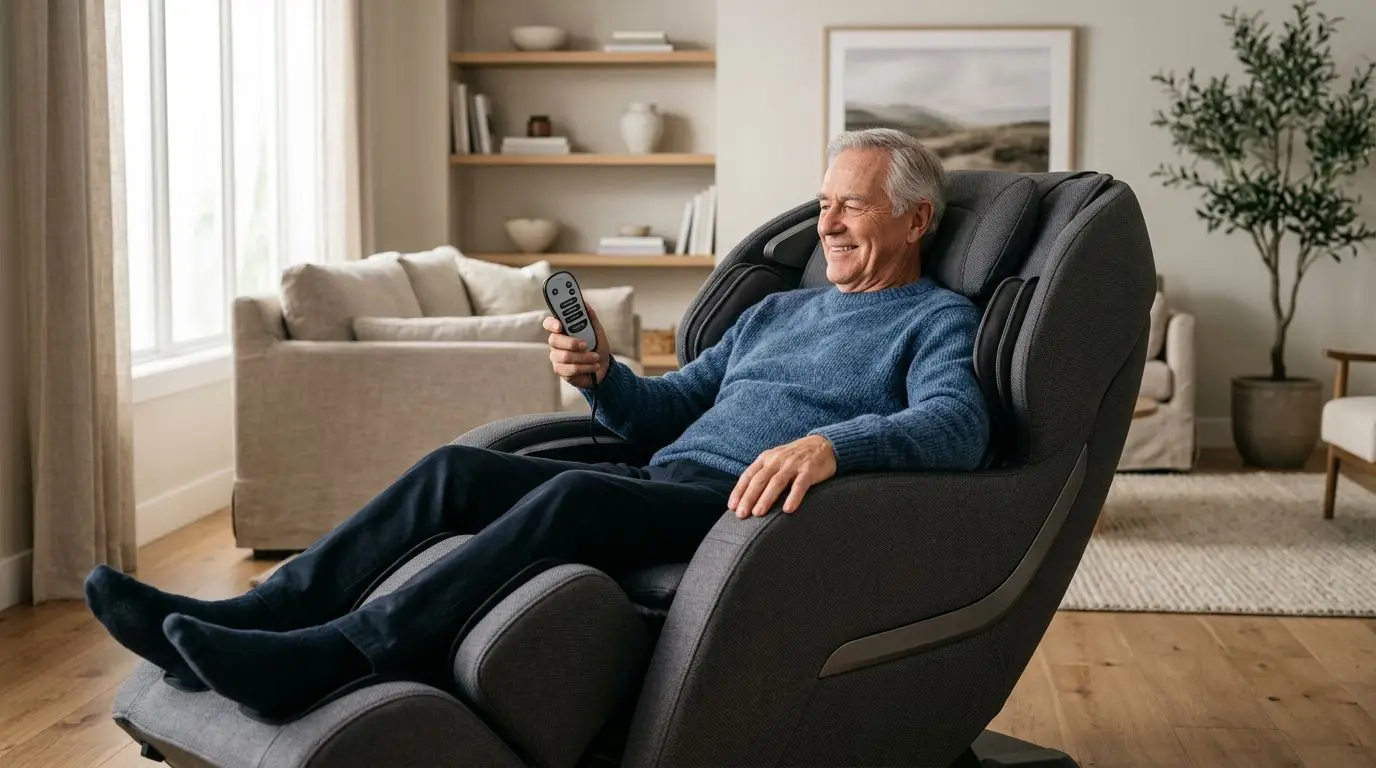
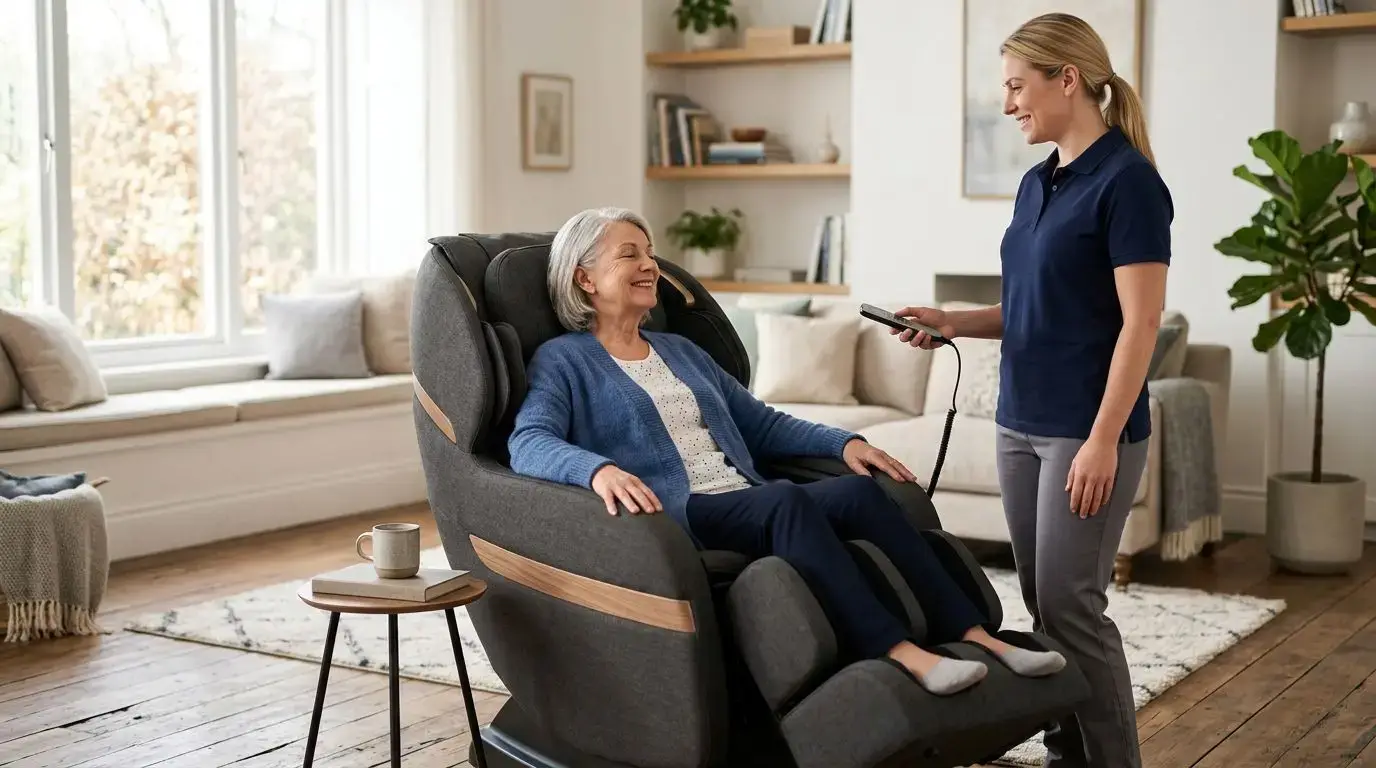
Massage chairs can suit some older adults who want at-home relaxation, gentle muscle comfort, and a predictable routine for stiffness after daily activity. The best choice is usually a chair that is easy to get into, simple to control, appropriately sized, and equipped with adjustable intensity, automatic shutoff, and a safe recline path. Seniors and caregivers should also review medical conditions, mobility limits, room layout, and weight capacity before buying.
A massage chair is not a medical device and should not be treated as a replacement for care from a physician, physical therapist, or other licensed professional. Used thoughtfully, however, it can become a comfortable wellness tool: 10 to 20 minutes of gentle kneading, rolling, heat, or air compression may help an older adult unwind and feel less tense at the end of the day.
What a massage chair can and cannot do for older adults
Most massage chair programs run for about 10, 15, or 20 minutes, which is long enough for a relaxation session without asking someone to sit for too long. For many seniors, that short, repeatable routine is the main advantage. The chair is available at home, does not require an appointment, and can be used at a consistent time of day.
Common wellness benefits include temporary muscle relaxation, reduced feelings of tension, and comfort after sitting, gardening, walking, or light household activity. Gentle rollers may work along the back and neck, while air cells may compress the calves, feet, arms, or shoulders depending on the chair design. Heat can add a soothing sensation, especially around the lower back.
Expectations should stay realistic. A massage chair does not diagnose, treat, or cure arthritis, neuropathy, circulation disorders, back injuries, or chronic pain conditions. It also cannot correct a fall-risk problem, replace balance training, or substitute for a prescribed mobility aid. If an older adult has new pain, numbness, swelling, unexplained weakness, recent surgery, a history of blood clots, advanced osteoporosis, a pacemaker, or any unstable medical condition, a clinician should be consulted before use.
The best outcome usually comes from matching the chair to the person, not from choosing the model with the longest feature list. A senior who dislikes strong pressure may be happier with a basic, soft-roller chair than with an intense full-body design. Comfort matters more than complexity.
Who it is best for—and who should be cautious
A massage chair can be useful for an older adult who can sit down and stand up independently or with light help, understands the controls, and enjoys pressure along the back or legs. Many chairs are designed for users somewhere around 5 feet to 6 feet 3 inches tall, but fit varies widely, so body size should be checked carefully.
- Best for relaxation seekers: Seniors who want a calm evening routine, gentle back kneading, or light heat while reading or watching TV.
- Best for stiffness after activity: Older adults who feel tight after walking, errands, yardwork, or long periods of sitting may appreciate a 10-minute low-intensity cycle.
- Best for caregivers looking for consistency: A chair can provide a repeatable, hands-free comfort routine when used safely and in moderation.
- Best for users who can communicate discomfort: The user should be able to say when pressure is too strong, heat is too warm, or recline feels unsafe.
Some seniors should be more cautious. A person who has trouble getting out of low seating, becomes dizzy when reclined, has fragile skin, cannot feel heat reliably, or has significant cognitive impairment may need supervision or may not be a good candidate. The same applies to someone who uses oxygen tubing, has limited trunk control, or cannot operate an emergency stop button.
Caregivers should also consider personality and habits. Some older adults enjoy technology. Others feel stressed by touchscreens, voice prompts, or complex menus. If the person will use only two settings, a chair with 30 automatic programs may be more frustrating than helpful.
Comfort factors that matter after age 60
Comfort starts with fit. Typical massage chair seat widths often fall around 18 to 22 inches, but the usable space can feel narrower because of side panels, arm massagers, or hip airbags. A senior who normally prefers a wide recliner may feel confined in a chair with fixed arm wells.
Seat height matters too. Many older adults do better when the seat is high enough that the knees are not sharply bent and the feet can reach the floor before the chair reclines. A very low seat may look sleek, but it can make standing difficult, especially for someone with knee, hip, or balance limitations.
| Comfort factor | What to look for | Why it matters for seniors |
|---|---|---|
| Adjustable intensity | At least 2 to 3 pressure levels or removable back padding | Helps avoid overly strong roller pressure on sensitive backs |
| Seat width | Measure the actual sitting area, often about 18 to 22 inches | Prevents a cramped feeling at the hips and thighs |
| Heat control | Separate on/off setting, ideally with mild warmth | Useful for comfort, but safer when the user controls it easily |
| Footrest adjustment | Manual or automatic extension of several inches | Improves fit for shorter or taller users and reduces knee strain |
| Recline style | Smooth movement with a clear stop button | Reduces anxiety for users who dislike deep reclining |
| Control panel | Large buttons, readable labels, simple presets | Makes independent use more realistic |
Pay close attention to massage intensity. Some chairs use rollers that press firmly into the back, which can feel too aggressive for a slim senior or anyone with bony areas along the spine. Softer rollers, adjustable speed, lower intensity modes, or an extra back pad can make the experience more comfortable.
Noise is another practical detail. A quiet chair may produce a low motor sound, while stronger air pumps and foot rollers can be more noticeable. If the chair will sit in a shared living room, test whether the sound is acceptable during a 15-minute session.
Safety considerations before buying
Start with the published weight limit. Many residential massage chairs list maximum capacities in the 250 to 300 pound range, while some heavy-duty designs may allow more. Staying within the stated limit protects both the user and the chair mechanism.
Next, think about getting in and out. A chair with high side panels, deep recline, or a footrest that rises before the user is settled can create a fall hazard. The safest setup leaves enough open floor space for a walker, cane, or caregiver to stand nearby. If the senior uses a mobility aid, plan the approach path before delivery.
- Automatic shutoff: A 15- or 20-minute timer helps prevent overly long sessions, especially if the user falls asleep.
- Emergency stop: The user should be able to stop rollers, air compression, and recline without searching through menus.
- Gentle startup: Programs that begin softly are better for users who startle easily or have tender muscles.
- Heat caution: Anyone with reduced sensation, diabetes-related nerve issues, or fragile skin should be careful with heat and ask a clinician for guidance.
- Air compression caution: Leg and foot airbags should not be painfully tight. Users with circulation concerns should seek medical advice before using compression features.
- Stable flooring: The chair should sit level on a firm surface, not on a thick rug that allows rocking or shifting.
Recline angle is also worth checking. Some zero-gravity-style positions elevate the legs and tilt the body back significantly, sometimes 20 to 45 degrees depending on design. Many people find that relaxing, but a senior who gets lightheaded when leaning back may need a more upright setting.
Safety is not only about features. It is also about habits. Begin with short sessions, keep the remote within reach, avoid sleeping in the chair for hours, and stop immediately if there is sharp pain, numbness, dizziness, shortness of breath, or unusual discomfort.
How to choose and measure before delivery
Measure before you shop. A massage chair may weigh 150 to 300 pounds and can be difficult to move once assembled, so a few measurements can prevent an expensive mistake. Standard interior doorways are often about 30 to 36 inches wide, but older homes, hallway turns, and stair landings may be tighter.
Step 1: Measure the user
Record height, weight, shoulder width, hip width while seated, and lower-leg length from the back of the knee to the heel. Compare these numbers with the chair's recommended height range and seat dimensions. If two people will share the chair, fit it to the person with the greater safety need, not just the taller user.
Step 2: Measure the room
Check the chair's upright footprint and fully reclined footprint. Some wall-hugging designs need only about 3 to 6 inches behind the chair, while others may need 12 inches or more. Leave room on at least one side for a caregiver to assist with standing.
Step 3: Measure the path
Measure the front door, hallways, stair width, elevator opening, and the tightest turn. Ask whether the chair arrives in one piece or in multiple sections. If assembly requires two adults, plan for that instead of expecting an older adult to help lift.
Step 4: Test the controls
If possible, have the senior operate the remote without coaching. Can they find power, stop, recline, heat, and intensity controls within 30 seconds? If not, the chair may be too complicated for independent daily use.
Step 5: Start with the mildest program
The first session should be short, about 5 to 10 minutes. Use the lowest intensity and skip aggressive foot rollers or strong calf compression until the user knows how the chair feels.
Types of massage chairs compared
Massage chairs differ most in their track shape, roller system, and body coverage. A basic back-only chair may use a shorter track, while full-body designs may run from the neck toward the glutes or upper hamstrings. Track lengths commonly range from roughly 28 inches on compact designs to 45 inches or more on extended-track chairs.
| Chair type | Typical coverage | Senior-friendly strengths | Possible drawbacks |
|---|---|---|---|
| S-track | Follows the curve of the spine from neck to lower back | Often comfortable for traditional back massage | May not reach the glutes or upper hamstrings |
| L-track | Extends from the neck down under the seat | Good for users who want lower-back and hip-area coverage | Can feel intense under the seat for sensitive users |
| SL-track | Combines spinal curve with extended seat coverage | Broad coverage without sacrificing back contouring | Usually larger and more complex |
| 2D rollers | Move up/down and side-to-side | Simple, often gentler, easier to tolerate | Less depth adjustment |
| 3D or 4D rollers | Add in/out depth and sometimes variable rhythm | More adjustable for users who want customized pressure | Can be too strong if not set low |
| Air-compression chair | Uses airbags for arms, calves, feet, hips, or shoulders | Can feel like a gentle squeeze rather than deep kneading | Not ideal for everyone with circulation or sensitivity issues |
For seniors, a simpler chair often wins. A comfortable S-track with heat and adjustable intensity may be better than a large chair with strong foot rollers, voice controls, Bluetooth speakers, body scanning, and dozens of programs that never get used.
Foot massage deserves special attention. Rollers under the feet can feel wonderful to one person and painfully sharp to another. If the senior has reduced sensation, neuropathy symptoms, foot wounds, severe swelling, or diabetes-related foot concerns, get medical guidance before using foot rollers or tight compression.
Feature priorities for caregivers and families
If a caregiver will help manage the chair, the best features are the ones that reduce confusion and risk. A chair with 6 clear automatic programs may be easier to manage than one with 25 similar modes and a complicated screen. Labels should be readable in normal room light, ideally without needing a phone app.
| Priority | Look for | Why it helps |
|---|---|---|
| Ease of use | Large remote, simple presets, memory position if available | Supports independence and reduces caregiver workload |
| Gentle comfort | Low intensity setting, soft mode, removable pad | Better for thin or pressure-sensitive users |
| Safe timing | Auto shutoff after about 15 to 20 minutes | Prevents unintended long sessions |
| Access | Moderate seat height and open side clearance | Makes transfers easier |
| Room fit | Wall-hugging recline or compact footprint | Useful in apartments and smaller senior living spaces |
| Cleaning | Wipeable upholstery and accessible footwell | Helps with hygiene, especially for shared use |
Caregivers should create a simple written routine and place it near the chair: sit down fully, turn on the low program, keep the remote in hand, stop if uncomfortable, and wait a moment before standing. That one-page checklist can be more helpful than a thick manual.
Setup, daily use, and maintenance tips
Delivery planning matters because many massage chairs are heavy, often around 150 to 300 pounds depending on size and features. Two-person handling is usually safer, and some homes may need professional delivery or in-room placement. Do not drag a heavy chair across flooring without checking whether the base can damage wood, vinyl, or tile.
Place the chair near a grounded outlet so cords do not cross a walking path. Avoid extension cords unless the chair's instructions specifically allow them. Leave a clear route from the chair to the bathroom, bedroom, or main walkway, especially if the user may stand up sleepy after a session.
For daily use, start low and slow. A good first-week plan might be 5 to 10 minutes per session, once a day, using low intensity and no heat until the user is comfortable. If the chair feels good, sessions can gradually increase within the manufacturer's recommended limits, often around 15 to 20 minutes.
Maintenance is straightforward but still important. Wipe upholstery with a soft cloth, remove debris from the footwell, check that zippers and fabric around the rollers are intact, and listen for unusual grinding or clicking sounds. If the chair has removable cushions, inspect them every few months for wear because thinning padding can make the massage feel stronger.
One more practical tip: keep a firm side table within arm's reach for glasses, a phone, and the remote. Seniors should not have to twist, reach to the floor, or lean across the chair while reclined.
Frequently asked questions
Are massage chairs safe for seniors?
They can be safe for many seniors when the chair fits well, the intensity is adjustable, sessions are limited to about 10 to 20 minutes, and the user can stop the chair easily. Seniors with significant medical conditions, recent surgery, clot history, reduced sensation, or severe pain should ask a clinician before use.
What is the best massage chair type for an older adult?
There is no single best type. Many older adults do well with a chair that has gentle 2D or adjustable 3D rollers, an easy remote, mild heat, automatic shutoff, and a seat that is not too low. Fit and simplicity are usually more important than advanced features.
Can a massage chair help with stiffness?
A massage chair may temporarily ease feelings of muscle tightness or stiffness after normal activity, especially when used on a gentle setting. It should not be used as a substitute for medical evaluation if stiffness is new, worsening, painful, or linked with weakness or swelling.
How long should a senior use a massage chair?
A cautious starting point is 5 to 10 minutes on the lowest setting. If comfortable, many users stay within 15 to 20 minutes per session, following the chair's instructions and stopping sooner if anything feels wrong.
What features should caregivers prioritize?
Caregivers should prioritize a clear stop button, automatic shutoff, low-intensity mode, stable recline, readable controls, appropriate weight capacity, and enough room around the chair for safe transfers.
Should seniors use heat and foot compression?
Heat and foot compression can feel soothing, but they are not right for everyone. Seniors with reduced sensation, diabetes-related foot concerns, circulation issues, swelling, fragile skin, or open sores should get medical guidance before using these features.
Frequently asked questions
Are massage chairs safe for seniors? +
They can be safe for many seniors when the chair fits well, intensity is adjustable, sessions are limited, and the stop control is easy to reach. Seniors with medical concerns such as recent surgery, clot history, severe pain, reduced sensation, or unstable conditions should ask a clinician before use.
What type of massage chair is best for an older adult? +
The best type is usually the one that fits the user, feels gentle, and is simple to operate. Many seniors should prioritize adjustable intensity, automatic shutoff, readable controls, a comfortable seat height, and safe entry and exit over advanced features.
Can a massage chair help with stiffness? +
A massage chair may temporarily ease feelings of muscle tightness or stiffness after normal daily activity. It should not replace medical evaluation for new, worsening, severe, or unexplained stiffness.
How long should seniors use a massage chair? +
A cautious first session is about 5 to 10 minutes on the lowest setting. If the user is comfortable, many sessions can stay around 15 to 20 minutes, depending on the chair instructions and personal tolerance.
What should caregivers check before buying a massage chair? +
Caregivers should check weight capacity, seat height, seat width, recline clearance, doorway access, control simplicity, automatic shutoff, emergency stop access, and whether there is enough room to assist with transfers.
Are heat and foot massage safe for all seniors? +
No. Heat, foot rollers, and leg compression may not be appropriate for seniors with reduced sensation, diabetes-related foot concerns, circulation issues, swelling, fragile skin, or wounds. In those cases, medical guidance is recommended before use.
Related guides
Are Massage Chairs Good or Bad for You? Benefits, Risks, and Safe Use Guidelines
13 min read
Massage Chair Benefits for Stress Relief and Relaxation at Home
11 min read
Can a Massage Chair Help With Lower Back Pain? Benefits, Settings, and Safety Tips
12 min read
How to Choose a Massage Chair for Home Use
14 min read
Best Massage Chair Features to Look For Before You Buy
13 min read