Disclosure: We may earn a commission when you buy through links on this page, at no extra cost to you. We buy nothing, sell nothing and accept no payment for coverage — commissions never decide what we recommend. How we make money.
A massage chair can be a useful part of a home relaxation routine because it gives you a predictable place to sit, slow down and enjoy controlled pressure for 15 to 30 minutes. It is not a medical device and should not be treated as a substitute for professional care, but it can make everyday unwinding more convenient and consistent.
At home, the biggest benefits are practical: you do not have to schedule an appointment, drive anywhere or explain your preferred pressure each time. The right chair can feel calming, supportive and repeatable, especially when you choose one that fits your body, room and tolerance for intensity.
What to expect from a 15- to 30-minute relaxation session
Most full-body massage chair sessions last about 15, 20 or 30 minutes. That is enough time for the chair to recline, scan your back in many models, work through a programmed sequence and return you to an upright position without making the session a long commitment.
The feeling is mechanical, but it does not have to be harsh. Rollers usually move along the back in kneading, tapping, rolling or combination patterns, while air cells inflate and deflate around areas such as the shoulders, arms, calves or feet. Depending on the design, some chairs also use vibration, heat in limited zones, foot rollers or a rocking motion.
A good session should feel controlled. You should be able to lower the intensity, skip an area or stop the chair if the pressure feels too strong. Expect firmer contact in bony areas such as the shoulder blades and lower back, especially in chairs with protruding rollers. Softer chairs tend to feel more like broad compression and gentle movement.
Think of the chair as a structured pause. It creates a comfortable boundary around a short block of time, making it easier to put down your phone, stop multitasking and reset your evening routine. The benefit is not magic. It is repeatability.
Who it is best for: 5 common at-home use cases
A massage chair makes the most sense when you will use it often enough to justify the space it takes. Many full-size chairs need roughly 30 to 36 inches of width and can weigh well over 150 pounds, so this is not a small impulse item. It works best in a dedicated spot where sitting down feels easy.
| Use case | What to look for | Why it matters |
|---|---|---|
| Evening wind-down | Quiet motor, low-intensity programs, heat option | A calmer feel is better for use before bed. |
| Desk-work decompression | Neck, shoulder and upper-back coverage | Targets the areas many people notice after long sitting days. |
| Shared household use | Adjustable intensity, user height range, easy remote | One chair needs to suit different bodies and preferences. |
| Foot-focused comfort | Foot rollers, calf airbags, adjustable footrest | Important if you want lower-leg pressure, not just back rollers. |
| Short daily routine | 15-minute automatic programs | Short presets are easier to use consistently. |
It may not be the best fit if you dislike enclosed seating, have very limited floor space or know you strongly prefer human massage. A chair cannot listen, adapt by feel or use professional judgment. It follows a program.
For many households, that is exactly the appeal. The chair is always available, the pressure is predictable and the experience can be adjusted with buttons instead of a conversation.
How rollers, tracks and airbags change the feel in 3 major ways
The roller track is one of the biggest reasons one chair feels different from another. Most chairs use an S-track, L-track or SL-track layout. The track shape determines how far the rollers travel and how closely they follow the curve of your body.
| Chair design | Typical coverage | How it tends to feel |
|---|---|---|
| S-track | Neck to lower back | Focused back coverage that follows the spine's curve. |
| L-track | Back into glutes/upper hamstrings | Longer coverage with seated-area pressure. |
| SL-track | Curved back plus extended lower coverage | A blend of contour-following and longer reach. |
Roller depth matters too. A 2D roller typically moves up, down, left and right. A 3D roller can also move inward and outward, changing how much the roller presses into the body. Some higher-feature chairs offer more levels of depth control, which helps if one person likes gentle pressure and another wants a stronger feel.
Airbags create a different sensation. Instead of targeted roller pressure, they use compression. Shoulder airbags may hold the body in place while back rollers move. Arm airbags may squeeze and release. Calf and foot airbags can make the lower-body portion feel more encompassing.
If your idea of relaxation is soft, steady pressure, airbags may matter more than aggressive rollers. If you want pronounced kneading along the back, roller design should move higher on your checklist.
Zero gravity, heat and sound: 4 features that shape relaxation
Relaxation features vary widely, but four are especially common: recline angle, heat, preset programs and sound or app-based controls. None is required, but each one changes how the chair fits into a home routine.
| Feature | What it does | What to check before buying |
|---|---|---|
| Zero-gravity recline | Tilts the body back with the legs elevated | Confirm the reclined footprint; some need 6 to 12 inches from the wall, others need more. |
| Heat | Adds warmth, often in the back or calf area | Check where heat is located; it is not always full-body. |
| Preset programs | Runs a timed sequence automatically | Look for 15-, 20- and 30-minute options. |
| Sound features | May include speakers or quiet-operation design | Motor noise matters more if the chair sits near a TV or bedroom. |
Zero-gravity positioning is popular because it changes the angle of the body and can make back roller pressure feel more evenly distributed. Some people love the floating feeling. Others prefer a more upright position because it feels less enclosed.
Judge heat realistically. In many chairs, heat is mild and localized. It may feel cozy through light clothing, but it is usually not like a heating pad wrapped around the entire body. If warmth is important to you, check the heated zones and whether the heat can be turned on without running the most intense program.
Sound features are secondary, but the chair's own noise level matters. Air pumps, rollers and motors all make sound. If your relaxation routine includes reading or quiet music, try to learn whether the chair has a softer operating profile rather than focusing only on built-in speakers.
How to choose and measure before buying: 6 checks
Before comparing feature lists, measure your space and your body fit. A chair that looks perfect online can become frustrating if it blocks a walkway, crowds a room or misses your shoulders by 2 inches.
- Measure the chair zone. Note width, depth and reclined length. Full-size chairs often need a footprint roughly similar to a recliner, but the exact recline path matters.
- Check wall clearance. Some space-saving designs may need about 2 to 6 inches from the wall, while others need closer to 12 inches or more.
- Confirm doorway access. Measure doorways, stair turns and hallway corners. A heavy chair may arrive in large sections, but the delivery path still matters.
- Match height range. Many chairs are built around a listed user-height range, often spanning about 5 feet to 6 feet 2 inches or more, depending on the model type.
- Check weight capacity. Look for a published maximum user weight and stay within it for comfort and mechanical durability.
- Test intensity controls. More control is better in shared households. Look for roller depth, airbag strength and manual zone adjustment.
Do not buy only by the longest feature list. A simpler chair that fits your frame and has excellent low-intensity control may feel better than a loaded chair that is too forceful. The same goes for footrests: if the leg section does not adjust enough for your height, foot rollers can land in the wrong place and feel awkward.
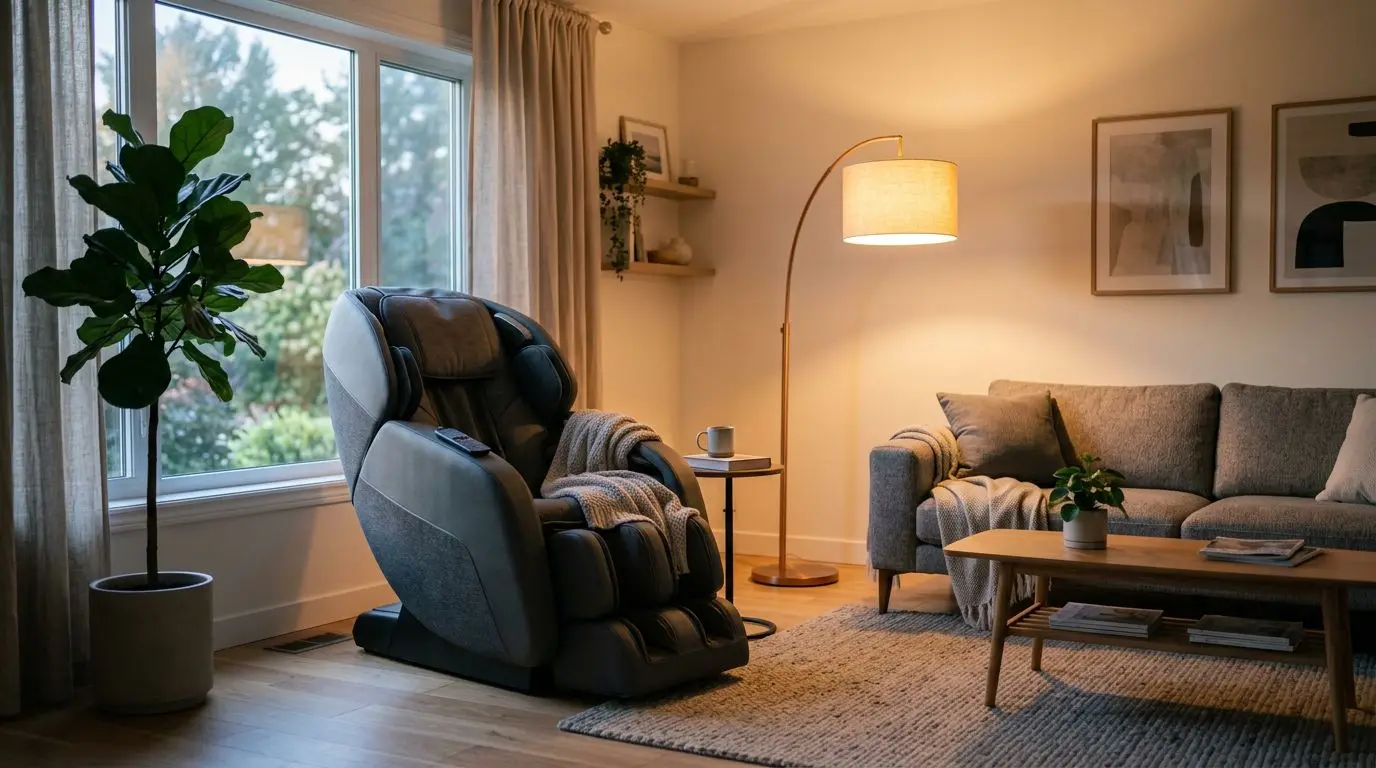
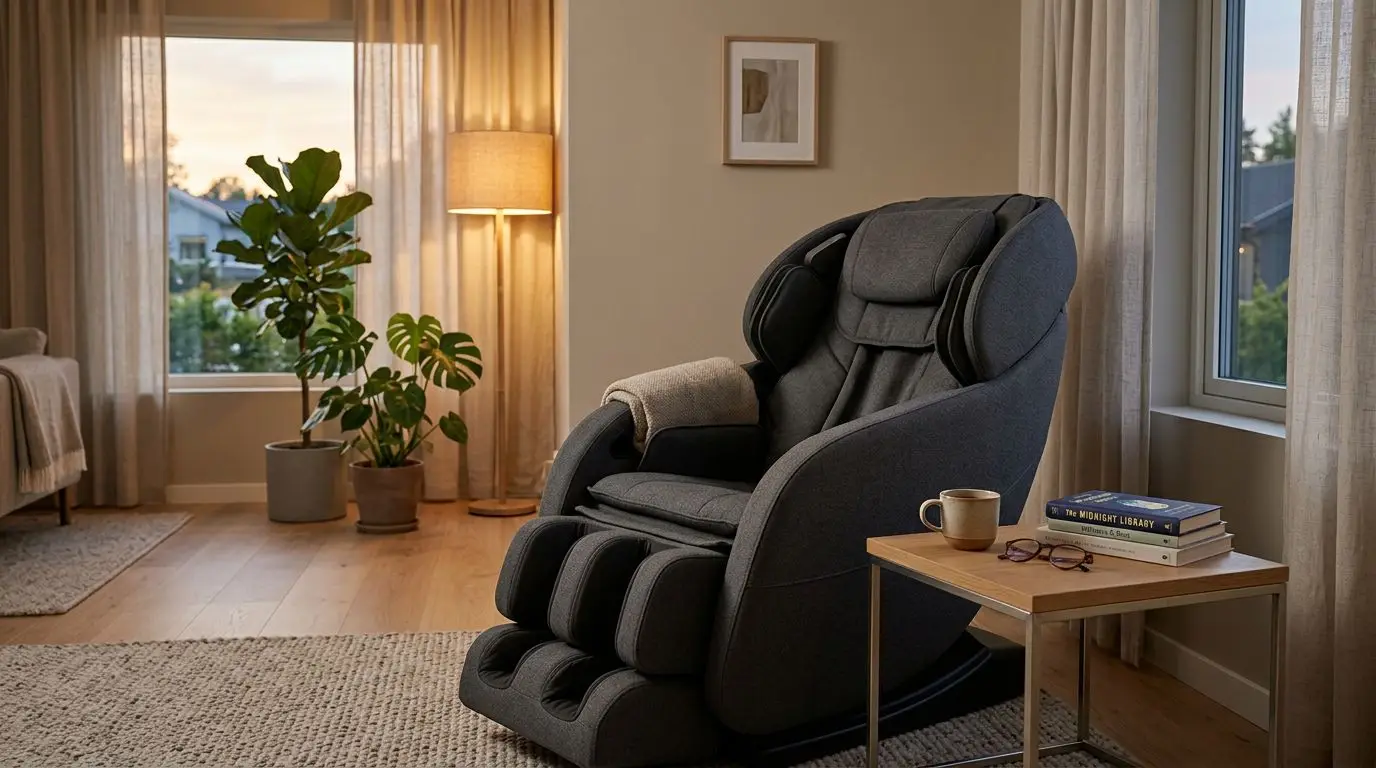
Think about placement as part of the routine. A chair in a basement corner may be used less than one near a reading lamp, a small side table and a clear outlet. Convenience drives consistency.
Comfort expectations after 1 week of home use
The first week is usually about learning the chair. Try several programs, but start with the gentlest setting for the first 3 to 5 sessions. Even if you like strong pressure, a new roller pattern can feel more intense than expected once you are fully reclined.
Wear normal comfortable clothing, remove bulky items from pockets and avoid sitting on belts, wallets or hard seams. Small details change the feel. A zipper under a roller can turn a relaxing session into an annoying one.
Pay attention to what your body prefers, not what the control panel calls the program. A chair's “stretch,” “night,” “refresh” or “full body” label is just a preset name. What matters is where it applies pressure, how long it stays there and whether you can relax into it.
A useful routine might be 15 minutes after work, 20 minutes on a weekend morning or a short session before reading at night. More time is not automatically better. If the pressure starts to feel irritating, stop the session or lower the intensity.
Safety notes: ask a physician in these 8 situations
Massage chairs are consumer wellness products, and they are not appropriate for everyone. If any of the following apply to you, ask your physician before using a massage chair: pregnancy, a pacemaker or other implanted cardiac device, blood clots or anticoagulant use, osteoporosis, recent fracture, recent surgery, spinal disc problems, neuropathy or uncontrolled hypertension.
Use caution as well if you have reduced sensation in your feet, legs or back. If you cannot clearly feel pressure or heat, it may be harder to judge when a session is too intense. Stop immediately if you feel sharp pain, numbness, dizziness or unusual discomfort.
Children should not use a massage chair without adult supervision, and pets should be kept away from moving footrests, reclining bases and side panels. A reclining chair has pinch points. Treat it like any powered furniture.
Read the manual before first use. Look for instructions on maximum session length, heat use, cleaning, electrical safety and emergency stop controls. A 10-minute setup review is not exciting, but it can prevent avoidable problems.
Massage chair vs. other relaxation tools: 5 practical differences
A massage chair is only one way to build a home relaxation space. It is more immersive than a handheld massager and more convenient than scheduling an appointment, but it takes more space and costs more than small accessories.
| Option | Best strength | Main limitation |
|---|---|---|
| Massage chair | Full seated routine with back, leg and recline features | Large footprint and fixed mechanical patterns |
| Handheld massager | Targeted pressure in small areas | Requires effort and arm reach |
| Massage cushion | Lower cost and easier storage | Less coverage and fewer adjustments |
| Recliner with heat | Comfortable lounging | Usually lacks roller and air compression systems |
| Professional appointment | Human judgment and technique variation | Requires scheduling, travel and ongoing appointments |
The best choice depends on how you relax. If you want a daily sit-down ritual with little setup, a chair has an advantage. If you only want occasional shoulder pressure, a smaller tool may be enough.
Household use also matters. A chair can serve multiple adults if it has broad adjustability, but if only one person will use it once a month, the space commitment may be hard to justify.
FAQ: 5 questions people ask before bringing one home
Can a massage chair help me feel less stressed?
It can help create a relaxing routine by giving you a quiet place to sit and experience steady, controlled pressure. That is different from saying it addresses stress as a health condition. Think of it as a comfort tool, not a medical solution.
How often should I use a massage chair?
Many people start with 15 minutes a few times per week and adjust from there. Follow the chair's manual, use lower intensity at first and stop if the session feels uncomfortable.
Is stronger pressure better?
Not always. Strong pressure can feel satisfying to some users, but relaxation often depends on comfort, body fit and control. A chair with adjustable intensity is usually safer to share than one that is always forceful.
Do I need zero gravity?
No. Zero-gravity recline can make a session feel more immersive, but a well-fitting upright or partially reclined chair can still be comfortable. Try to prioritize fit, roller placement and easy controls first.
Where should I put a massage chair?
Choose a spot with enough recline clearance, a grounded outlet and room to enter and exit safely. A practical setup might include 2 to 3 feet of walking space nearby and a small table for glasses, a phone or water.
Bottom line: a 20-minute routine works best when it is easy to repeat
The most useful massage chair is not the one with the longest feature list. It is the one that fits your body, fits your room and lets you choose a comfortable 15- to 30-minute session without fuss.
For stress-focused relaxation, look for quiet operation, adjustable intensity, a track style that matches your desired coverage and presets you will actually use. Keep expectations grounded: a massage chair is a home comfort product designed to feel soothing, structured and convenient. Used thoughtfully, it can become a dependable part of how you unwind at home.
Frequently asked questions
Can a massage chair help me feel less stressed? +
It can support a relaxing routine by giving you a quiet place to sit and experience controlled pressure. It should be viewed as a consumer comfort product, not a medical solution for stress.
How long should a home massage chair session be? +
Many preset sessions run 15 to 30 minutes. Start with shorter, lower-intensity sessions and follow the manufacturer's manual for time limits.
Is zero gravity necessary for relaxation? +
No. Zero-gravity recline can feel immersive, but fit, pressure control, quiet operation and comfortable roller placement usually matter more.
What features matter most for a calming routine? +
Look for adjustable intensity, quiet operation, comfortable recline, simple presets, and heat if you enjoy mild warmth. The best features are the ones you will use regularly.
Who should ask a physician before using a massage chair? +
Ask a physician if you are pregnant or have a pacemaker or implanted cardiac device, blood clots or anticoagulant use, osteoporosis, recent fracture or surgery, spinal disc problems, neuropathy or uncontrolled hypertension.
Related guides
Massage Chairs for Stress Relief and Better Sleep: What to Expect from Regular Use
11 min read
Are Massage Chairs Good or Bad for You? Benefits, Risks, and Safe Use Guidelines
13 min read
Is a Massage Chair Worth It? Benefits, Limitations, and Who Should Buy One
13 min read
How to Choose a Massage Chair for Home Use
14 min read
Best Massage Chair Features to Look For Before You Buy
13 min read