Disclosure: We may earn a commission when you buy through links on this page, at no extra cost to you. We buy nothing, sell nothing and accept no payment for coverage — commissions never decide what we recommend. How we make money.
A massage chair is usually better if you want low-effort, consistent pressure across your back, neck, hips, calves, or feet for 10 to 20 minutes. A foam roller is usually better if you want targeted pressure, portability, and active control over a specific tight area. Neither one fixes an underlying medical issue; both are consumer wellness tools that may help you feel temporarily looser and more comfortable when used sensibly.
The 60-second answer: passive comfort vs active control
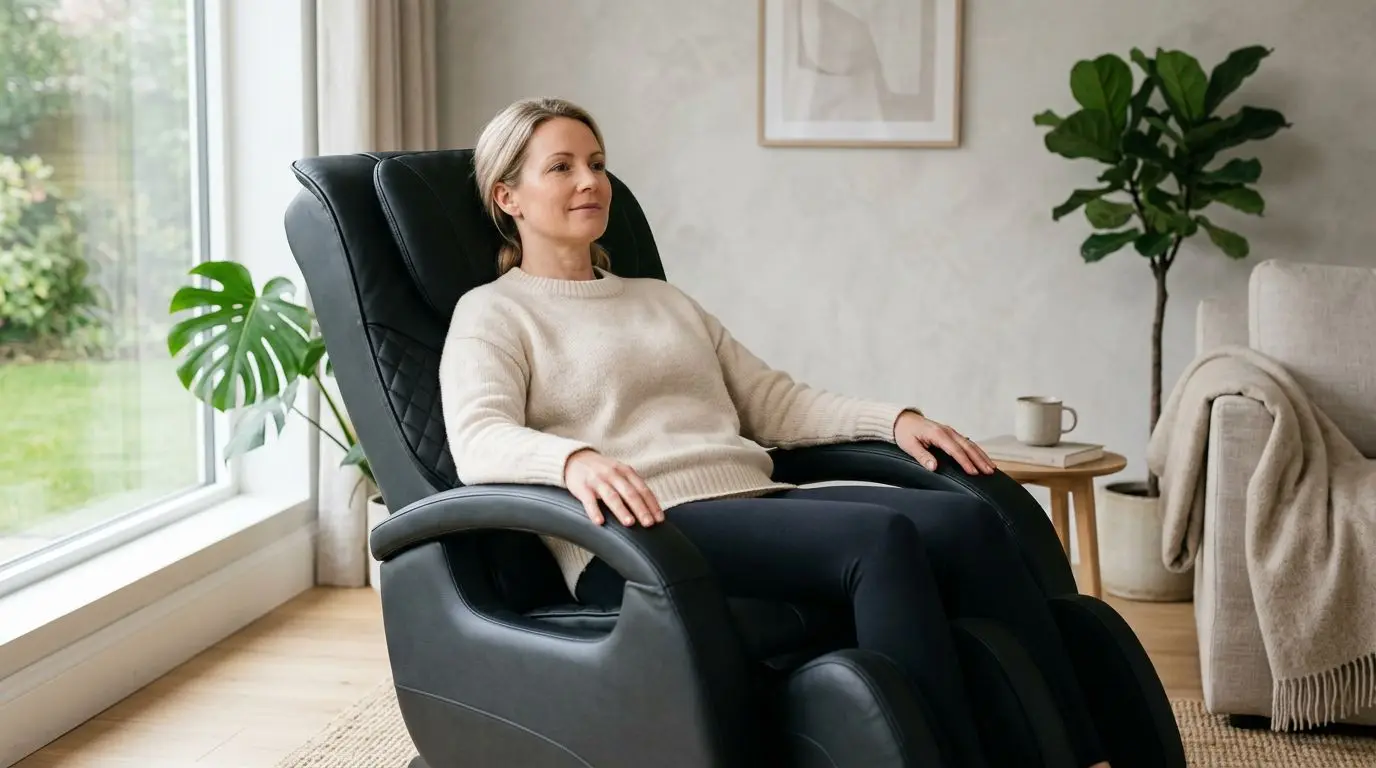
The main difference is effort. A massage chair does the work for you with motorized rollers, airbags, heat in some areas, and preset programs that commonly run 10, 15, or 20 minutes. You sit down, choose an intensity, and let the chair deliver a repeatable routine.
A foam roller asks more from you. You use body weight, floor position, and small movements to apply pressure to one muscle area at a time. That makes it less relaxing for many people, but also more precise. If your tight spot is the outer thigh, upper glute area, calves, or lats, a roller can be placed exactly where a chair may not reach.
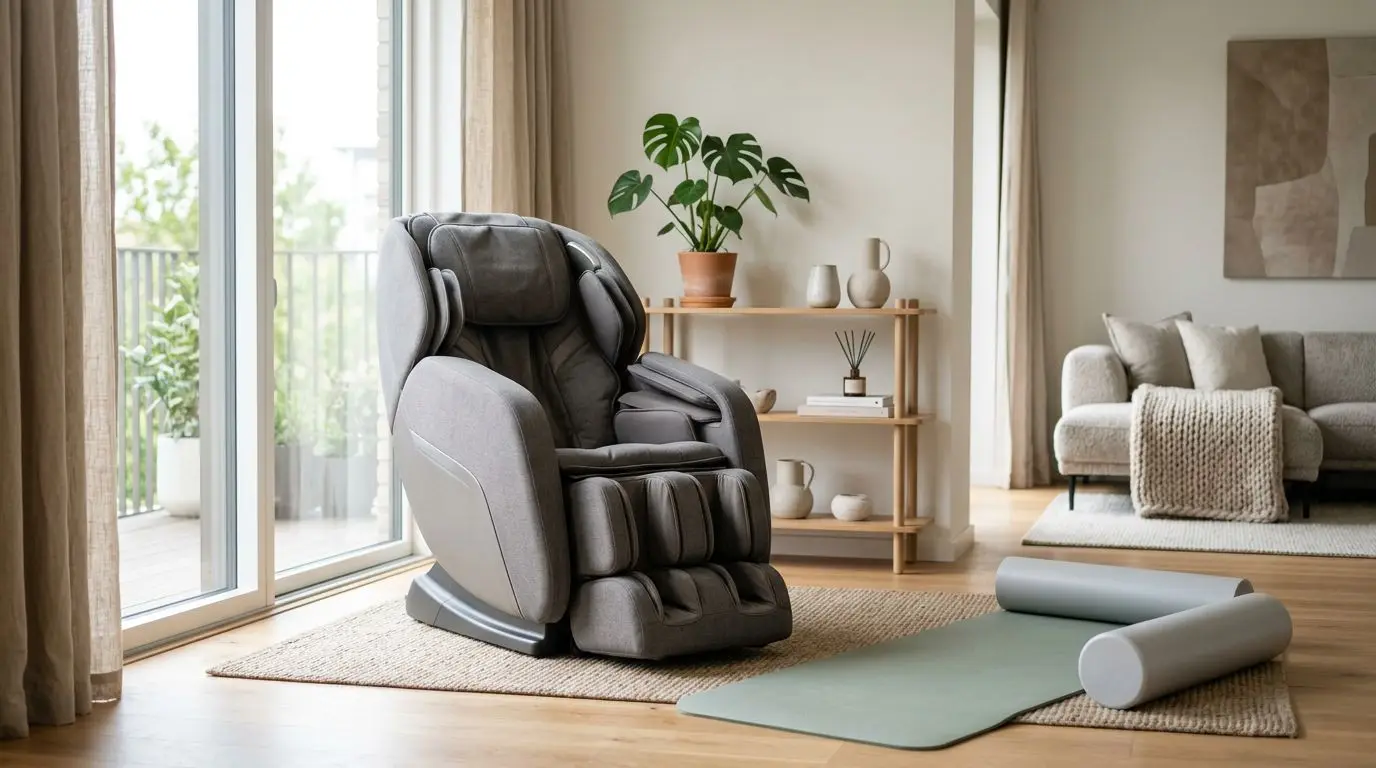
For most households, the best answer is not either-or. A massage chair is the comfort-first choice for regular unwinding after long workdays. A foam roller is the practical, low-space tool for targeted spots and pre- or post-workout routines.
How they work: 2 different ways to create pressure
A massage chair uses mechanical pressure. Depending on the chair type, rollers may move up and down an S-track, an L-track, or an SL-track. An S-track follows the curve of the spine from the neck to the lower back. An L-track continues under the seat toward the glutes and upper hamstrings. Some chairs use 2D rollers that move up and down and side to side, while 3D and 4D designs can add more depth control and rhythm variation.
Foam rolling uses active pressure. A common roller is about 5 to 6 inches in diameter and 12 to 36 inches long. You place a body area on the cylinder, then shift your weight to adjust pressure. A short roller fits smaller spaces and travel bags. A 36-inch roller provides more stability for back and mobility work.
The pressure feels different too. A chair can feel rhythmic, predictable, and cushioned by upholstery. A foam roller feels more direct because there is less padding between you and the pressure point. That directness is useful, but it can be too intense if you put your full body weight into one spot too quickly.
| Option | Pressure source | Typical session length | Main strength | Main limitation |
|---|---|---|---|---|
| Massage chair | Motorized rollers, airbags, recline, optional heat | 10 to 20 minutes | Low effort and consistent comfort | Less precise for small tight spots |
| Foam roller | Your body weight and movement | 5 to 15 minutes | Targeted pressure and control | Requires floor work and effort |
Comfort and effort: 0 floor work vs body-weight pressure
If comfort is the deciding factor, a massage chair has the edge. You do not need to get on the floor, hold a plank-like position, or support yourself with your arms. This matters if you are tired after an 8-hour desk day, have limited patience for stretching routines, or simply want a repeatable way to decompress while seated.
Massage chairs also make intensity easier to manage. Many chairs offer 3 to 5 intensity levels, adjustable recline, and separate air compression zones. You can usually reduce pressure by sitting more upright, adding a light blanket, or choosing a gentler program. The experience is more passive and predictable.
Foam rolling takes coordination. Rolling the calves is fairly simple. Rolling the quads, outer thighs, lats, or glutes can require balance and upper-body strength. You may need to support part of your weight with your hands or opposite leg, then move slowly over a 4- to 8-inch area. That effort can be a plus if you like active self-care. It can be a drawback if you want to relax.
There is a learning curve as well. Beginners often press too hard, move too fast, or spend too long on one tender spot. A better approach is to use moderate pressure, breathe normally, and keep each area brief at first. Discomfort should stay manageable. Sharp, electric, or unusual sensations are a sign to stop.
Coverage and precision: 1 chair track vs 1 portable cylinder
Massage chairs win on broad coverage. A full-size chair can cover the neck, upper back, mid-back, lower back, seat area, calves, and feet depending on its design. Chairs with extended tracks may reach from the neck to under the glutes, while air cells can apply squeeze-like pressure around the shoulders, arms, calves, or feet.
That broad coverage helps when you do not have one obvious tight spot. If your whole back feels tense after sitting at a computer for 6 hours, a chair can feel more complete than rolling one area at a time. It also keeps your position stable, which makes it easier to use consistently.
Foam rollers win on precision and body areas that chairs often miss. A roller can work along the calves, quads, hamstrings, glutes, lats, and upper back. You can angle your body by a few degrees and immediately change the pressure point. A chair cannot always do that, especially around the side hip, outer thigh, or shoulder blade edge.
Foam rolling the lower back deserves caution. Many people place a roller directly under the lumbar spine and arch over it aggressively. That is not a good default. If you use a roller near the lower back, keep movements controlled, avoid forcing extension, and consider focusing on nearby areas such as glutes, hips, and upper back instead.
| Feature | Massage chair | Foam roller | Better choice |
|---|---|---|---|
| Full-back comfort | Strong, especially with S-track or SL-track designs | Possible, but requires repositioning | Massage chair |
| Glutes and upper hamstrings | Better with L-track or SL-track chairs | Very adjustable | Tie, depending on preference |
| Calves | Good if the chair has calf rollers or airbags | Good and easy to target | Tie |
| Outer thighs and lats | Limited on many chairs | Strong precision | Foam roller |
| Neck and shoulders | Good if roller height fits your body | Limited and awkward for many users | Massage chair |
Cost, space, and upkeep: 0 outlets vs a full-size recliner
A foam roller is the simpler purchase. It needs no outlet, no assembly beyond unwrapping it, and almost no maintenance. Most rollers fit in a closet, under a bed, or beside a workout mat. A 12- to 18-inch roller is easy to store, while a 36-inch roller is more stable but takes more room.
A massage chair is furniture. Many full-size chairs are roughly recliner-sized, often around 30 to 36 inches wide, and they can weigh well over 100 pounds. Some need only a few inches behind them if they have a space-saving recline design, while others need more rear clearance. Always check the required wall clearance before buying, because 2 inches and 18 inches are very different in a small room.
Upkeep is different too. A foam roller can be wiped down and replaced when it compresses, cracks, or loses shape. A massage chair has motors, upholstery, remote controls, airbags, and moving parts. It may offer a longer-lasting experience, but it is also harder to move and more complicated to repair.
On cost, foam rollers are the budget-friendly option by a wide margin. Massage chairs cost more because they combine furniture, electronics, motors, and moving massage mechanisms. If you are not sure you will use either tool consistently, a foam roller is the lower-risk starting point. If you already know you prefer passive comfort and will use a chair several times a week, the larger footprint may be easier to justify.
Realistic results: what to expect after 1 session and 4 weeks
After one session, the realistic goal is a temporary change in how your muscles feel: warmer, less guarded, more relaxed, or easier to move. Some people feel a noticeable difference after 10 minutes in a chair. Others need a few sessions to find the right intensity, recline angle, and program.
Foam rolling can feel more immediate in one specific area because the pressure is targeted. For example, 60 to 90 seconds on each calf may make your lower legs feel less stiff before a walk. The tradeoff is that the sensation may be more intense, and overdoing it can leave the area feeling irritated rather than comfortable.
Over 4 weeks, consistency matters more than intensity. A gentle 10-minute routine used 4 days a week is usually easier to sustain than one hard session you dread repeating. With a chair, that might mean a short back-and-calf program after work. With a foam roller, it might mean 5 minutes on calves, quads, glutes, and upper back after exercise.
Do not expect either tool to solve persistent or unusual tightness by itself. If muscle tightness is severe, one-sided, linked with swelling, numbness, weakness, chest discomfort, shortness of breath, or follows an injury, do not try to self-manage it with a chair or roller. Ask a qualified medical professional what is appropriate for you.
Who it is best for: 5 common use cases
1. The tired desk worker. A massage chair is usually the better fit. It gives broad back and neck coverage without asking you to get on the floor after a long day. Look for adjustable intensity and a track that fits your height.
2. The active gym user. A foam roller is often more useful. You can target quads, calves, glutes, lats, and hamstrings in short sessions before or after workouts. A firmer roller may suit experienced users, while beginners should start softer.
3. The person who dislikes intense pressure. A massage chair may be easier to control, especially with lower intensity settings and cushioning. A smooth, medium-density foam roller can also work, but avoid very hard or heavily textured rollers at first.
4. The small-apartment shopper. A foam roller is the clear winner for space. A 12-inch roller can fit in a drawer or gym bag. A full-size massage chair needs a dedicated footprint, power access, and room to recline.
5. The household with multiple users. A massage chair can be convenient if several people want seated, low-effort sessions. The catch is body fit. A chair that feels great to a 5-foot-6 user may not line up as well for someone who is 6-foot-3. A foam roller adjusts to almost anyone because the user controls position.
How to choose and measure in 15 minutes
Start with your main tight area. If it is mostly back, neck, calves, or feet, compare massage chair features first. If it is quads, outer thighs, lats, glutes, or a specific small area, compare foam rollers first. Write down the top 2 body zones you care about; that keeps the purchase practical.
For a massage chair, measure the room before you shop. Note the floor space available, the distance to the nearest outlet, doorway width, and rear clearance. Many chairs are difficult to move once placed, and some require at least 30 inches of doorway clearance depending on packaging and assembly. Also check user height and weight guidelines from the manufacturer.
Next, compare track type. An S-track is usually enough for back-focused comfort. An L-track or SL-track is worth considering if seat and glute coverage matter. If you are sensitive to pressure, prioritize adjustable intensity over the largest feature list. A chair with 3 good intensity settings may be more useful than one with many programs you never use.
For a foam roller, choose length and firmness. A 36-inch smooth roller is the most stable for beginners and useful for upper-back work. A 12- to 18-inch roller is easier to store and travel with. Soft foam is more forgiving. Medium density is a common middle ground. Very firm or deeply textured designs create stronger pressure and are not the best first choice for everyone.
Try this quick decision test: if you want to sit down and let the device run for 15 minutes, choose a massage chair. If you want to control the exact spot and pressure with your own movement, choose a foam roller. If both sound useful, start with the lower-cost, lower-space option unless you already know you prefer passive seated comfort.
Safety notes before a 10- to 20-minute session
Massage chairs and foam rollers are consumer wellness products, not medical devices. Use them for comfort, relaxation, and the feeling of muscle looseness, not as a substitute for medical advice. Start light, especially during the first week.
Ask your physician before using a massage chair or foam roller if you are pregnant, have a pacemaker or other implanted cardiac device, have a history of blood clots, take anticoagulants, have osteoporosis, recently had a fracture or surgery, have spinal disc problems, have neuropathy, or have uncontrolled hypertension. These situations deserve specific guidance, not guesswork.
Stop using either option if you feel sharp pain, numbness, tingling, dizziness, unusual swelling, skin changes, or symptoms that feel out of proportion to the pressure. Avoid using strong pressure over bruises, open skin, inflamed areas, or directly over bones and joints. More intensity is not automatically better.
For massage chairs, begin with the lowest setting and a shorter program, such as 10 minutes. For foam rollers, start with 30 to 60 seconds per area and moderate pressure. You can always add time later.
FAQ: 5 practical questions
Is a massage chair better than a foam roller for tight back muscles?
Usually, yes, if you want broad back comfort with little effort. A chair can cover the upper, mid, and lower back in one seated session. A foam roller can work well for the upper back, but it requires floor positioning and is less convenient for the neck and lower back.
Can a foam roller replace a massage chair?
It can replace a chair for targeted pressure and portability, but not for the same passive experience. A roller is best when you are willing to move, balance, and adjust your body position. A chair is better when ease and repeatability are the priority.
How long should I use either one?
For a massage chair, many preset programs run 10 to 20 minutes. For a foam roller, start with 30 to 60 seconds per area and build gradually if it feels comfortable. Longer or harder sessions are not always better.
Which is better for beginners?
A massage chair is easier for beginners because it requires less technique. For foam rolling, beginners should choose a smooth, softer or medium-density roller and avoid aggressive pressure at first.
Should I buy both?
Buy both only if they solve different problems for you. A chair can be your low-effort relaxation tool, while a roller can handle specific areas the chair misses. If budget or space is limited, start with the option you are most likely to use 3 or 4 times a week.
Frequently asked questions
Is a massage chair better than a foam roller for tight back muscles? +
Usually, yes, if you want broad back comfort with little effort. A chair can cover the upper, mid, and lower back in one seated session. A foam roller can work well for the upper back, but it requires floor positioning and is less convenient for the neck and lower back.
Can a foam roller replace a massage chair? +
It can replace a chair for targeted pressure and portability, but not for the same passive experience. A roller is best when you are willing to move, balance, and adjust your body position. A chair is better when ease and repeatability are the priority.
How long should I use either one? +
For a massage chair, many preset programs run 10 to 20 minutes. For a foam roller, start with 30 to 60 seconds per area and build gradually if it feels comfortable. Longer or harder sessions are not always better.
Which is better for beginners? +
A massage chair is easier for beginners because it requires less technique. For foam rolling, beginners should choose a smooth, softer or medium-density roller and avoid aggressive pressure at first.
Should I buy both? +
Buy both only if they solve different problems for you. A chair can be your low-effort relaxation tool, while a roller can handle specific areas the chair misses. If budget or space is limited, start with the option you are most likely to use 3 or 4 times a week.
Related guides
Are Massage Chairs Good or Bad for You? Benefits, Risks, and Safe Use Guidelines
13 min read
Best Massage Chair Features to Look For Before You Buy
13 min read
Massage Chairs for Back Pain: When They May Help and When to Be Cautious
12 min read
How to Choose a Massage Chair for Home Use
14 min read
Massage Chair vs. Massage Gun: Which At-Home Recovery Tool Should You Choose?
14 min read