Disclosure: We may earn a commission when you buy through links on this page, at no extra cost to you. We buy nothing, sell nothing and accept no payment for coverage — commissions never decide what we recommend. How we make money.
A full-body massage chair can help you unwind, ease everyday muscle tension, and build a more consistent head-to-toe relaxation routine in about 15 to 30 minutes. It works best as a comfort and wellness tool, not as a medical treatment or a substitute for hands-on care from a qualified professional.
Its biggest benefit is coverage. Instead of focusing only on the back, a full-body chair may work the neck, shoulders, spine, glutes, calves, and feet in one seated session. The limits matter too: a chair cannot diagnose pain, correct an injury, cure a chronic condition, or adapt with the same judgment as a trained massage therapist.
What a full-body massage chair does in a 15–30 minute session
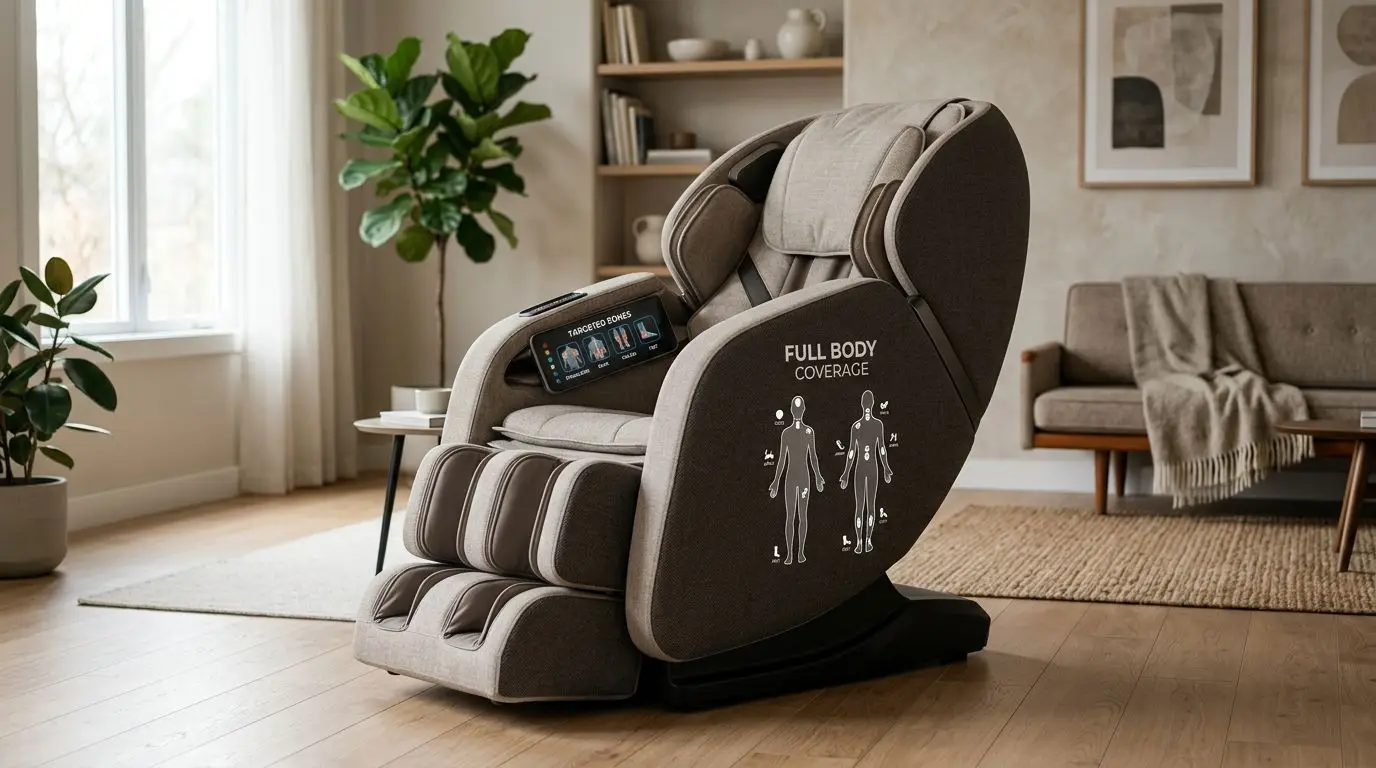
A full-body massage chair combines moving rollers, air compression, heat, vibration, foot rollers, and reclining positions to create a structured massage experience. Most automatic programs run somewhere around 15 to 30 minutes, long enough for a relaxation session without turning the chair into an all-evening commitment.
The chair’s core job is mechanical. Rollers travel along a track behind your back, while airbags inflate and deflate around areas such as the shoulders, arms, calves, or feet. Depending on the chair type, the roller path may stop near the lower back or continue under the seat toward the glutes and hamstrings.
Common full-body zones include:
- Neck and shoulders: roller kneading, tapping, or air compression near the upper back.
- Mid and lower back: rolling, kneading, stretching, and heat in the lumbar area.
- Hips and glutes: extended-track roller coverage or seat-based air compression.
- Arms and hands: airbags that compress and release around the forearms.
- Calves: air compression, kneading-style pressure, or vibration depending on design.
- Feet: rollers under the soles, air pressure over the instep, and sometimes heat.
That broad coverage is why shoppers often use the phrase “head-to-toe,” though it helps to be precise. Most chairs do not massage the scalp, face, front of the torso, or every inch of the body. The experience is closer to a coordinated seated massage for the back side of the body, legs, feet, and arms.
7 realistic full-body massage chair benefits for daily comfort
The strongest case for a full-body massage chair is consistency. A chair in your home can be used several times per week, often exactly when you need a reset: after work, after a long drive, or before bed. That convenience can make relaxation more repeatable than an occasional appointment.
1. Temporary relief from everyday muscle tightness
Rollers and airbags can help loosen areas that feel tight from sitting, standing, commuting, or exercise. This is not the same as treating an injury, but many people find that rhythmic pressure helps the body feel less guarded after a long day.
2. A calmer wind-down routine
A 20-minute session can act like a boundary between work and home time. The fixed program length helps because you are not scrolling, multitasking, or trying to squeeze relaxation into 3 distracted minutes.
3. Better whole-body comfort after sitting
People who spend 6 to 8 hours at a desk often feel stiffness through the neck, shoulders, lower back, hips, and calves. A full-body chair can address several of those areas in one session, especially if it has an extended track, calf compression, and foot rollers.
4. Foot and calf relief after standing
If your job keeps you on your feet, lower-body features may matter more than the back program. Air compression around the calves and rolling under the soles can feel especially helpful after retail, healthcare, warehouse, teaching, or service work.
5. Support for a regular self-care habit
Wellness benefits often come from repeatable habits, not one intense session. Using a chair 3 or 4 times per week at moderate intensity is usually more practical than waiting until your back feels completely locked up.
6. Shared household convenience
A full-body chair can serve more than one adult if it has adjustable shoulder detection, footrest extension, and intensity settings. That is one reason fit range matters. A chair that works for a 5 ft 2 in user and a 6 ft 2 in user will need more adjustability than a chair used by one person.
7. A low-effort way to relax
Some wellness routines require planning, travel, or motivation. A chair is simple: sit down, select a program, and let the session run. That ease is a real benefit for people who will actually use the chair regularly.
What head-to-toe massage can’t do: 5 important limits
A massage chair can feel excellent and still have limits. Clear expectations help protect you from overspending, overusing the chair, or expecting medical results from a comfort product.
| Expectation | Reality |
|---|---|
| Cure back pain | It may temporarily ease tension, but it does not diagnose or treat the cause of pain. |
| Replace physical therapy | It cannot evaluate movement, prescribe exercises, or track clinical progress. |
| Fix posture | It may relax tight areas, but posture also depends on strength, habits, desk setup, and mobility. |
| Match a therapist’s judgment | A chair follows preset patterns and sensors; a professional can adapt moment by moment. |
| Work for every body | Fit, height, weight capacity, sensitivity, and medical history all affect comfort and safety. |
Be especially cautious if you have a recent injury, severe osteoporosis, uncontrolled blood pressure, blood clot risk, implanted medical devices, neuropathy, recent surgery, or are pregnant. That does not automatically mean a chair is off-limits, but it does mean you should ask a qualified clinician before using strong compression, deep rollers, heat, or inversion-like recline.
Pain is also a stop sign. A massage chair may create firm pressure, but it should not cause sharp pain, numbness, dizziness, bruising, or symptoms that last well beyond the session. More intensity is not automatically better.
Who it’s best for: 6 common full-body chair users
A full-body massage chair is most useful for people who want convenient, repeatable relaxation across multiple body zones. It is not only for athletes or people with back stiffness. The right user values comfort, has room for the chair, and understands the difference between wellness support and medical care.
- Desk workers: good candidates if neck, shoulder, low-back, hip, or calf stiffness builds after 6 or more seated hours.
- People who stand for work: may benefit from calf and foot features after long shifts on hard floors.
- Active adults: can use gentle programs on rest days to relax tight-feeling muscles after training, walking, cycling, or yard work.
- Households with multiple users: may appreciate automatic body scanning, adjustable footrests, and multiple intensity levels.
- People building a bedtime routine: low-intensity massage and mild heat can make it easier to transition out of the day.
- Careful comfort seekers: those who prefer predictable pressure may like that the chair delivers the same program each time.
It may not be the best choice if you dislike confined leg wells, are very sensitive to pressure, have limited space, or need hands-on therapeutic assessment. It also may not make sense if you only want a back massage and do not care about legs, feet, arms, or recline.
How to choose and measure: 4 numbers to check before buying
Fit is one of the most overlooked parts of buying a full-body massage chair. Before comparing features, check 4 practical numbers: user height range, weight capacity, chair width, and required recline clearance.
1. User height range
Many full-size chairs are designed around average adult heights, but the usable range varies. If you are under about 5 ft 2 in or over about 6 ft 2 in, pay close attention to shoulder detection, neck roller position, and footrest extension. A neck massage that lands at the upper back is not a neck massage.
2. Weight capacity
Weight capacity is both a safety and durability issue. Do not assume every chair supports every adult. Check the stated limit and leave a reasonable margin when possible, especially if the chair uses a moving footrest, reclining base, or lifting mechanisms.
3. Seat, shoulder, and leg fit
Look at the inner seat width, shoulder area, calf well width, and foot compartment length. A chair can have strong massage technology and still feel wrong if your shoulders are squeezed or your calves do not sit properly in the leg wells.
4. Recline and wall clearance
Massage chairs are large. A typical full-size chair may be roughly 30 to 36 inches wide and 55 to 65 inches long when upright, with additional room needed to recline. Space-saving designs may need only a few inches behind the chair, while other designs may require much more clearance. Measure the path into the room too, including doorways, corners, and stairs.
A simple measuring process helps:
- Measure the chair location with tape, not guesswork.
- Leave walking space around at least one side.
- Check doorway width before delivery.
- Confirm ceiling clearance if the chair reclines dramatically.
- Make sure an outlet is nearby; avoid creating a tripping hazard with cords.
Types compared: 3 track designs and what they feel like
The massage track determines where the rollers can travel. This is one of the most important differences between a basic back-focused chair and a more complete full-body design.
| Track type | Typical coverage | Best for | Trade-off |
|---|---|---|---|
| S-track | Neck to lower back, following the spine’s curve | Users who mainly want back and shoulder work | Usually less coverage through glutes and upper hamstrings |
| L-track | Neck down the back and under the seat | People who want glute and hip-area coverage | May not recline or stretch the same way as some other designs |
| SL-track | Curved spine path plus extended seat coverage | Shoppers wanting broad back-to-glute coverage | Often requires careful fit testing because roller position matters more |
Roller style matters too. A 2D roller generally moves up and down and side to side. A 3D roller adds depth adjustment, so pressure can feel lighter or stronger. A 4D system usually varies speed and rhythm in addition to depth, though naming can vary across the industry. Do not buy the biggest number automatically. A well-fitted 3D chair at moderate intensity can feel better than an aggressive chair that misses your shoulders.
Feature comparison: 8 common options and when they matter
Full-body chairs can include a long list of features, but not every feature changes the experience equally. Focus on the functions that match your body and routine.
| Feature | What it does | Worth prioritizing if... |
|---|---|---|
| Body scanning | Estimates shoulder height and body position before a program | Multiple people will use the chair |
| Zero-gravity recline | Tilts the body back to spread weight and reduce pressure points | You want a more floating, reclined feel |
| Heat | Warms areas such as the low back, calves, or feet | You prefer gentle warmth during 15–30 minute sessions |
| Air compression | Inflates airbags around arms, shoulders, calves, or feet | You like squeezing pressure more than deep rolling |
| Foot rollers | Apply rolling pressure under the soles | Your feet feel tired after standing or walking |
| Calf kneading or compression | Works the lower legs through pressure or movement | You want lower-body comfort, not just back massage |
| Manual zone control | Lets you focus on one area instead of running a full program | You often want 5–10 minutes on the same tight area |
| Intensity adjustment | Changes roller depth, air pressure, or program strength | Users in the home have different pressure preferences |
One caution: feature count can distract from comfort. A chair with 20 named programs is not automatically better than one with fewer, clearer programs and better fit. Sit position, roller alignment, pressure range, and ease of controls usually matter more in daily use.
Safe use: start with 10–15 minutes and build slowly
If you are new to massage chairs, begin with short, low-intensity sessions. Ten to 15 minutes is enough to learn how your body responds. You can increase duration or intensity later if the experience feels comfortable during and after the session.
Use these practical guidelines:
- Start on the gentlest automatic program.
- Use a towel or pad if rollers feel too intense.
- Avoid using high heat if your skin sensation is reduced.
- Do not fall asleep in a deep program until you know how your body reacts.
- Stop if you feel sharp pain, tingling, numbness, dizziness, or unusual discomfort.
- Give your body a rest day if you feel sore after a strong session.
Many people prefer one session per day, while others use the chair a few times per week. The right frequency depends on sensitivity, pressure level, and why you are using it. Gentle relaxation can usually be more frequent than deep, intense roller work.
Hydration, light stretching, and movement still matter. A massage chair can support a wellness routine, but it should not become the only thing you do for mobility, strength, sleep habits, or stress management.
FAQ: 5 questions about full-body massage chair benefits
Are full-body massage chairs actually good for you?
They can be a good wellness tool for relaxation and temporary relief from everyday muscle tension. The key is using moderate pressure, choosing a chair that fits, and not treating it as a medical device unless your clinician has specifically advised you.
How long should you sit in a full-body massage chair?
Most people should start with 10 to 15 minutes, especially on a new chair. If you feel good afterward, a typical 15 to 30 minute automatic program may be reasonable. Longer is not always better.
Can a massage chair help with back pain?
It may help some people feel temporary comfort when back tightness is related to daily strain, sitting, or general muscle tension. Persistent, severe, radiating, or injury-related back pain should be evaluated by a healthcare professional.
Is zero-gravity recline necessary?
No. Zero-gravity recline can make the massage feel more evenly distributed and relaxing, but it is not required for everyone. Fit, roller placement, and pressure control are usually more important.
What is the difference between full-body and back-only chairs?
A back-only chair mainly focuses on the neck, shoulders, and spine. A full-body chair adds features for areas such as the glutes, arms, calves, and feet, often using an extended track and air compression.
A full-body massage chair is most valuable when you buy it for the right reason: convenient, repeatable comfort. It can help you relax from head to toe, but it cannot replace medical care, skilled bodywork, exercise, or good daily movement habits. Choose for fit first, features second, and intensity last.
Frequently asked questions
Are full-body massage chairs actually good for you? +
They can support relaxation and temporary relief from everyday muscle tension when used at a comfortable intensity. They should not be treated as a cure or a substitute for medical care.
How long should you use a full-body massage chair? +
Start with 10 to 15 minutes on a gentle setting. If it feels comfortable during and after the session, many users move to typical 15 to 30 minute programs.
Can a massage chair help with back pain? +
It may provide temporary comfort for general tightness or strain, but persistent, severe, radiating, or injury-related back pain should be evaluated by a healthcare professional.
Is an L-track or SL-track better for full-body massage? +
An L-track or SL-track usually provides more coverage through the glutes and seat area than a basic S-track. The better choice depends on fit, comfort, and whether you want lower-body coverage.
What features matter most in a full-body massage chair? +
Fit, roller alignment, adjustable intensity, track coverage, calf and foot comfort, and easy controls matter more than the number of preset programs.
Related guides
Full-Body Massage Chairs Explained: What They Massage, What They Miss, and Who They Fit Best
14 min read
Massage Chairs for Back Pain: When They May Help and When to Be Cautious
12 min read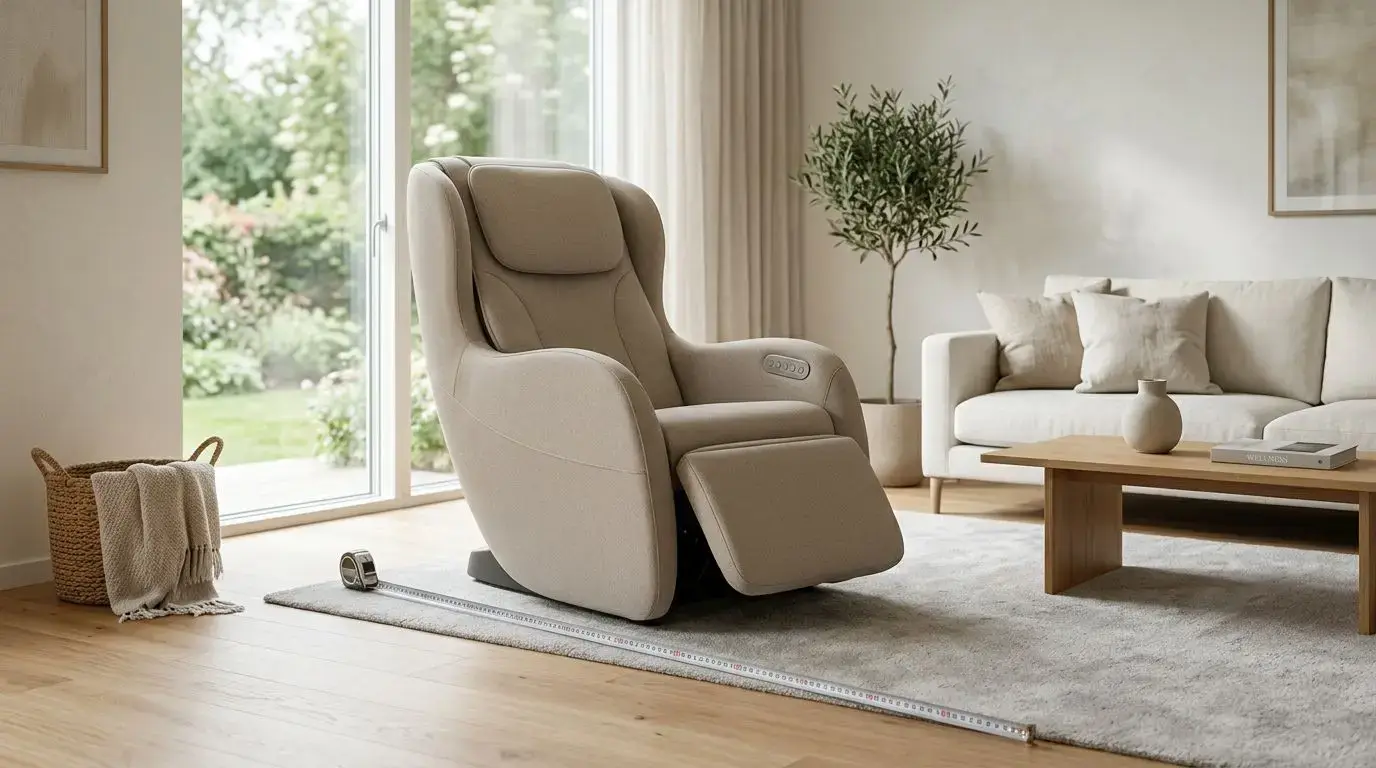
Is a Massage Chair Worth It? Benefits, Limitations, and Who Should Buy One
13 min read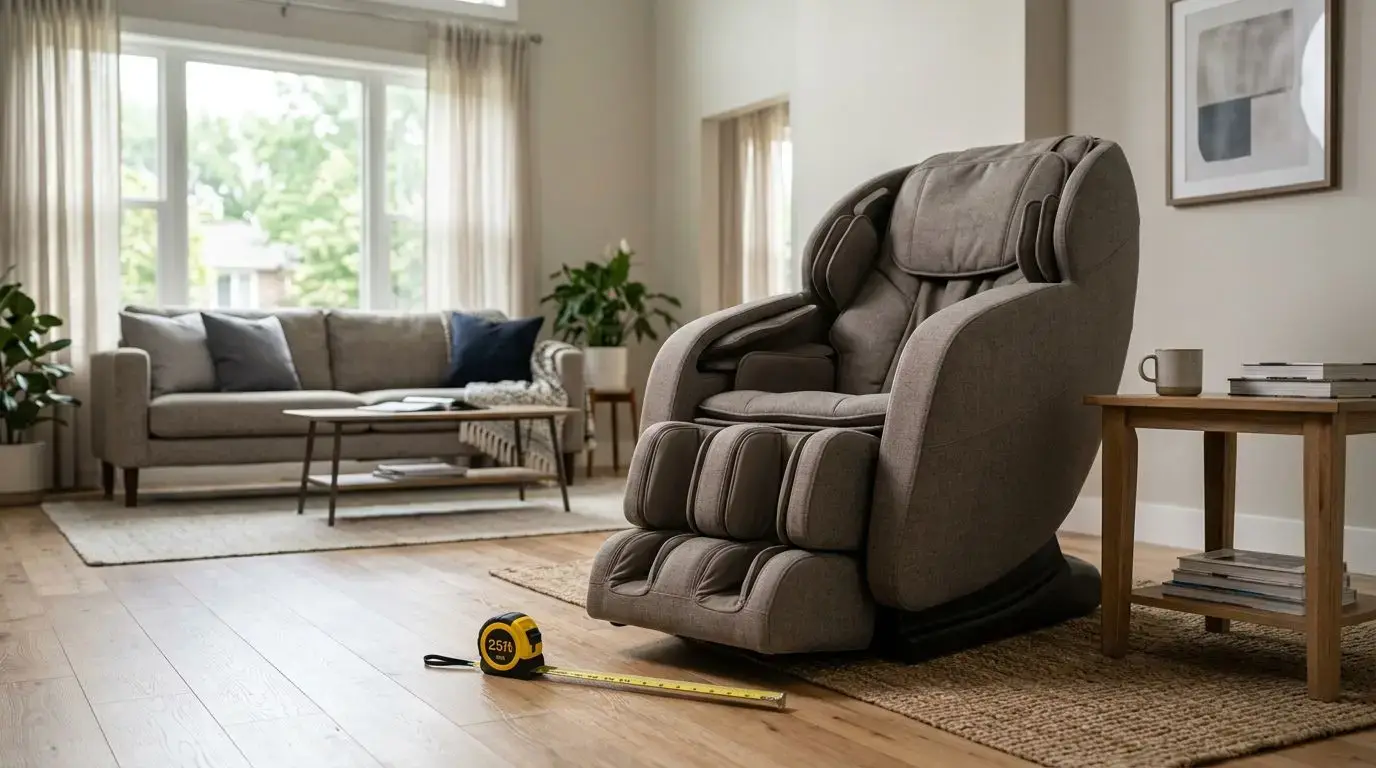
How to Choose a Massage Chair for Home Use
14 min read
Are Massage Chairs Good or Bad for You? Benefits, Risks, and Safe Use Guidelines
13 min read