Disclosure: We may earn a commission when you buy through links on this page, at no extra cost to you. We buy nothing, sell nothing and accept no payment for coverage — commissions never decide what we recommend. How we make money.
An electric massage chair uses powered motors, actuators, rollers, air pumps, heaters, and controls to deliver repeatable pressure and movement. The key features to understand are the roller system, recline mechanism, track design, air compression zones, and the chair’s basic electrical and space requirements.
For most shoppers, the best chair is not the one with the longest feature list. It is the one that fits your body, your room, your outlet, and the intensity level you will actually want to use for 10 to 20 minutes at a time.
What is powered inside an electric massage chair? 5 core systems
Electric massage chairs are powered furniture. A full-size chair may include several separate systems: one or more motors for the roller carriage, an actuator for recline, an air pump for airbags, small motors for foot rollers or vibration, and a control board that coordinates programs and safety shutoffs.
That may sound technical, but the shopping takeaway is simple. Each powered component affects feel, coverage, noise, durability, setup, or daily convenience. A chair with a strong roller system but a weak recline design may feel good upright, then become awkward in a small room. A chair with dozens of airbags may look impressive, yet the fit of the shoulder and calf zones matters more than the count alone.
| Powered component | What it does | Why shoppers should care |
|---|---|---|
| Roller motor and carriage | Moves rollers up, down, in, out, or side to side | Controls back coverage, pressure style, and intensity range |
| Recline actuator | Tilts the backrest and often raises the leg rest | Affects comfort, room clearance, and getting in or out |
| Air pump and valves | Inflates airbags in zones such as arms, calves, feet, hips, or shoulders | Adds squeezing pressure and body positioning |
| Foot or calf motors | Drive rollers, kneading nodes, or vibration in the lower body area | Changes the feel of foot and calf programs |
| Control board | Coordinates programs, timers, sensors, and display controls | Impacts ease of use, error handling, and automatic sessions |
Do not judge by motor count alone. A chair with 6 powered functions that fit you well can be more useful than a chair with 10 functions that feels cramped, too firm, or difficult to place in your room.
Motors and actuators: why 2 chairs with similar features can feel different
Massage chairs use electric motors for movement and linear actuators for controlled lifting or reclining. A linear actuator is the powered arm that extends or retracts to move the backrest or leg rest. In many household chairs, this movement is intentionally slow; a full recline cycle may take 10 to 30 seconds so the position changes smoothly.
The motor behind the roller carriage matters because it controls travel and pressure behavior. In a basic 2D system, the motorized carriage typically moves rollers up and down along the track while the mechanism creates kneading or tapping motions. In a 3D design, the rollers can also move farther forward into the back, giving the chair a wider intensity range. A 4D description usually means the chair varies speed, depth, or rhythm in more detailed ways, though the exact meaning can vary by manufacturer.
Air systems use a pump and valves rather than individual motors at every airbag. The pump fills the air chambers; valves route and release air by zone. If a chair is advertised with 40 or 60 airbags, remember that this describes coverage, not a guarantee of better comfort. Fit and adjustability still matter.
Noise is another practical clue. Many electric chairs create a mix of motor hum, air pump sound, roller movement, and fabric creaks. If a retailer lists a sound rating, a number under about 60 decibels is generally closer to normal conversation than loud appliance noise. If no rating is listed, read setup and return policies carefully and expect some mechanical sound during use.
Recline systems and zero gravity positions: 2 to 24 inches of clearance can matter
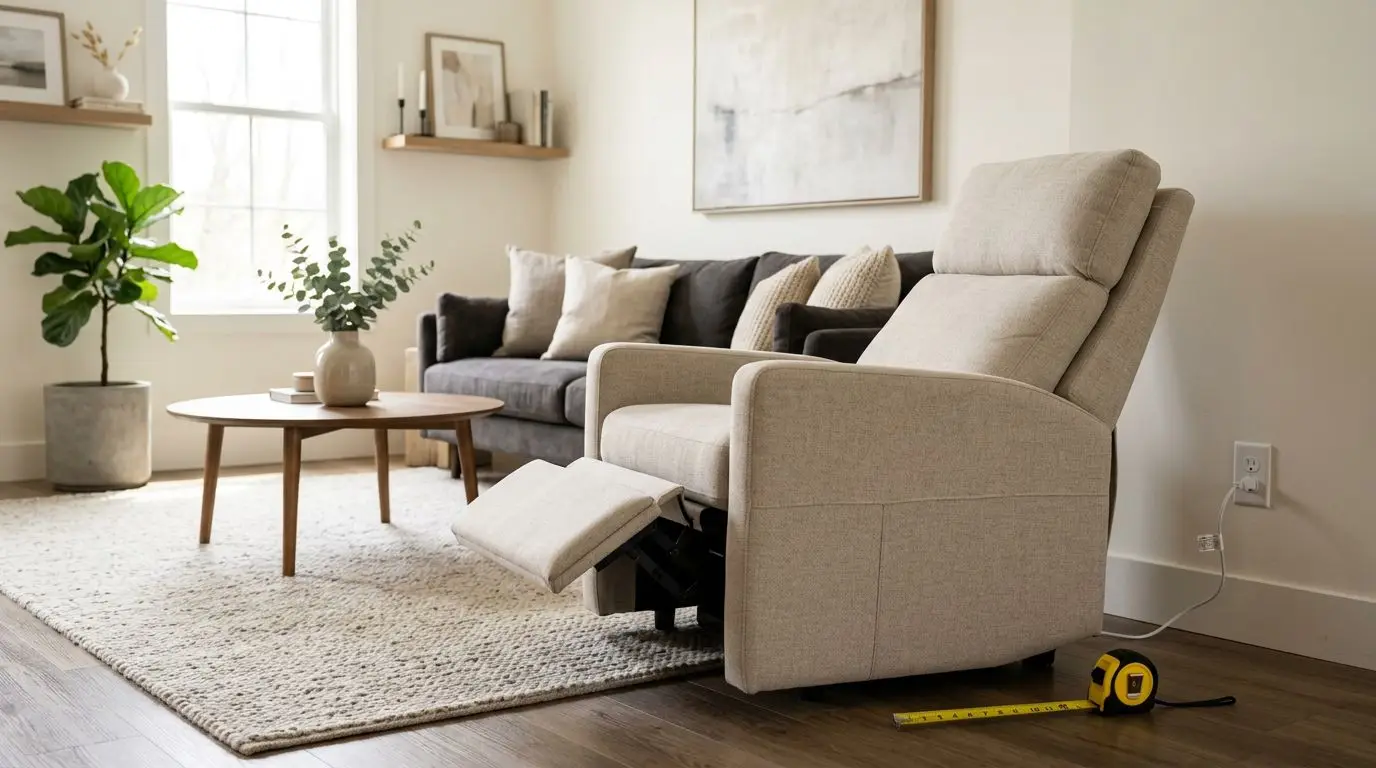
The recline system changes how the chair supports your body and how much floor space it needs. Traditional recline designs may require 12 to 24 inches behind the chair because the backrest moves backward as it tilts. Space-saving designs slide the chair base forward as the back reclines, and some can work with about 2 to 6 inches of rear clearance.
Many chairs also include a zero gravity style position. In furniture terms, this usually means the chair reclines while the leg rest rises, placing the torso and legs in a more cradled position than standard upright seating. The exact angle varies, but the user is commonly tilted back somewhere around 120 to 170 degrees depending on the chair and program.
Recline also affects intensity. When you lean back, your body weight settles more directly against the roller track. The same roller setting can feel stronger in a deep recline than it does upright. If you prefer gentler pressure, look for adjustable intensity or a way to use programs without entering the deepest recline position.
| Recline type | Typical space need | Best fit | Tradeoff |
|---|---|---|---|
| Standard power recline | Often 12 to 24 inches behind chair | Larger rooms and open layouts | Needs more wall clearance |
| Space-saving recline | Often about 2 to 6 inches behind chair | Bedrooms, offices, apartments | Mechanism may add weight and cost |
| Upright-only or limited recline | Varies, often less depth in use | Simple seating and smaller budgets | Less body positioning flexibility |
Check the rated user weight before buying. Many full-size chairs fall somewhere around 250 to 320 pounds, but limits vary. Staying within the published rating protects the mechanism and helps the chair operate as intended.
Rollers and track design: 28 to 52 inches of back and glute coverage
The roller system is the heart of the chair’s feel. Rollers are the moving contact points behind the upholstery. They sit on a carriage that travels along a track, and the track shape determines which parts of the body the rollers can reach.
An S-track follows the natural curve of the back. It commonly covers the neck, shoulders, mid-back, and lower back, with track lengths often around 28 to 32 inches. An L-track continues under the seat, allowing the rollers to reach into the glute area and sometimes the upper hamstrings; these tracks are often closer to 45 to 52 inches. An SL-track combines a curved back path with extended seat coverage.
Roller dimension matters, too. Some chairs use small rollers that feel precise and firm. Others use wider or softer roller heads that feel broader and less pointed. If you are sensitive to pressure, a chair with 3D depth control, removable padding, or multiple intensity levels is usually easier to adapt than a chair with one fixed roller depth.
| Roller and track feature | What it means | Feel and coverage |
|---|---|---|
| 2D rollers | Move mainly up and down, with preset massage motions | Simple, often firmer because depth is less adjustable |
| 3D rollers | Move in and out as well as along the track | Better intensity control for light to strong pressure |
| 4D rollers | Vary depth, rhythm, or speed more dynamically | More variation, but definitions differ by maker |
| S-track | Curved back track, usually about 28 to 32 inches | Back-focused coverage |
| L-track or SL-track | Extended track, often about 45 to 52 inches | Back plus seat-area coverage |
Body scanning is another powered feature tied to roller performance. The chair moves the rollers to estimate shoulder height and back shape, then adjusts the program path. It is useful, but not perfect. If the scan misses your shoulders by 2 or 3 inches, manual shoulder-position adjustment can make a major difference.
Airbags, heat, foot rollers, and vibration: 4 common add-ons to compare
Beyond the back rollers, most full-size electric chairs add powered comfort features. Airbags are the most common. They inflate around the arms, shoulders, hips, calves, or feet to create a squeezing sensation and help hold the body in position while the rollers move.
Airbag count can range from fewer than 20 to more than 60, depending on chair size and design. More airbags can mean more coverage, but layout matters more than the total. A well-placed calf and foot system may feel more useful than extra shoulder airbags that do not line up with your frame.
Heat is usually built into the lumbar area, calves, or foot area. These elements are designed to feel warm, not hot. Many chairs use a single heat setting, while others offer 2 or 3 levels. If heat matters to you, check whether it works independently or only within certain automatic programs.
Foot rollers can feel surprisingly intense because the foot area has less padding between the roller and the body. Look for adjustable speed, removable inserts, or the ability to turn foot rollers off. Vibration is different: more of a buzzing or pulsing feel, and it may be used in the seat, legs, or backrest.
| Feature | Designed to feel like | What to check |
|---|---|---|
| Air compression | Squeezing and releasing pressure | Number of zones, intensity levels, fit at shoulders and calves |
| Heat | Gentle warmth in a targeted area | Location, levels, automatic shutoff, independent control |
| Foot rollers | Firm rolling or kneading under the feet | On/off control, speed levels, removable pads |
| Vibration | Buzzing or pulsing sensation | Location, noise, whether it can be disabled |
Power requirements and setup: 120 volts, one grounded outlet, and a clear path
Most electric massage chairs sold for US homes are designed for a standard 120-volt grounded household outlet. Always confirm the rating plate and manual before plugging one in. Many chairs draw far less power than a space heater, but wattage varies by size and feature set; you may see figures in the low hundreds of watts for full-size chairs.
A dedicated circuit is not always required, but the outlet should be grounded, accessible, and not overloaded with other high-draw devices. Avoid lightweight extension cords. If an extension cord is unavoidable for temporary placement, follow the manual’s cord rating requirements and do not route cords where people walk.
Delivery and placement deserve as much attention as the outlet. Full-size chairs can weigh roughly 150 to 300 pounds. Some arrive in multiple boxes, while others ship mostly assembled. Measure doorways, hallway turns, stairwells, and elevators before delivery. A doorway around 29 to 32 inches wide may be tight for some chairs unless side panels or foot sections can be removed.
Place the chair on a level floor. On hardwood, vinyl, or laminate, use furniture pads or a floor mat to reduce scuffing from the base and catch minor shifting during recline. Leave room on both sides for arm airbags and for getting in and out safely.
How to choose and measure: 7 checks before you buy
Before comparing feature lists, spend 15 minutes with a tape measure. The right chair has to fit your body and your room at the same time. A chair that is too deep for the room or too narrow through the shoulders can become an expensive seat you avoid using.
- Measure the room depth. Include the chair’s upright depth, fully reclined depth, and required wall clearance.
- Measure doorways and turns. Check the narrowest point, not just the front door.
- Check user height range. Many chairs are designed around a broad range, such as roughly 5 feet to over 6 feet, but the published range matters.
- Check seat width. Many seats fall around 18 to 22 inches wide; narrow hip airbags can feel restrictive.
- Compare leg extension. A spring-loaded or powered leg rest should match your inseam without forcing your knees upward.
- Confirm weight rating. Do not exceed the listed limit.
- Review controls. A clear remote, memory settings, or a simple app can matter more than 20 automatic programs.
| Measurement | Why it matters | Practical target |
|---|---|---|
| Rear wall clearance | Prevents the chair from hitting the wall | Use the maker’s number; often 2 to 24 inches |
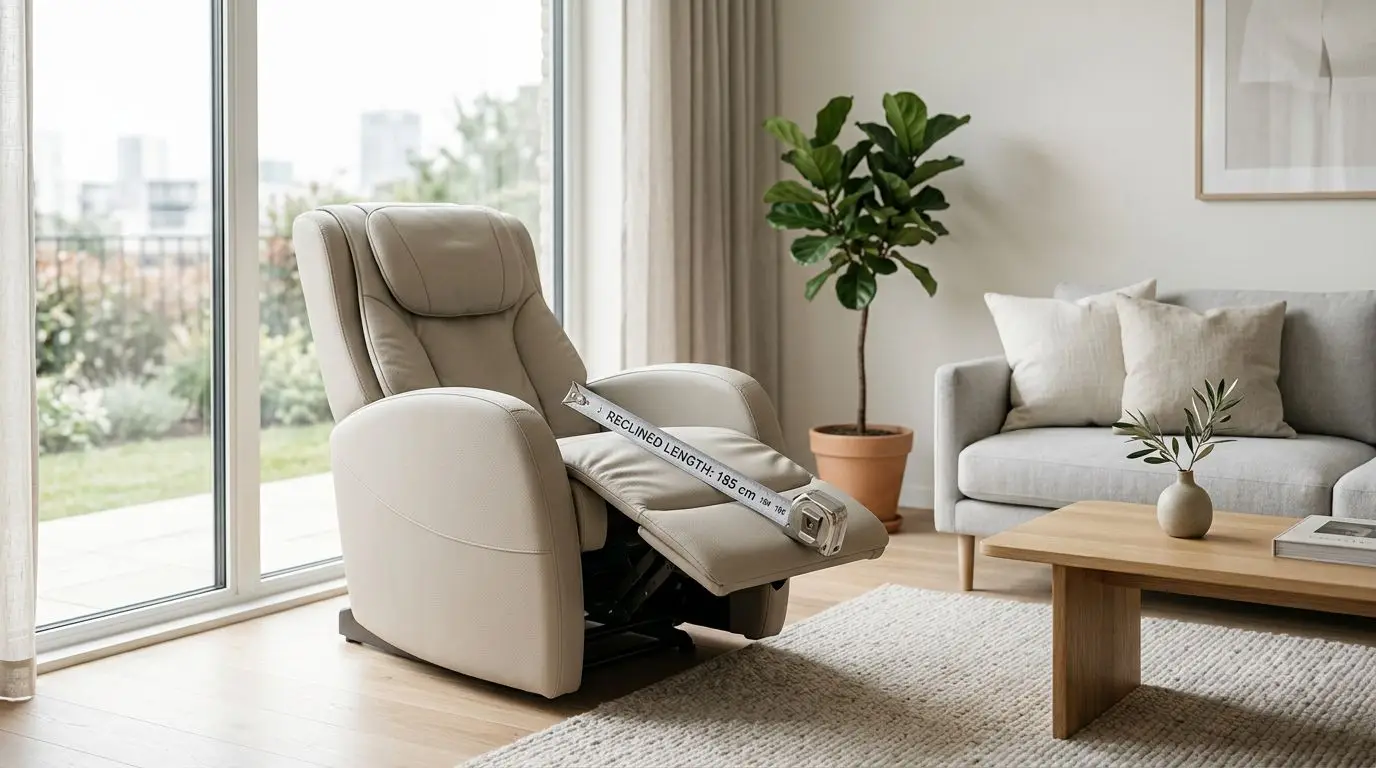
| Fully reclined length | Shows real floor footprint during use | Confirm before placing near a bed or desk |
| Doorway width | Controls delivery access | Measure the narrowest opening in inches |
| Seat width | Affects hip comfort and airbag fit | Compare to your seated hip width plus room for clothing |
| User height range | Affects shoulder scan and leg rest fit | Stay within the published range when possible |
If you can test a chair, run at least one 10-minute program, not just a 60-second demo. Try the lightest and strongest settings. Test upright and reclined positions. Turn the foot rollers on and off. The goal is not to be impressed quickly; it is to see whether the chair still feels comfortable after the novelty wears off.
Who an electric massage chair is best for: 10 to 20 minute daily users
An electric massage chair is best for someone who wants a repeatable, at-home pressure routine without scheduling an appointment or setting up separate handheld devices. It suits shoppers who value convenience, predictable programs, and full-chair support for the back, legs, arms, or feet.
It can also be a good fit for households with multiple users, as long as the chair has adjustable intensity and a height range that covers the people who will use it. A 3D roller system, adjustable air compression, and manual zone controls are especially useful when one person prefers gentle pressure and another wants a firmer feel.
It may not be the right purchase if you have very limited floor space, need a silent room, dislike enclosed leg or arm compartments, or want a chair that looks like a standard living room recliner. It is also not ideal for anyone who cannot safely get in and out of a low, reclining seat without assistance.
- Best for: regular short sessions, predictable pressure, multi-zone coverage, and users who like powered recline.
- Consider carefully: small apartments, upper-floor rooms with tight stairs, shared walls, and users who are sensitive to firm rollers.
- Usually not best for: buyers who only want occasional foot vibration or a compact accent chair.
Safety and responsible use: start with 10 minutes and ask your physician when needed
A massage chair is a consumer wellness product, not a medical device. It is designed to create pressure, movement, warmth, and a relaxing seating experience. It should not be used as a substitute for professional medical advice.
Ask your physician before using an electric massage chair if you are pregnant, have a pacemaker or other implanted cardiac device, have a history of blood clots, take anticoagulants, have osteoporosis, have had a recent fracture or surgery, have spinal disc problems, neuropathy, or uncontrolled hypertension. Do not skip this step. Powered rollers, compression, heat, and recline may not be appropriate for every person.
Start conservatively. Use a gentle program for about 10 minutes, then notice how your body feels afterward. Avoid falling asleep in the chair unless the manual specifically addresses automatic shutoff and safe use. Keep children and pets away from moving leg rests, hinges, and reclining parts.
Stop using the chair if the pressure feels sharp, pinching, or unusually uncomfortable. More intensity is not automatically better. A feature is only useful if you can use it comfortably and safely.
Maintenance and daily use: 6 simple habits that protect the chair
Electric massage chairs do not require much day-to-day work, but small habits help. Power the chair off after use, keep vents clear, and avoid placing drinks on the armrests or remote area. Moisture and control panels do not mix.
- Wipe upholstery with a soft cloth after use, especially in foot and calf areas.
- Use only cleaners approved for the chair’s upholstery type.
- Keep coins, hair pins, charging cables, and blankets out of moving gaps.
- Check the power cord every few months for pinching or wear.
- Vacuum around the base so dust does not collect near vents.
- Review the manual every 6 to 12 months for filter, bolt, or inspection guidance if listed.
If the chair displays an error code or stops mid-recline, do not force the mechanism. Unplug it only if the manual says to do so, then follow the reset steps. For heavy chairs, get help before moving them; dragging a 200-pound chair across a hard floor can damage both the floor and the frame.
FAQ: 5 common questions about electric massage chair features
How many motors should an electric massage chair have?
There is no ideal motor count. What matters is what the motors control: roller depth, track travel, recline, leg rest movement, foot rollers, and air compression. A well-designed chair with fewer powered systems can be more comfortable than a crowded chair with features you rarely use.
Is a 3D roller system worth it?
A 3D system is worth considering if you want adjustable pressure depth. It lets the rollers move closer to or farther from your back, which can make one chair more usable for different people in the same household.
How much space does a reclining massage chair need?
It depends on the recline design. Some space-saving chairs need only about 2 to 6 inches behind them, while traditional recliners may need 12 to 24 inches. Always use the manufacturer’s fully reclined dimensions.
Can I plug a massage chair into a regular outlet?
Most US home massage chairs are designed for a standard 120-volt grounded outlet, but you should confirm the rating plate and manual. Avoid overloaded outlets and lightweight extension cords.
Are more airbags better?
Not automatically. Airbag placement, fit, and intensity control matter more than the count. A chair with fewer well-placed airbags may feel better than one with a higher number that does not match your shoulders, arms, calves, or feet.
Frequently asked questions
How many motors should an electric massage chair have? +
There is no ideal motor count. Focus on what the powered systems control, such as roller movement, recline, leg rest adjustment, foot rollers, and air compression.
Is a 3D roller system worth it? +
A 3D roller system is worth considering if you want adjustable pressure depth or if multiple people will use the same chair with different intensity preferences.
How much wall clearance does a massage chair need? +
Space-saving recline designs may need about 2 to 6 inches behind the chair, while traditional recline designs may need 12 to 24 inches. Check the fully reclined dimensions before buying.
Can an electric massage chair use a regular US outlet? +
Most are designed for a standard 120-volt grounded household outlet, but always confirm the rating plate and manual. Avoid overloaded outlets and lightweight extension cords.
Are more airbags always better in a massage chair? +
No. Airbag placement, body fit, zone control, and intensity adjustment matter more than the total number of airbags.
Related guides
How to Choose a Massage Chair for Home Use
14 min read
Massage Chair Recliners Explained: Comfort, Coverage, and When This Chair Type Makes Sense
13 min read
Massage Chair Recliner vs. Standard Recliner: Which Is Better for Everyday Comfort?
15 min read
Electric Massage Chairs vs. Manual Massage Recliners: What’s the Difference?
13 min read
Is a Massage Chair Worth It? Benefits, Limitations, and Who Should Buy One
13 min read