Disclosure: We may earn a commission when you buy through links on this page, at no extra cost to you. We buy nothing, sell nothing and accept no payment for coverage — commissions never decide what we recommend. How we make money.
A massage chair may feel soothing when sciatica-related discomfort is worsened by tight, overworked muscles around the low back, glutes, or hips. It cannot diagnose sciatica, fix nerve compression, or replace medical care, and stronger settings can make nerve-related symptoms feel worse for some people.
The safest way to view a massage chair is as a comfort tool. It can apply pressure, warmth, stretching motion, and positional support for short sessions, usually 10 to 20 minutes. If your pain is severe, spreads down the leg, comes with numbness or weakness, or is connected to a known spine issue, ask a physician before using one.
Sciatica basics: why 1 nerve can cause low-back, hip, and leg discomfort
Sciatica refers to discomfort that follows the path of the sciatic nerve, which runs from the lower spine through the buttock and down the back of each leg. People often describe it as sharp, burning, electric, aching, or tingling. It may stay in the buttock, travel behind the thigh, or reach the calf and foot.
That pattern matters because nerve-related discomfort is different from ordinary muscle soreness. A massage chair works from the outside in, using rollers, air cells, heat, and reclining angles. It can change how pressure feels on your back and hips, but it does not change the structure of a disc, bone spur, joint, or narrowed spinal space.
Many massage chairs focus on the spine and surrounding muscles, not the nerve itself. That can feel good when nearby tissue is tight. It can also be too much if a roller presses directly into a sensitive area, especially near the low back, sacrum, or piriformis region.
Use the symptom pattern as a warning signal. Local low-back tightness after sitting at a desk for 8 hours is one thing. New leg weakness, foot drop, loss of bladder or bowel control, fever, recent trauma, or worsening numbness is urgent and belongs with a medical professional, not a chair session.
What a massage chair may do in a 10- to 20-minute session
A massage chair may help some users feel more comfortable for a limited period. The most relevant areas for sciatica-related discomfort are the lumbar back, glutes, hips, hamstrings, and calves, depending on where the chair provides coverage.
Most chairs use one or more of these methods: rolling along a track, kneading, tapping, gentle vibration, air compression, heat, and recline positioning. None should be treated as a fix for the underlying cause of sciatica. They are designed to create sensations such as pressure, warmth, rocking, compression, and stretch.
| Chair function | What it is designed to feel like | Sciatica-related caution |
|---|---|---|
| Low-back rollers | Focused pressure along the lumbar muscles | Too much intensity can irritate a sensitive low back |
| Glute or hip coverage | Pressure under the pelvis and buttocks | Direct pressure may be uncomfortable if symptoms are sharp or nerve-like |
| Heat | Gentle warmth, often in the back area | Avoid high heat if you have reduced sensation or neuropathy |
| Air compression | Squeezing and releasing around legs or hips | Ask a physician first if you have clot risk or take anticoagulants |
| Recline or zero-gravity positioning | A supported, laid-back posture with reduced upright pressure | Getting in and out may be difficult during a flare-up |
Start smaller than you think. A 5-minute test on the lowest intensity is more useful than a 30-minute full-body program that leaves you guessing which feature bothered you. If the chair lets you turn off tapping, reduce roller depth, skip the calves, or keep the rollers away from the lowest back, use those controls.
Comfort during the session is not the only test. Notice how you feel 1 hour later and the next morning. If leg symptoms spread, tingling increases, or pain becomes sharper, stop using the chair and check with a clinician.
Who it is best for: 4 situations where a chair may make sense
A massage chair is most reasonable for people who already know their symptoms are mild, stable, and not linked to a serious or changing medical issue. It is less appropriate when symptoms are new, intense, or clearly nerve-dominant.
- People with mostly muscle tightness around the low back or glutes. If the main complaint is a stiff feeling after long sitting, a gentle chair program may feel pleasant.
- People who tolerate light pressure well. If a hand massage, foam roller, or warm pack usually feels comfortable, a low-intensity chair may be easier to dial in.
- People who want a structured short routine. Built-in programs commonly run about 10, 15, or 20 minutes, which can prevent overdoing it.
- People who can sit and recline without symptom spikes. If reclining itself sends pain down the leg, the chair is probably not the right tool at that moment.
It is not best for everyone. If your discomfort is primarily electric, shooting, or numb, a deep roller may feel aggressive. If your pain is worst when sitting, remember that a massage chair is still a chair; the recline may help some users feel supported, but the seated position can bother others.
Safety limits: 8 reasons to ask a physician before using one
Do not bury safety concerns under feature talk. Sciatica can overlap with spine, nerve, vascular, pregnancy-related, and post-surgical issues, and a consumer massage chair is not built to sort those out.
Ask your physician before using a massage chair if any of the following apply:
- You are pregnant.
- You have a pacemaker or another implanted cardiac device.
- You have a history of blood clots, suspected clotting problems, or you take anticoagulants.
- You have osteoporosis or have been told you are at high fracture risk.
- You recently had a fracture, major injury, or surgery.
- You have known spinal disc problems, spinal stenosis, or worsening nerve symptoms.
- You have neuropathy, reduced sensation, or cannot reliably feel heat or pressure.
- You have uncontrolled hypertension or have been advised to avoid compression or heat.
Also stop immediately if a session causes new numbness, increasing leg pain, dizziness, chest discomfort, unusual shortness of breath, or weakness. Those are not normal “deep massage” sensations to push through.
Be especially cautious with calf compression. Many chairs squeeze the calves and feet firmly, which can feel intense even for healthy users. If there is any concern about clot risk, skip leg compression until your physician says it is appropriate.
How to choose: 7 features that matter more than brand names
For sciatica-related comfort, the best chair is usually the one that gives you control. A high-intensity chair with limited adjustment is a poor match, even if it has a long feature list.
| Feature | Why it matters | What to look for |
|---|---|---|
| Adjustable intensity | Nerve-adjacent discomfort often needs gentle pressure | At least 2 or 3 intensity levels, plus the ability to soften air pressure |
| Roller position control | You may need to avoid one sensitive zone | Manual spot control or zone control for upper, mid, and lower back |
| Track design | Determines coverage from neck to low back or glutes | S-track for back contouring; L-track or SL-track for seat and glute coverage |
| Heat control | Warmth can feel relaxing, but too much is not better | On/off heat control; avoid chairs where heat is always tied to one program |
| Program length | Short sessions are safer for testing tolerance | 10- to 20-minute automatic shutoff or timer options |
| Calf and foot controls | Leg symptoms may not tolerate squeezing | Separate on/off or intensity adjustment for calves and feet |
| Easy exit | Flare-ups can make standing difficult | Stable armrests, predictable recline return, and a remote you can reach |
Track type is a major decision. An S-track follows the curve of the back and typically stops around the low back. An L-track extends under the seat to reach the glute area. An SL-track combines a curved back path with seat extension. For some users, glute coverage feels useful; for others, pressure under the pelvis is too direct. Try before buying whenever possible.
Roller style matters too. Two-dimensional rollers move up, down, side to side, and in preset patterns. Three-dimensional rollers can vary depth, which helps if you want lighter or deeper contact. Four-dimensional descriptions usually add speed variation or rhythm changes. Do not assume more dimensions are better for sciatica-related symptoms. More control is the real advantage.
How to measure fit at home: 5 checks before you buy
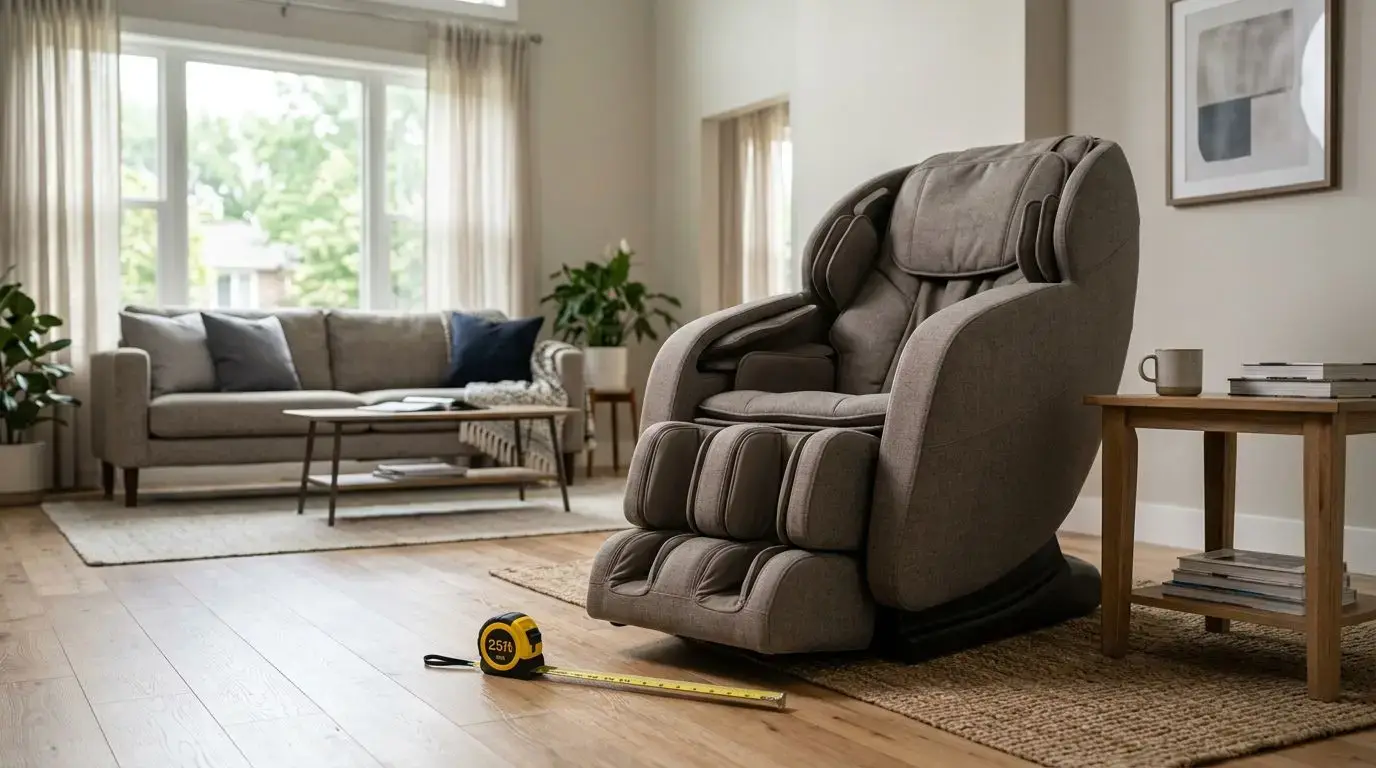
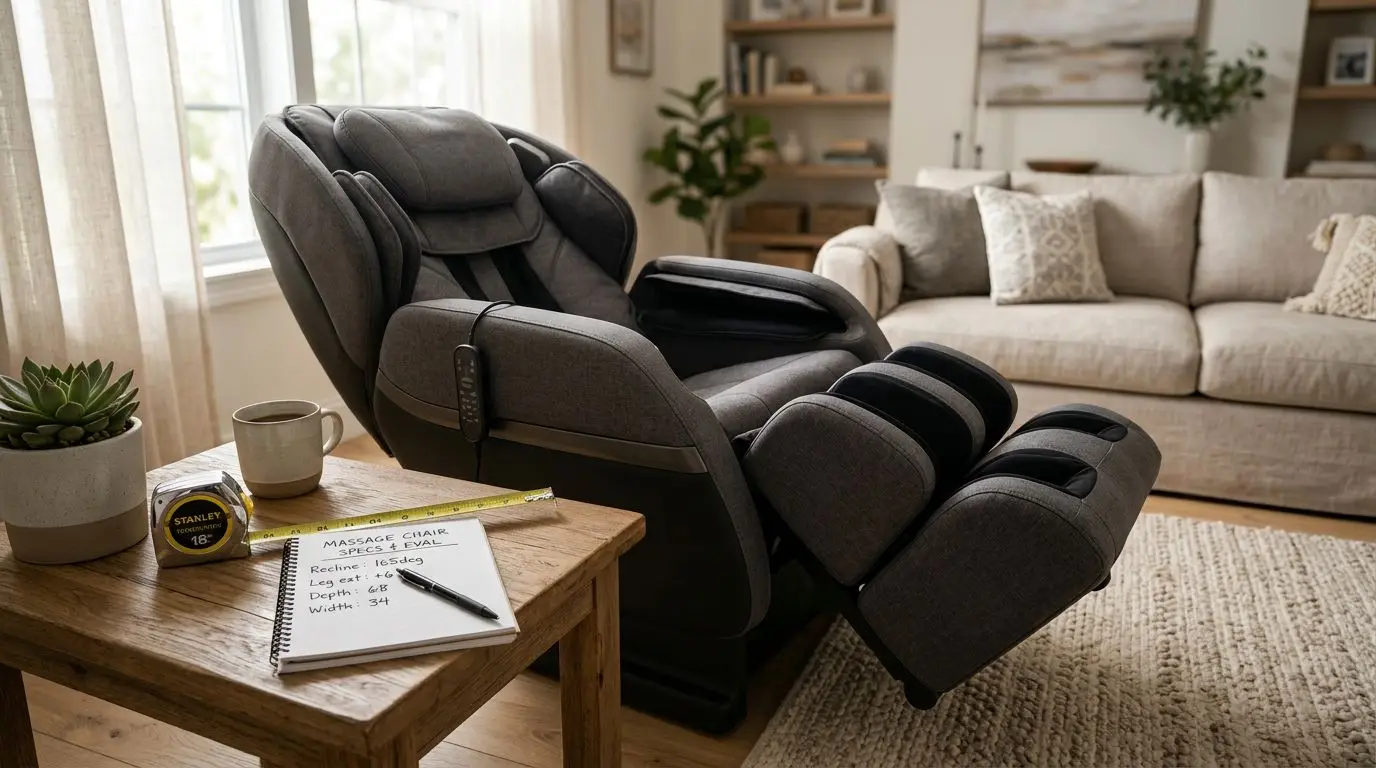
A chair that does not fit your body can put pressure in the wrong place. Before shopping, take 10 minutes with a tape measure and note your body size, room space, and doorway path.
- Measure your height and seated shoulder position. Many chairs are designed around a height range, often spanning roughly 5 feet to over 6 feet, but fit varies by torso length.
- Check seat width. Measure across your hips while seated and compare that with the chair’s interior seat width, allowing at least 1 to 2 inches of comfort space.
- Note weight capacity. Use the manufacturer’s stated limit and leave a margin. Do not guess.
- Measure recline clearance. Some chairs need only a few inches behind them; others may need 12 inches or more. Also measure the full reclined length.
- Map delivery access. Measure doorways, hallway turns, stair landings, and elevator openings. Massage chairs are bulky and often weigh well over 150 pounds.
Fit testing should include the low-back and seat areas. Sit in the chair while it is off first. Your pelvis should feel supported, not wedged. Your feet should reach the footrest comfortably, and the rollers should not feel like they are digging into bone when the scan begins.
If you are between sizes, prioritize neutral posture and easy entry over maximum feature count. A chair that forces your knees too high, misses your low back, or presses hard under the thighs may be a poor match for sciatica-related comfort.
Gentle use plan: a 3-step way to test tolerance
When symptoms are sensitive, change only one variable at a time. That makes it easier to tell whether rollers, heat, recline, or leg compression is helping you feel comfortable or making things worse.
Step 1: Start with positioning only
Use the chair reclined with rollers off for about 5 minutes. Notice whether sitting and reclining feel okay. If the position alone increases leg symptoms, do not add massage functions.
Step 2: Add low-intensity back rollers
Choose the gentlest back-only setting for 5 to 10 minutes. Keep tapping, deep-kneading, and calf compression off at first. If the chair offers manual zone control, avoid the most sensitive spot rather than trying to overpower it.
Step 3: Add one feature at a time
On a different session, try heat. On another, try light glute coverage. On another, try leg air pressure only if you have no clot risk and it feels comfortable. Keep early sessions short, preferably 10 minutes or less.
Do not chase intensity. With nerve-related discomfort, a session that feels “barely enough” is often a smarter test than one that feels impressive. Strong pressure is not proof of effectiveness.
Feature comparison: 6 common chair types for sciatica-related comfort
Massage chairs are often marketed by feature bundles, but the practical differences come down to coverage, pressure style, and adjustability. Use this table to narrow the type, not to pick a brand.
| Chair type | Potential fit | Trade-off |
|---|---|---|
| Basic S-track chair | Good for users who want back-focused pressure without seat rollers | May not reach the glutes or upper hamstrings |
| L-track chair | Useful if you want coverage under the seat and into the glute area | Seat pressure may be too direct for some sciatica patterns |
| SL-track chair | Broad coverage from upper back through the seat | Usually larger and more complex |
| 3D roller chair | Helpful when you need to reduce roller depth | Deep settings can be too aggressive if used carelessly |
| Air-compression-heavy chair | Can create a snug, wrapped feeling around hips, legs, or feet | Not appropriate for everyone, especially with clot or anticoagulant concerns |
| Compact recliner-style chair | May fit smaller rooms and users who want lighter features | Often has less precise low-back and glute coverage |
If possible, test a chair for at least 10 minutes in a showroom or during a trial period at home. Pay attention to how the rollers transition from low back to seat. That is the zone most likely to feel either helpful or irritating for sciatica-related discomfort.
When professional care matters: 6 signs not to rely on a chair
A massage chair belongs in the comfort category, not the diagnostic category. If your symptoms suggest nerve involvement, worsening function, or a serious underlying issue, get medical guidance.
- Pain began after a fall, crash, or lifting injury.
- You have new or increasing weakness in the leg or foot.
- Numbness is spreading or becoming constant.
- You have changes in bladder or bowel control.
- You have fever, unexplained weight loss, or a history of cancer.
- Symptoms are severe, worsening, or not improving after several days of basic self-care.
Even without red flags, recurring sciatica deserves a clear diagnosis. A clinician can help identify whether the pattern is related to a disc, joint, muscle irritation, posture, activity load, or another cause. That information helps you decide whether a massage chair is reasonable, what settings to avoid, and what other steps may be more appropriate.
Bring specifics to the conversation: where symptoms travel, what positions make them worse, whether sitting bothers you, and whether pressure to the glutes changes the sensation. Those details are more useful than simply saying, “My back hurts.”
FAQ: 5 common questions about massage chairs and sciatica
Can a massage chair make sciatica worse?
Yes, it can for some people. Deep rollers, aggressive tapping, hard glute pressure, or long sessions may increase nerve-like symptoms, especially if the underlying issue is sensitive. Stop if pain travels farther down the leg, tingling increases, or numbness appears.
Is heat a good feature for sciatica-related discomfort?
Heat may feel soothing to some users because it adds gentle warmth to the low back or seat area. It should be adjustable, and it is not appropriate for everyone. Avoid heat or ask a physician first if you have reduced sensation, neuropathy, recent injury, or have been told to avoid heat.
Should I use calf and foot massage if pain runs down my leg?
Use caution. Calf and foot rollers or air compression can feel intense, and leg symptoms do not always mean the leg itself needs pressure. Skip calf compression if you have clot risk, take anticoagulants, or are unsure whether leg compression is safe for you.
How long should a first session be?
Start with 5 to 10 minutes on the lowest setting, with leg compression and deep tapping turned off. If you feel fine later that day and the next morning, you can gradually test longer sessions, staying within the chair’s timer limits.
What type of massage chair is best for sciatica?
There is no single best type. Look for adjustable intensity, zone control, easy heat control, and a track that fits your body. Some users prefer an L-track for glute coverage, while others do better with a back-focused S-track that avoids direct seat pressure.
Frequently asked questions
Can a massage chair make sciatica worse? +
Yes. Deep rollers, aggressive tapping, hard glute pressure, or long sessions can make nerve-like symptoms feel worse for some people. Stop if pain travels farther down the leg, tingling increases, or numbness appears.
Is heat a good feature for sciatica-related discomfort? +
Heat may feel soothing because it adds gentle warmth to the low back or seat area, but it should be adjustable. Ask a physician first if you have reduced sensation, neuropathy, recent injury, or have been told to avoid heat.
Should I use calf and foot massage if pain runs down my leg? +
Use caution. Calf and foot rollers or air compression can feel intense, and leg symptoms do not always mean the leg itself needs pressure. Skip calf compression if you have clot risk, take anticoagulants, or are unsure whether compression is safe.
How long should a first massage chair session be? +
Start with 5 to 10 minutes on the lowest setting, with leg compression and deep tapping turned off. If you feel fine later that day and the next morning, you can gradually test longer sessions within the chair’s timer limits.
What type of massage chair is best for sciatica? +
There is no single best type. Prioritize adjustable intensity, zone control, heat control, and a track that fits your body. Some users prefer L-track glute coverage, while others do better with a back-focused S-track.
Related guides
Are Massage Chairs Good or Bad for You? Benefits, Risks, and Safe Use Guidelines
13 min read
Massage Chairs for Back Pain: When They May Help and When to Be Cautious
12 min read
Massage Chair vs. Physical Therapy or Chiropractic Care: What Each Can and Can’t Do
13 min read
Can a Massage Chair Help With Lower Back Pain? Benefits, Settings, and Safety Tips
12 min read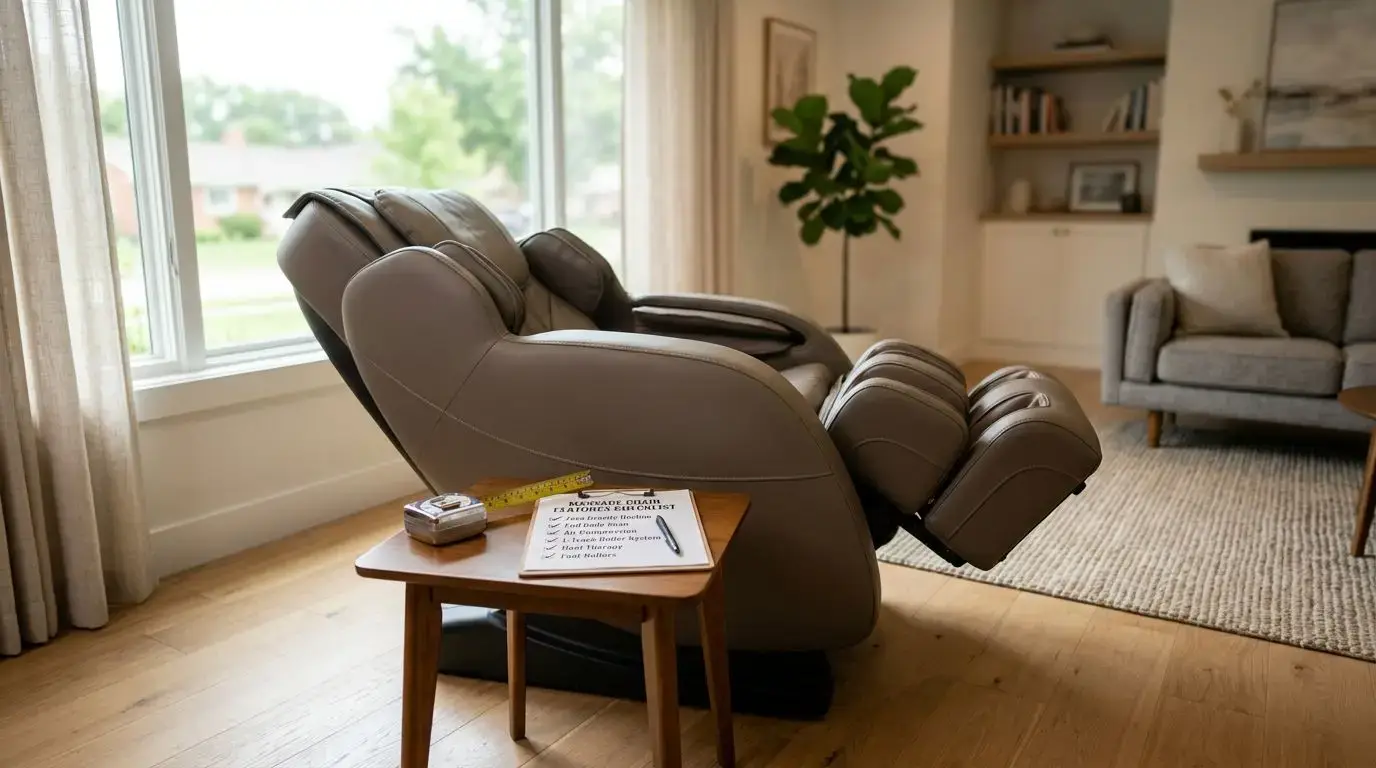
Best Massage Chair Features to Look For Before You Buy
13 min read