Disclosure: We may earn a commission when you buy through links on this page, at no extra cost to you. We buy nothing, sell nothing and accept no payment for coverage — commissions never decide what we recommend. How we make money.
A massage chair is the better fit if you want stronger, more targeted kneading with full-back coverage, leg features, body scanning, and preset sessions. A massage recliner is better if you mainly want a comfortable living-room seat with lighter vibration, gentle heat, and an easier learning curve. The right choice comes down to how much intensity, coverage, floor space, and everyday seating comfort you want from one piece of furniture.
Massage chair vs. massage recliner: the 5 big differences
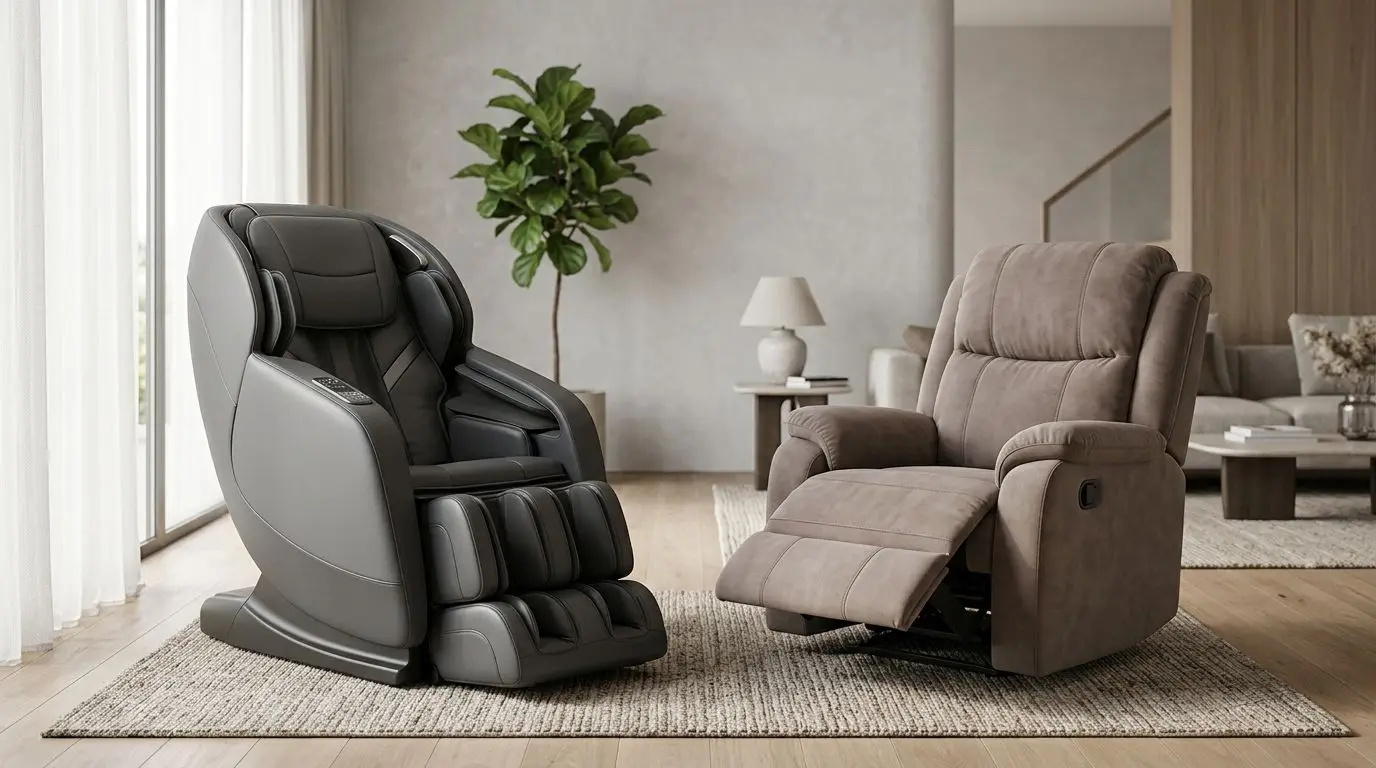
These two products can look similar from across the room, but they are built around different priorities. A full-featured massage chair is usually designed first as a massage device and second as a seat. A massage recliner is usually designed first as a recliner, with massage functions added on.
The practical difference shows up in 5 areas: mechanism, coverage, intensity, adjustability, and room fit. A full-size massage chair may use rollers that travel along a track from the neck area toward the lower back or glutes, while many massage recliners use fixed vibration motors in the back, seat, or leg rest. Some recliners feel soothing and pleasant, but they do not usually create the same rolling, kneading, or tapping sensation as a dedicated chair.
| Category | Full-featured massage chair | Massage recliner |
|---|---|---|
| Main purpose | Structured massage programs with adjustable zones | Everyday reclining seat with light massage extras |
| Common mechanism | Rollers, airbags, foot rollers, heat, body scan | Vibration motors, heat, manual or powered recline |
| Back coverage | Often neck-to-low-back; some tracks extend below the seat | Usually fixed zones in the back and seat |
| Typical session length | About 10 to 30 minutes per preset program | Often 10 to 20 minutes for vibration or heat timers |
| Best room role | Dedicated relaxation spot | Primary TV chair, reading chair, or living-room recliner |
If you want the chair to actively work across your back with clear changes in pressure and location, look at a massage chair. If you want a plush recliner that adds a mild buzzing sensation while you watch a 2-hour movie, a massage recliner may feel more natural.
Who it is best for: 2 different comfort profiles
A full-featured massage chair is best for someone who will use massage functions regularly, not just once in a while. If you expect to run a 15-minute program several evenings a week, the extra features and more specific controls are easier to justify. This type is also better for users who care about coverage from the shoulders to the lower back, a reclined posture, calf compression, or foot rollers.
A massage recliner is best for someone who wants one chair to handle normal furniture duty every day. It can be a good match for a living room, den, reading corner, or guest room where the seat needs to look and feel like a traditional recliner. The massage function is a bonus, not the main event.
- Choose a full-featured massage chair if you want more adjustable intensity, roller movement, multiple preset programs, and coverage beyond the back.
- Choose a massage recliner if you want soft upholstery, simple controls, a familiar recliner shape, and gentle vibration during TV or reading time.
- Be cautious with either option if you need it to serve as your only daily chair for 6 to 8 hours, because deep bucket seats, raised leg rests, and firm bolsters do not fit every body well.
There is also a lifestyle question. A massage chair often needs a dedicated spot and a deliberate session. A massage recliner blends into ordinary seating habits. Neither is automatically better; they solve different problems.
Massage mechanisms: rollers, airbags, vibration, and tracks
The biggest performance gap is inside the chair. Full-featured massage chairs commonly use roller systems. A 2D roller moves up and down and side to side along the back. A 3D roller can also move in and out to vary pressure. Some chairs advertise 4D action, which generally means more control over rhythm or speed along with depth changes. The exact feel varies by design, but the basic idea is the same: moving rollers create a more specific sensation than fixed vibration motors.
Track design matters, too. An S-track follows the curve of the spine area and commonly runs from the neck and shoulders to the lower back. An L-track continues under the seat, so it can reach the glute area and upper hamstrings. Track lengths vary, but many are roughly 28 to 54 inches depending on chair size and design. Longer does not always mean better; roller shape, body scan, padding, and your height all affect comfort.
| Feature | What it feels like | Usually found in |
|---|---|---|
| Rolling rollers | Moving pressure along the back | Full-featured massage chairs |
| 3D depth control | Stronger or lighter pressure from the back rollers | Higher-feature massage chairs |
| Airbags | Compress-and-release pressure around arms, calves, feet, or shoulders | Many massage chairs; some recliners |
| Vibration | Buzzing or pulsing sensation in fixed zones | Common in massage recliners |
| Heat | Warmth in the back, seat, or legs | Both categories |
Massage recliners often use several vibration motors placed in the backrest, seat, and leg rest. You may see 4, 6, or 8 vibration zones, but those zones usually stay in place. The sensation can be pleasant and easy to tolerate, especially for people who dislike firm rollers. It is not the same as a roller traveling along a track.
Space, style, and daily seating: measure at least 3 clearances
Space can decide the purchase before features do. A full-featured massage chair may need a footprint similar to a large recliner, but the shell, leg unit, and recline path can make placement more demanding. Some wall-hugging designs need only about 2 to 6 inches behind the chair, while other reclining designs may need 12 inches or more. Always check the required rear clearance, fully reclined length, and side clearance for arms and doors.
Massage recliners often look more like standard furniture. They may be easier to pair with a sofa, coffee table, or media console. Many have softer armrests and a more upright sitting position, which can make them more comfortable for long casual use. A massage chair can feel more structured: shoulder panels, foot wells, calf units, and a deeper recline can be excellent during a session but less casual for social seating.
- Rear clearance: measure from the wall to the back of the chair in both upright and reclined positions.
- Front clearance: allow room for the footrest or leg unit to extend, often 18 to 30 inches depending on design.
- Side clearance: leave enough room for entry, arm movement, and remote access; 4 to 6 inches per side is a useful starting point.
If the chair will sit in a shared living room, style matters. A recliner-style option usually disappears into the room more easily. A full-featured chair tends to look like equipment, even when the upholstery and shape are refined.
How to choose and how to measure before you buy
Start with your body, then measure the room. Many massage chairs list a suggested user-height range and a maximum user weight, often somewhere around 250 to 350 pounds depending on construction. Do not treat those numbers as suggestions to stretch. Fit affects both comfort and how well the rollers line up with your shoulders and back.
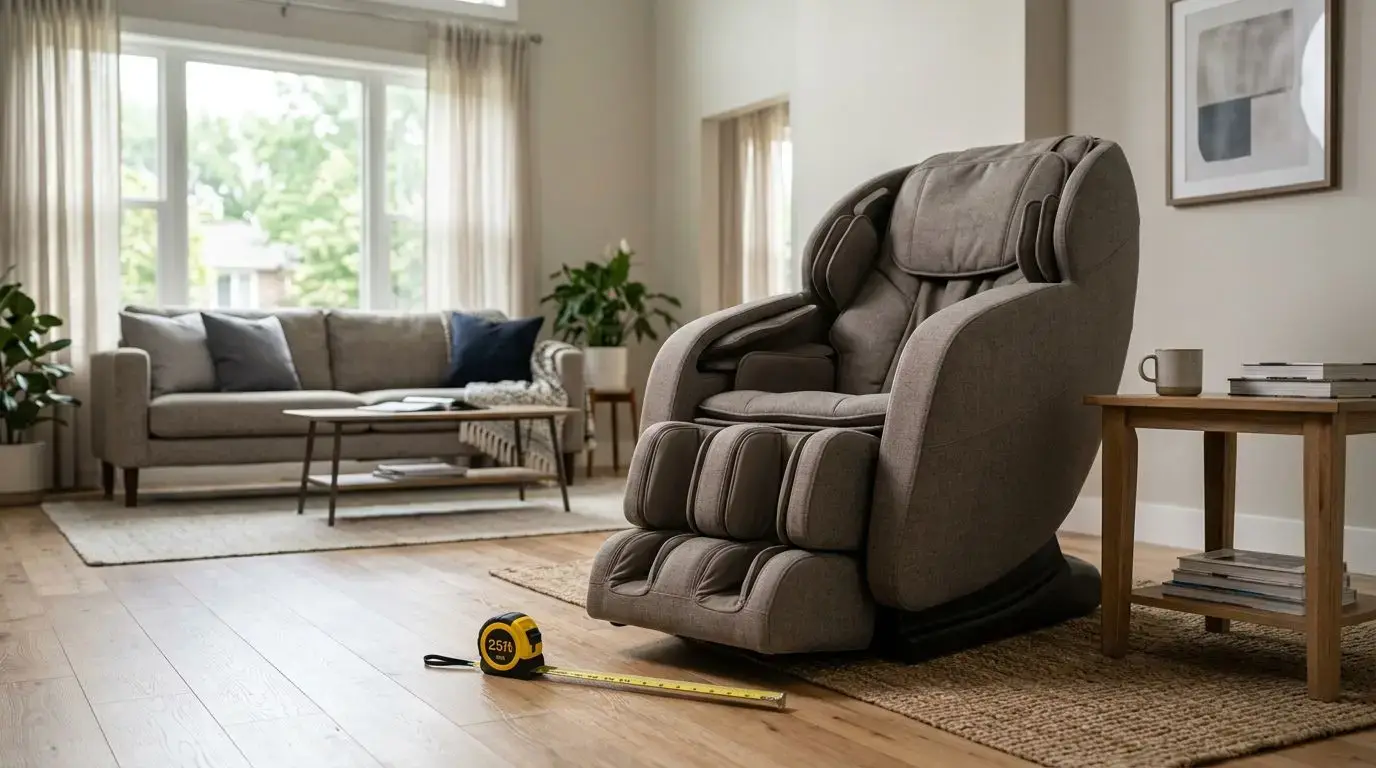
For room fit, measure the chair path before thinking about color or upholstery. A common interior doorway is about 30 to 36 inches wide, but trim, turns, stairs, and hallway angles can make delivery harder. Measure the narrowest point from the front door to the final room. If stairs are involved, measure landing depth and ceiling height as well.
| Measurement | Why it matters | What to check |
|---|---|---|
| User height | Rollers and shoulder sensors need to line up | Published fit range and adjustable shoulder position |
| User weight | Frame, motor, and recline parts have limits | Maximum capacity in the manual |
| Doorway width | Delivery may require tight turns | Narrowest opening, including trim |
| Fully reclined length | Prevents blocking walkways | Measure with the leg unit extended |
| Seat width | Affects hip and shoulder comfort | Inside width, not outside arm-to-arm width |
Then decide how much control you actually want. More programs sound appealing, but a simple remote may be better if several people will use the chair. Look for controls you can understand in 2 minutes: power, recline, intensity, zone, heat, and stop. If you need reading glasses to operate every session, the chair may not get used as often as you expect.
Safety and comfort checks before your first 10-minute session
Use either seating option conservatively at first. Start with a short 10-minute session at the lowest intensity, then adjust after you know how the chair feels. Firm rollers, strong calf compression, and tight foot wells can be too much for some users, even when the chair is working exactly as designed.
Ask your physician before using a massage chair or massage recliner if you are pregnant; have a pacemaker or other implanted cardiac device; have a history of blood clots or take anticoagulants; have osteoporosis; recently had a fracture or surgery; have spinal disc problems; have neuropathy; or have uncontrolled hypertension. This is not a formality. These are situations where pressure, heat, vibration, compression, or reclining posture may not be appropriate for every person.
- Stop using the chair if the sensation feels sharp, pinching, or unusually uncomfortable.
- Do not fall asleep with heat running unless the timer and manual clearly support that use.
- Keep pets and children away from moving leg rests, hinges, and reclining parts.
- Use a surge protector if the manual recommends one, and avoid extension cords unless allowed by the manufacturer.
A massage chair is a consumer wellness product. It can be designed to feel relaxing, warm, firm, gentle, rhythmic, or enveloping, but it should not be viewed as a medical device.
Bottom line: use 3 questions to decide
If you are still split, ask 3 questions. First, do you want a dedicated massage experience or a comfortable recliner with light massage? Second, do you prefer moving roller pressure or gentle vibration? Third, will the chair fit your room, body, and daily habits without becoming a large object you avoid?
Pick a full-featured massage chair if massage performance is the priority and you have the space for a dedicated seat. Pick a massage recliner if furniture comfort, simple controls, and a softer living-room look matter more. The best choice is the one you will use comfortably, safely, and often enough to justify the space it takes.
FAQ: 5 common questions before choosing
Is a massage recliner the same as a massage chair?
No. A massage recliner is usually a standard recliner with vibration, heat, or simple air compression added. A full-featured massage chair usually has moving rollers, preset programs, and more adjustable coverage.
Which option is better for small spaces?
It depends on the recline path. Some wall-hugging massage chairs need only 2 to 6 inches behind them, while some recliners need more room to extend. Measure the fully reclined length before buying either one.
Can a massage recliner feel strong enough?
For some users, yes. If you like mild vibration and warmth while sitting, it may be plenty. If you want kneading pressure that moves along the back, a roller-based massage chair will usually feel more specific.
How long should I use a massage chair at one time?
Follow the manual, but many preset sessions run about 10 to 30 minutes. Start at the low end until you know how the pressure, recline, and heat feel to your body.
Should I choose heat in either type of chair?
Heat can make the seat feel cozier, especially in the back or leg area. Check where the heating elements are located, whether heat runs on a timer, and whether it can be used without the massage function.
Frequently asked questions
Is a massage recliner the same as a massage chair? +
No. A massage recliner is usually a standard recliner with vibration, heat, or simple air compression added. A full-featured massage chair usually has moving rollers, preset programs, and more adjustable coverage.
Which option is better for small spaces? +
It depends on the recline path. Some wall-hugging massage chairs need only about 2 to 6 inches behind them, while some recliners need more room to extend. Measure the fully reclined length before buying either one.
Can a massage recliner feel strong enough? +
For some users, yes. If you like mild vibration and warmth while sitting, it may be enough. If you want kneading pressure that moves along the back, a roller-based massage chair will usually feel more specific.
How long should I use a massage chair at one time? +
Follow the manual, but many preset sessions run about 10 to 30 minutes. Start at the low end until you know how the pressure, recline, and heat feel to your body.
Should I choose heat in either type of chair? +
Heat can make the seat feel cozier, especially in the back or leg area. Check where the heating elements are located, whether heat runs on a timer, and whether it can be used without the massage function.
Related guides
Massage Chair Recliners Explained: Comfort, Coverage, and When This Chair Type Makes Sense
13 min read
Electric Massage Chairs vs. Manual Massage Recliners: What’s the Difference?
13 min read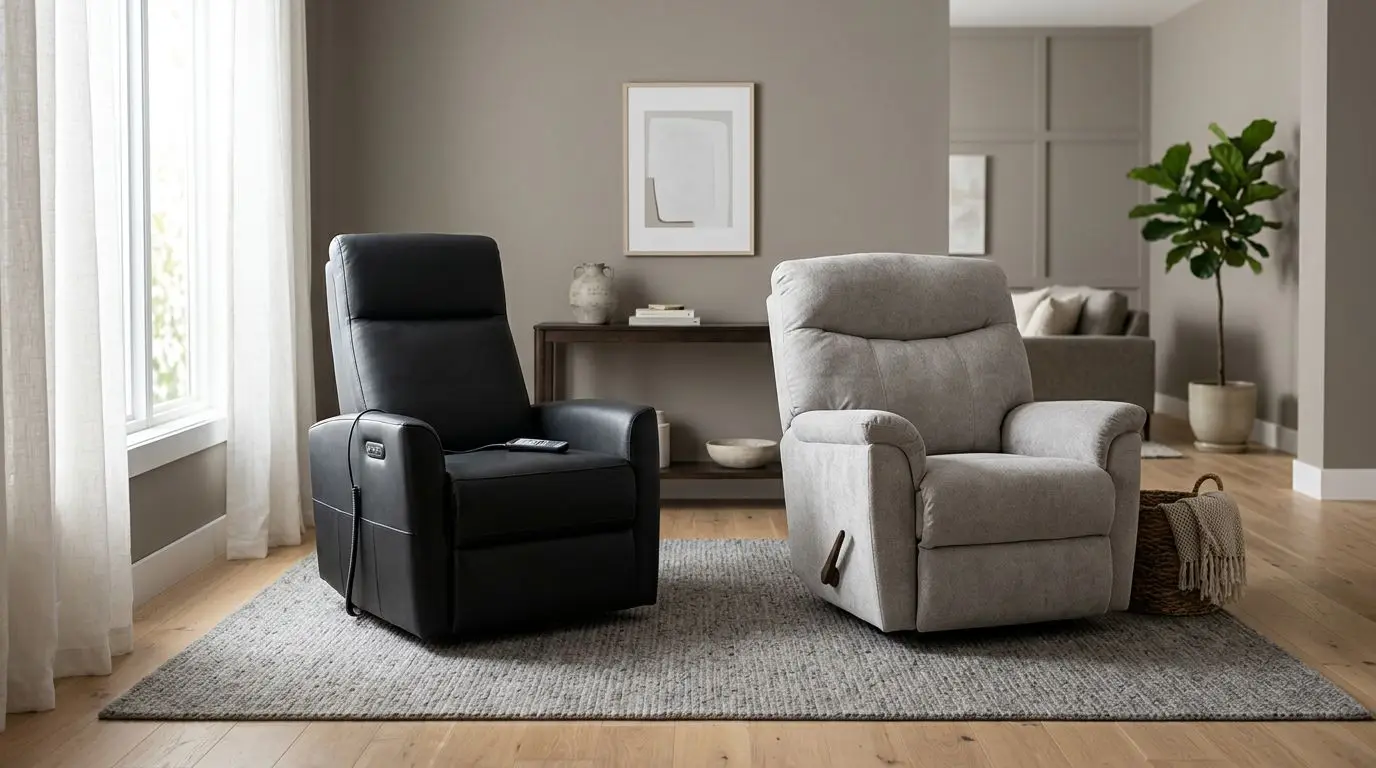
Massage Chair Recliner vs. Standard Recliner: Which Is Better for Everyday Comfort?
15 min read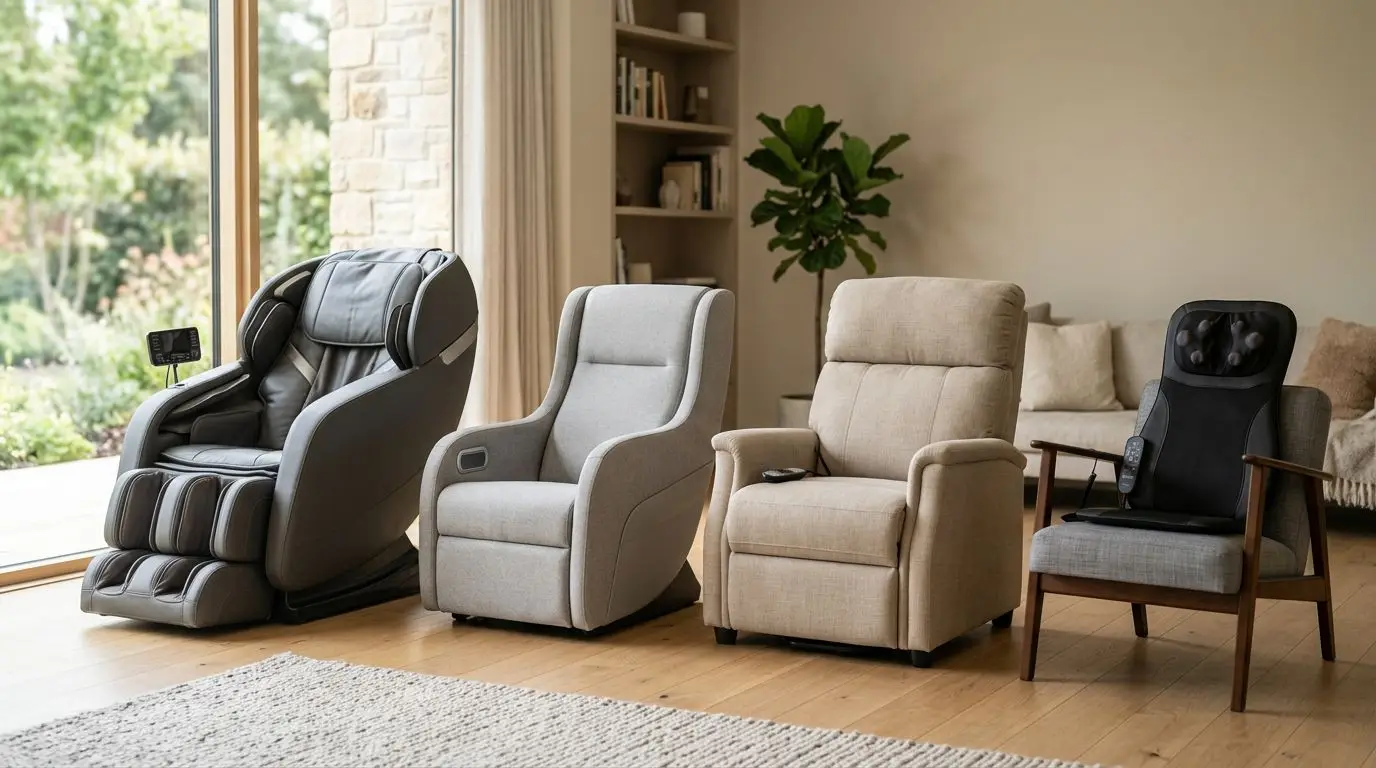
Home Massage Chairs Explained: Main Types, Room Fit, and Best Use Cases
15 min read
Massage Chair Benefits for Stress Relief and Relaxation at Home
11 min read