Disclosure: We may earn a commission when you buy through links on this page, at no extra cost to you. We buy nothing, sell nothing and accept no payment for coverage — commissions never decide what we recommend. How we make money.
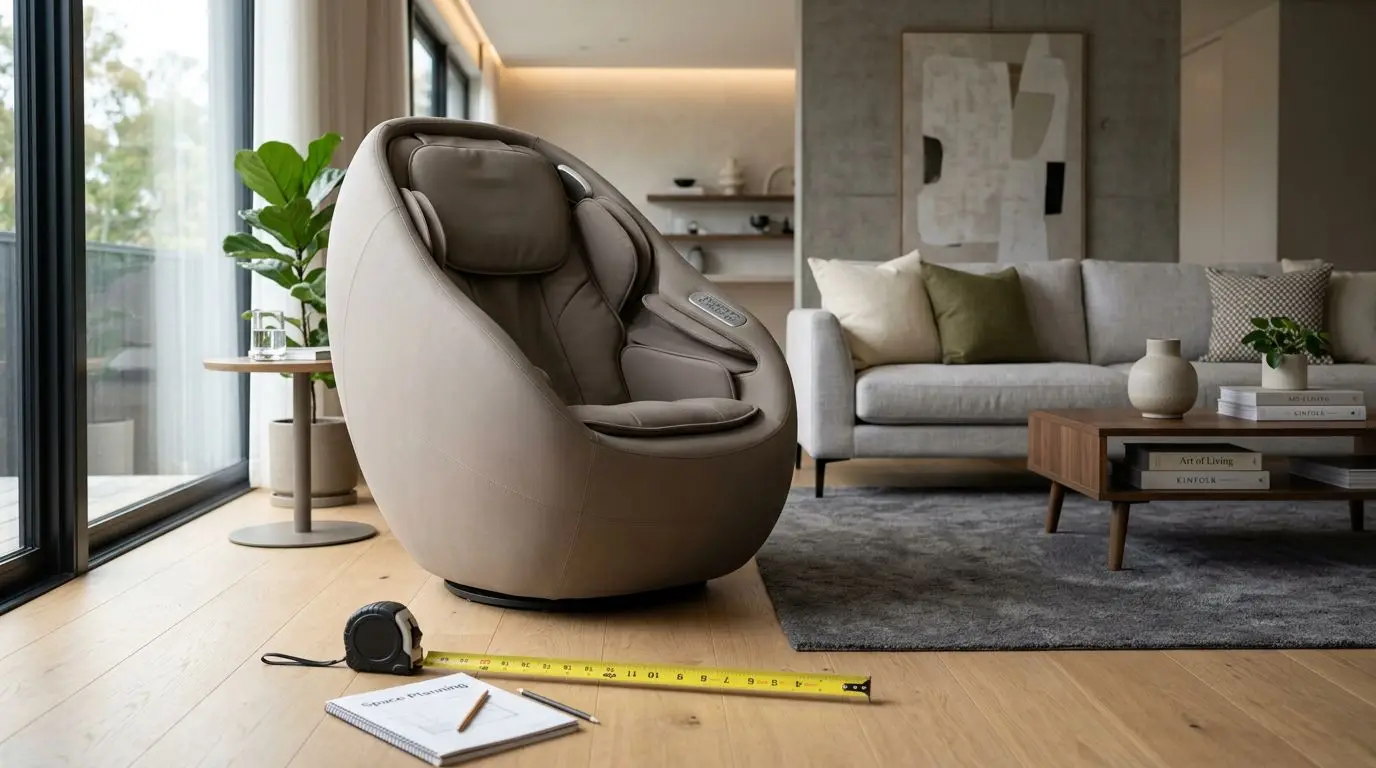
Egg-shaped massage chairs are massage chairs built around a rounded, cocoon-like shell instead of a traditional recliner shape. They appeal to shoppers who want a more enclosed seating feel, a modern look, and a compact visual footprint, though they can fall short on full-body coverage, adjustability, and ease of entry compared with larger recliner-style chairs.
The key question is not simply whether the chair looks like an egg. It is whether the shell shape gives you the roller track, shoulder room, leg fit, recline angle, and controls you actually want for 15 to 30 minutes at a time.
What “egg-shaped” means in a 40- to 55-inch massage chair
An egg-shaped massage chair usually has a high, rounded outer shell that wraps around the back and sides of the seated user. Many stand about 40 to 55 inches tall, depending on whether they include a head canopy, fixed headrest, or extended leg section. The shape is the selling point: it looks less like a living room recliner and more like a lounge pod.
That shape can represent several different construction styles. Some are true massage chairs with internal rollers, airbags, heat zones, and programmed sessions. Others are closer to powered lounge chairs with vibration motors and a dramatic shell. The outside may look similar, but the inside can be very different.
Start by separating appearance from mechanism. A rounded chair with only vibration will not feel like a chair with a 3D roller system. A chair with a short back track will not cover the same area as one with a longer track that runs from the neck area down toward the glutes. A chair without a moving leg rest will fit differently from one with an adjustable calf-and-foot section.
Most egg-style chairs are bought for rooms where appearance matters: apartments, home offices, media rooms, bedrooms, and modern living spaces. The rounded profile can look cleaner than a bulky recliner, especially from the side. Still, the shell does not automatically make the chair small. Some models need a footprint of roughly 30 by 50 inches before recline clearance is considered.
Design feel: enclosed comfort versus open recliner seating in 20-minute sessions
The enclosed design is the main reason people search for this category. Sitting inside an egg-shaped shell can feel private, quiet, and separate from the room. That can be appealing during a 20-minute automatic program, especially in a busy household where visual separation matters.
The trade-off is personal space. Some people like the tucked-in feeling. Others feel boxed in, particularly when the side panels are high or the shoulder area is narrow. A chair can look generous in photos and still feel tight once your elbows, shoulders, and hips are inside it.
Entry and exit also deserve attention. A traditional recliner often has open sides and a predictable seat height. Egg-shaped chairs may have raised side bolsters, a deeper bucket seat, or a curved front lip. If the seat is around 17 to 20 inches from the floor, most adults can sit down easily, but deeper shells can make standing up feel less straightforward.
Noise is another design detail. A shell can slightly muffle roller sounds for someone across the room, but it may also make mechanical sounds feel closer to the user’s head. If you test one in person, listen for motor whine, air pump cycling, and roller transitions. A quiet showroom can reveal things a product photo cannot.
The visual design cuts both ways. Egg-shaped chairs can look sleek, but they also make a strong style statement. If your room has traditional furniture, a sculptural pod chair may stand out more than expected. Measure the space, and picture the chair from the doorway, the sofa, and the hallway.
Massage coverage: 2D, 3D, S-track, and L-track differences
Coverage matters more than shape. In massage chairs, the track and roller design determine where the chair is designed to apply pressure. The shell decides the look; the track decides much of the feel.
A basic chair may use vibration zones or fixed massage nodes. More capable chairs use rollers that travel along a track. A 2D roller typically moves up and down, side to side, and follows the programmed path. A 3D roller adds in-and-out depth control, which can make the pressure feel stronger or softer depending on the setting. Some chairs advertise 4D motion, usually meaning variable speed or rhythm layered onto depth movement, though definitions vary by manufacturer.
Track type is the next point to check. An S-track follows the curve of the back from the neck area toward the lower back. An L-track extends farther under the seat, so the rollers are designed to reach into the glute area. Some chairs use longer hybrid tracks that try to follow both the spinal curve and seat area. Track lengths vary, but back-focused tracks may be around 28 to 32 inches, while longer L-style tracks can be roughly 45 inches or more.
| Chair mechanism | Designed feel | Typical coverage | Main trade-off |
|---|---|---|---|
| Vibration-only zones | Buzzing or pulsing sensation | Back, seat, or legs depending on motor placement | Less targeted than rollers |
| 2D rollers | Kneading and rolling with set depth | Usually neck-to-lower-back on an S-track | Intensity control may be limited |
| 3D rollers | Adjustable pressure depth | Back, and sometimes seat area with an L-track | Often costs more and needs careful adjustment |
| Air compression | Squeezing and releasing pressure | Shoulders, arms, calves, or feet depending on airbags | Fit matters; too tight can be uncomfortable |
| Foot rollers | Rolling pressure under the feet | Soles, sometimes arches and heels | Not useful if the footwell does not fit your size |
Egg-shaped chairs may have less room for broad shoulder airbags or large arm massage sections because the outer shell narrows the design envelope. That does not make them worse, but it does mean you should read the feature list closely. A dramatic shell can hide a fairly simple internal massage system.
Space needs: measure the 30-inch doorway, wall clearance, and recline path
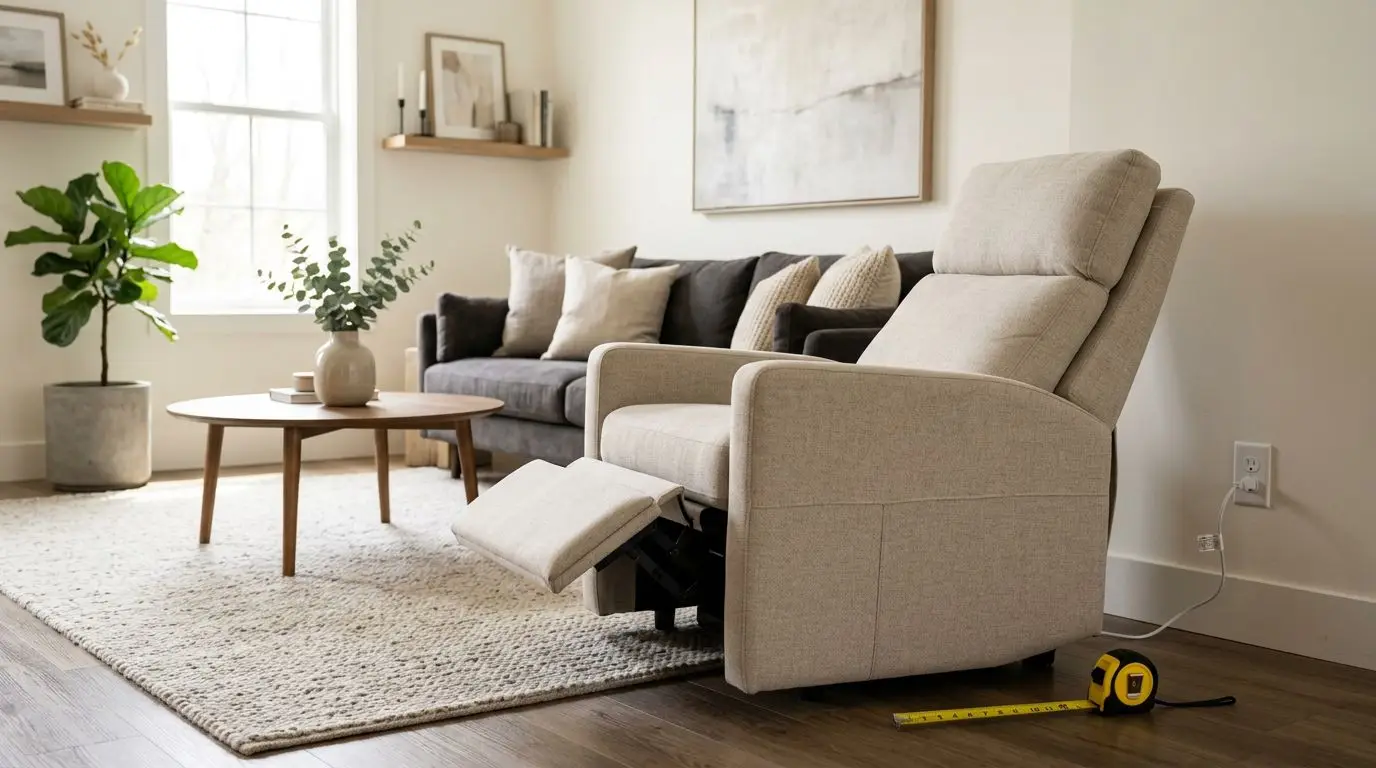
Do not judge space needs by the product photo. Measure the chair, the delivery path, and the recline movement. A chair that fits in a corner visually may still need several inches behind it or in front of it when the backrest tilts and the leg section extends.
Start with doorways. Many interior doors in US homes are around 30 inches wide, while some older homes have narrower openings. If a chair ships partly assembled, the largest boxed or assembled section still has to pass through the door, hallway, stair turn, or elevator. Ask for the chair’s widest unboxed dimension and shipping carton dimensions before you buy.
Next, measure the operating footprint. You need the chair’s width, upright depth, fully reclined depth, and recommended rear clearance. Some space-saving recline designs may need only 2 to 6 inches from the wall, while others need 12 inches or more. Egg-shaped chairs vary because some are more like fixed pods, while others have a powered recline mechanism inside the shell.
Use painter’s tape on the floor. Mark the chair’s width and fully reclined depth, then sit in your existing chair or stand inside the taped area. Leave walking clearance of at least 24 inches in a main path if the chair is near a doorway or hallway route. If the leg rest extends into a coffee table or desk, the chair will feel inconvenient even if it technically fits.
Check floor protection as well. A massage chair can weigh 150 to 300 pounds or more, depending on the frame, motors, and leg unit. On wood, vinyl plank, or laminate floors, a dense mat or furniture cups can help spread the load and reduce scuffing when the chair is moved. On thick carpet, make sure the chair sits level and the base does not rock during recline.
Who it’s best for: 5 shopper profiles that may like the pod shape
Egg-shaped massage chairs are not for everyone, but they make sense for certain shoppers. The best fit is usually someone who values the enclosed experience and modern design as much as the massage mechanism.
| Shopper type | Why the egg shape may work | What to double-check |
|---|---|---|
| Apartment or condo owner | The rounded shell can look visually compact in a smaller room | Doorway width, elevator size, and recline clearance |
| Home office user | A 15-minute break can feel more separated from the workspace | Noise level during calls in nearby rooms |
| Design-focused buyer | The sculptural shape can fit modern decor better than a bulky recliner | Whether the finish and scale match the room |
| Person who likes enclosed seating | The side panels can create a cocoon-like feel | Shoulder width, elbow room, and ease of exit |
| Occasional user | A simpler pod chair may be enough for short relaxation sessions | Whether coverage is limited to vibration or a short roller path |
They may be a weaker choice for very tall users, broad-shouldered users, or anyone who dislikes feeling enclosed. If you are over about 6 feet tall, pay close attention to shoulder position, headrest height, and leg extension. If the chair’s rollers do not align with your neck and back, the massage may feel misplaced no matter how good the chair looks.
They can also be less practical for shared households. A chair that fits one person beautifully may feel tight to another. Look for user height ranges, shoulder width, and weight capacity. Many chairs list maximum user weights somewhere around 250 to 300 pounds, but the number alone does not tell you whether the seat pan, arm area, or footwell will feel comfortable.
Where egg-shaped chairs fall short: 6 trade-offs to inspect before buying
The biggest trade-off is that exterior style can compete with interior function. Rounded shells leave less room for some components, and manufacturers may prioritize appearance, compactness, or lounge comfort over maximum massage coverage.
- Limited shoulder width: High side panels can make a chair feel narrow even when the listed width looks adequate.
- Shorter roller paths: Some pod-style chairs focus on the upper and mid-back rather than full neck-to-seat coverage.
- Less adjustable leg fit: Fixed or semi-fixed foot sections may not suit users with long legs or large shoe sizes.
- Harder entry and exit: Deep bucket seating can be awkward for users who prefer open sides.
- Feature confusion: A chair may look premium but use simple vibration instead of traveling rollers.
- Placement limits: The chair may need a very specific viewing angle to look intentional in the room.
Controls are another issue. Some chairs rely on a small remote, side buttons, or an app. A clean shell with hidden controls looks better, but it can be less convenient if you want to change intensity mid-session. Make sure you can reach the controls while reclined with your arms resting naturally.
Heat features call for realistic expectations. In many massage chairs, heat is designed as a warming comfort feature in the back, seat, calves, or feet. It is not a medical feature. If you like warmth, check whether the heat has multiple levels, whether it warms both sides evenly, and how long it takes to feel noticeable through clothing. A 10-minute test may not be long enough to judge it fully.
How to choose and measure: a 10-minute fit test before you commit
If you can try the chair in person, spend at least 10 minutes in it rather than sitting for 30 seconds. The first impression often tells you about style; the longer sit tells you about pressure, posture, noise, and fit.
Use a simple checklist. Sit all the way back with your hips against the backrest. Your head should meet the headrest without forcing your chin down. Your shoulders should not be pinned forward by the shell. Your elbows should have a natural place to rest. Your feet should sit in the footwell without curling your toes or pressing your knees too high.
Then run a basic program at a low or medium intensity. Notice where the rollers travel. Do they reach the areas you expected, or do they stop too high? If the chair has body scanning, see whether it correctly locates your shoulders. Some chairs allow manual roller adjustment in small increments, which can help if the scan is slightly off.
If buying online, compare your body measurements with the chair’s listed fit range. Useful numbers include your height, shoulder width, hip width while seated, inseam, and shoe size. Also compare the chair’s seat width, back height, footrest extension, and weight capacity. When a retailer lists only outside dimensions, ask for interior seating dimensions before purchase.
Finally, check the return process before ordering. Massage chairs are large freight items, and returns can involve restocking fees, pickup scheduling, repacking rules, or return shipping charges. The best time to learn those details is before a 200-pound chair is sitting in your living room.
Feature comparison: 8 specs that matter more than the shell
The egg shape may get your attention, but the spec sheet decides whether the chair fits your daily use. Focus on the features that change comfort, coverage, and ownership experience.
| Feature | Why it matters | Useful question to ask |
|---|---|---|
| Track type | Determines roller travel area | Is it S-track, L-track, or vibration-only? |
| Roller depth | Changes pressure intensity | Does it offer 2D movement or adjustable 3D depth? |
| Body scan | Helps align rollers with the user | Can shoulder position be manually adjusted? |
| Airbags | Add squeezing pressure to arms, legs, or shoulders | Can air intensity be lowered? |
| Foot and calf section | Affects lower-body comfort and fit | Does it extend for taller users? |
| Recline design | Changes room placement | How many inches of wall clearance are required? |
| Controls | Affects day-to-day usability | Can you adjust settings while reclined? |
| Warranty and service | Important for motors, rollers, and electronics | Who handles in-home service, and for how long? |
Warranty terms are especially important with this category because repairs can involve heavy parts and labor. Look for separate coverage periods for frame, parts, labor, and in-home service. A long parts warranty is useful, but it is not the same as labor coverage if a technician visit is needed.
Also consider everyday friction. Where will the remote live? Is there a child lock? Can you turn off voice prompts if the chair has them? Does the chair remember preferred settings, or do you have to rebuild the session every time? Small details matter when you use a chair several times a week.
Safety and comfort cautions: ask a physician in these 8 situations
A massage chair is a consumer wellness product, not a medical device. It is designed to create pressure, motion, warmth, vibration, and a relaxed seating experience. It should not be used as a substitute for professional medical advice.
Ask your physician before using a massage chair if you are pregnant, have a pacemaker or other implanted cardiac device, have a history of blood clots, take anticoagulant medication, have osteoporosis, recently had a fracture or surgery, have spinal disc problems, have neuropathy, or have uncontrolled hypertension. These situations can change what pressure, heat, vibration, or positioning is appropriate for you.
Use common-sense limits even if you are generally healthy. Start with the lowest intensity and a short session, such as 10 to 15 minutes. Stop if the pressure feels sharp, if your limbs feel numb, or if the position feels wrong. More intensity is not automatically better; the right setting should feel comfortable and controlled.
Children and pets should be kept away from moving leg rests, reclining mechanisms, and foot rollers. Unplug the chair before cleaning around moving parts. If the chair has a zipper, removable pad, or exposed fabric flap, make sure it is secured before running a program.
Buying bottom line: choose the mechanism first, the egg shape second
An egg-shaped massage chair can be a smart buy if you want a modern pod-like seat and confirm that the mechanism matches your expectations. The best candidates combine a comfortable shell, suitable body fit, adequate roller coverage, reachable controls, and realistic space requirements.
Do not pay for shape alone. Decide whether you want vibration, 2D rollers, adjustable 3D rollers, an S-track, an L-track, airbags, foot rollers, heat, or zero-gravity-style recline. Then see which egg-shaped designs actually offer those features in a size that fits your body and room.
The safest shopping approach is simple: measure first, test if possible, read the return terms, and verify the internal massage system before you fall for the silhouette. A beautiful chair that misses your shoulders by 3 inches or blocks a walkway by 6 inches will become frustrating quickly.
FAQ: 5 quick answers about egg-shaped massage chairs
Are egg-shaped massage chairs smaller than regular massage chairs?
Not always. Some look smaller because the shell is smooth and rounded, but many still need a footprint around 30 by 50 inches or more, plus recline clearance. Always compare upright depth, fully reclined depth, and wall clearance.
Do egg-shaped chairs give a full-body massage feel?
Some do, but many focus on the back, seat, calves, or feet depending on the mechanism. Check for a traveling roller track, airbag locations, and foot features instead of assuming the shell shape means full-body coverage.
Are pod-style chairs good for tall users?
They can be, but fit is less predictable. Users over about 6 feet tall should check shoulder alignment, headrest height, leg extension, and footwell length carefully before buying.
Is zero-gravity recline common in egg-shaped massage chairs?
Some include a zero-gravity-style recline position, while others have a fixed lounge angle or basic power recline. If this feature matters, confirm the recline positions and required wall clearance in inches.
What is the biggest mistake to avoid?
The biggest mistake is buying for the look without confirming the internal massage system. A rounded shell can hide anything from simple vibration motors to a more advanced roller track, so read the specifications closely.
Frequently asked questions
Are egg-shaped massage chairs smaller than regular massage chairs? +
Not always. Some look smaller because the shell is smooth and rounded, but many still need a footprint around 30 by 50 inches or more, plus recline clearance.
Do egg-shaped chairs give a full-body massage feel? +
Some do, but many focus on the back, seat, calves, or feet depending on the mechanism. Check for a traveling roller track, airbag locations, and foot features.
Are pod-style chairs good for tall users? +
They can be, but fit is less predictable. Users over about 6 feet tall should check shoulder alignment, headrest height, leg extension, and footwell length carefully.
Is zero-gravity recline common in egg-shaped massage chairs? +
Some include a zero-gravity-style recline position, while others have a fixed lounge angle or basic power recline. Confirm the recline positions and wall clearance in inches.
What is the biggest mistake to avoid when buying one? +
The biggest mistake is buying for the look without confirming the internal massage system. A rounded shell can hide anything from simple vibration motors to a more advanced roller track.
Related guides
Egg-Shaped Massage Chairs: Cocoon Design, Space Trade-Offs, and Coverage
12 min read
Ergonomic Massage Chairs: What “Ergonomic” Really Means Before You Buy
13 min read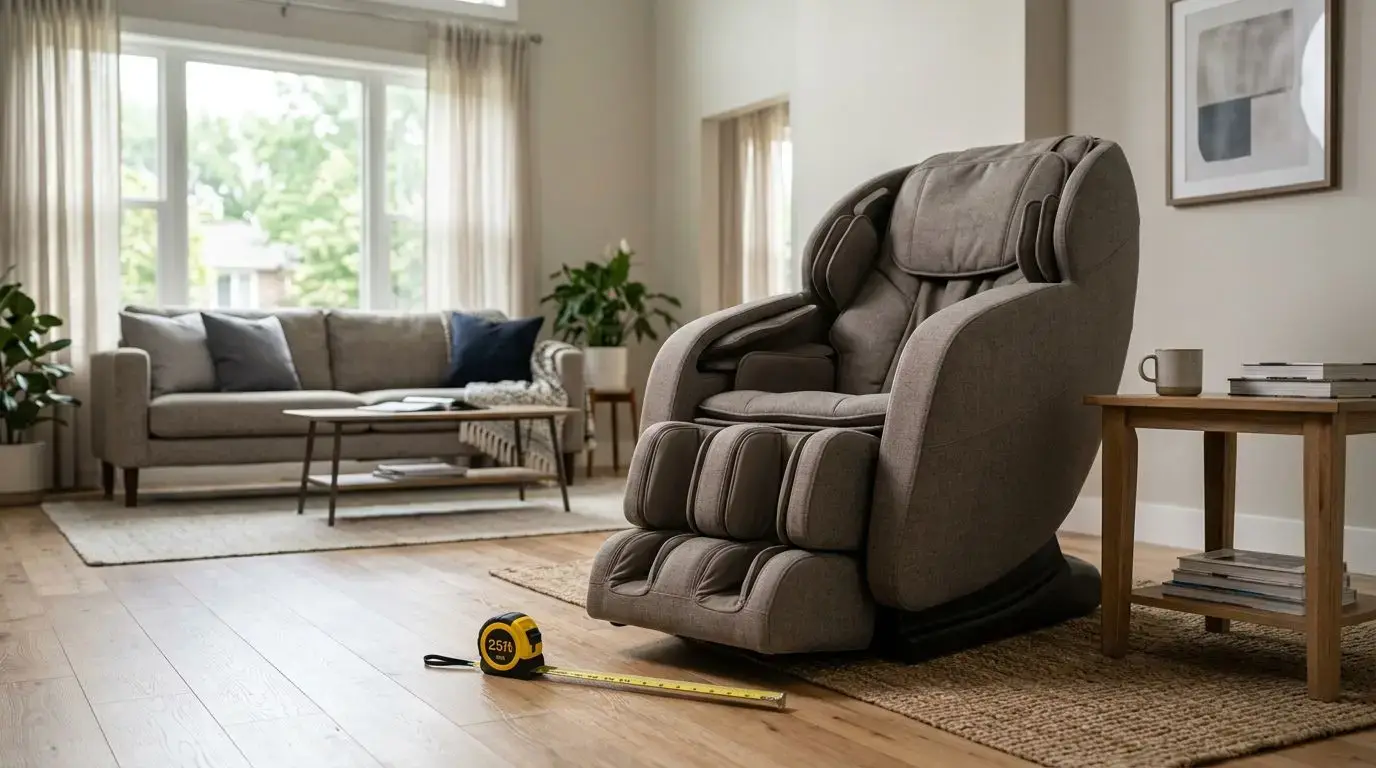
How to Choose a Massage Chair for Home Use
14 min read
Office Massage Chairs vs. Home Massage Chairs: Key Differences Before You Buy
13 min read
Massage Chair Recliner vs. Standard Recliner: Which Is Better for Everyday Comfort?
15 min read