Disclosure: We may earn a commission when you buy through links on this page, at no extra cost to you. We buy nothing, sell nothing and accept no payment for coverage — commissions never decide what we recommend. How we make money.
You generally cannot use HSA or FSA funds for a massage chair simply because it feels good or helps you relax. In the US, a massage chair may qualify only if it is used primarily to treat or manage a diagnosed medical condition, usually with a letter of medical necessity from a licensed healthcare provider.
The safest approach is to get written documentation before you buy, ask your FSA administrator or HSA custodian how they handle durable home equipment, and keep every receipt. Eligibility is not based on the chair type alone. It depends on medical purpose, documentation, plan rules, and whether the expense would be considered personal wellness without that diagnosis.
HSA and FSA eligibility in 2025: the short answer
Health Savings Accounts and Flexible Spending Accounts let US consumers pay certain medical expenses with tax-advantaged dollars, but they do not make every comfort or wellness product eligible. A massage chair falls into a gray area because it is commonly sold for relaxation, yet it may also be recommended as part of care for pain, muscle spasm, mobility limitations, or another diagnosed condition.
As a recent benchmark, the 2025 HSA contribution limits were $4,300 for self-only HDHP coverage and $8,550 for family HDHP coverage, with an additional $1,000 catch-up contribution for eligible account holders age 55 or older. The 2025 health FSA employee contribution limit was $3,300. These limits change, so always confirm the current-year numbers with the IRS or your benefits administrator.
The key rule is medical purpose. IRS guidance generally allows expenses paid for the diagnosis, cure, mitigation, treatment, or prevention of disease, and for treatments affecting a structure or function of the body. General health, relaxation, stress relief, or comfort purchases do not automatically qualify.
That distinction matters. A chair bought because your back feels tight after work is likely a personal expense. A chair recommended by a clinician as part of a documented treatment plan for a specific condition has a stronger case, though approval is never guaranteed.
HSA vs. FSA rules: 5 differences that affect massage chair purchases
HSA and FSA accounts are often grouped together, but they work differently when you buy a high-cost home therapy item. A massage chair can cost far more than a routine copay, which makes substantiation especially important.
| Account issue | HSA | FSA |
|---|---|---|
| Who decides eligibility first | You are responsible for using funds only for qualified medical expenses | The plan administrator usually reviews and approves or denies claims |
| Documentation timing | Keep records in case of IRS review | Submit receipts and supporting documents when requested |
| Funds deadline | Funds can generally remain in the account year to year | Often use-it-or-lose-it, with plan-specific grace period or carryover |
| Medical necessity letter | Strongly recommended for gray-area items | Often required for items with personal or wellness use |
| Risk if denied | Nonqualified distributions can be taxable and may face a 20% penalty if under age 65 | Claim may be denied, or card charge may need repayment |
With an HSA, you can often pay out of pocket and reimburse yourself later if the expense was incurred after the HSA was established and you keep proper records. With an FSA, you usually need to follow the administrator’s claim process within that plan year’s deadlines.
One practical point: do not assume your benefits debit card will work at checkout. Even if a merchant accepts the card, the transaction can be challenged later. A successful card swipe is not the same thing as eligibility.
When a massage chair may qualify: 3 documentation pieces to gather
A massage chair has the best chance of qualifying when you can show a direct medical reason, not a general wellness preference. In practice, you want 3 pieces of documentation: a diagnosis, a written recommendation, and a clear explanation of why the chair is part of treatment.
The most common supporting document is a letter of medical necessity, often called an LMN. It should come from a licensed healthcare provider familiar with your condition, such as a physician, nurse practitioner, physician assistant, physical therapist, chiropractor, or other provider allowed by your plan’s rules.
A useful LMN usually includes:
- Your name and the date of the recommendation.
- The provider’s name, license type, contact information, and signature.
- The diagnosed medical condition being treated or managed.
- Why massage therapy or mechanical massage is medically relevant to that condition.
- The recommended frequency or duration of use, such as 15 to 30 minutes per session.
- The expected treatment period, such as 3 months, 6 months, or ongoing management.
- A statement that the item is not being recommended for general wellness alone.
Specificity helps. A note that says, "patient would benefit from relaxation" is weak. A note connecting the chair to a documented condition and a defined treatment plan is stronger.
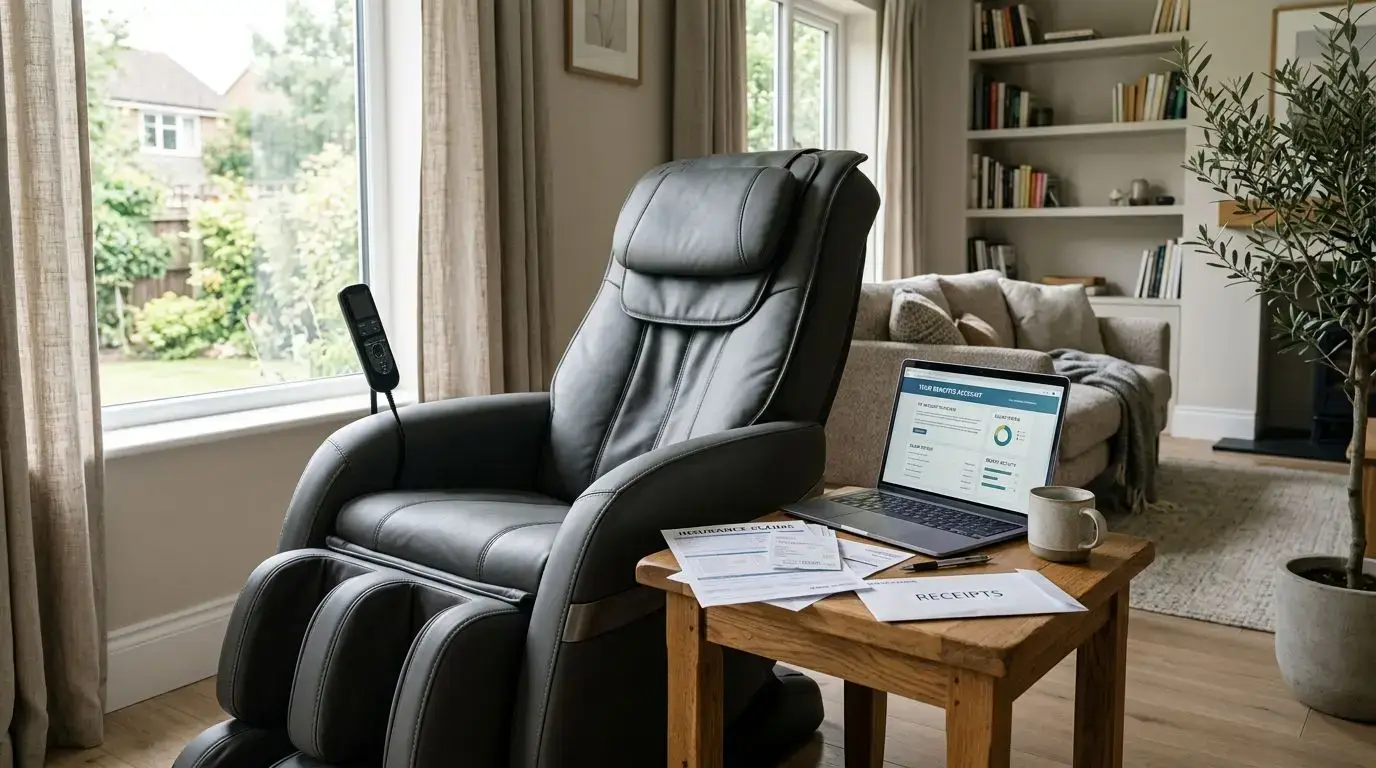
Keep the chair invoice, proof of payment, product description, prescription or LMN, claim forms, and any approval or denial letters. If your plan administrator asks for more information 30 days later, you do not want to reconstruct the purchase from memory.
When it probably will not qualify: 6 common denial reasons
Many massage chair purchases do not qualify for HSA or FSA reimbursement. The main issue is that massage chairs are widely marketed and used for comfort, relaxation, and convenience, which are personal reasons under tax rules.
Common denial reasons include:
- No diagnosed medical condition is documented.
- The provider letter mentions stress relief or wellness but not treatment of a condition.
- The chair is used mainly by family members who do not have the documented condition.
- The purchase is primarily for luxury, comfort, or lifestyle improvement.
- The plan administrator views the item as general household equipment.
- The documentation is dated after the purchase and does not clearly support medical necessity at the time of purchase.
Features can also complicate the claim. Heated rollers, reclining positions, foot rollers, Bluetooth speakers, ambient lighting, and multiple auto programs may be nice to have, but the administrator may ask whether all of those features are medically necessary. If only part of the product supports treatment, reimbursement can be harder to justify.
There is also a difference between professional massage therapy and owning a chair. A clinician may recommend massage, stretching, physical therapy, or heat as part of conservative care, but that does not automatically mean a full-size chair is the only reasonable way to receive those services. Your documentation should explain why home use is appropriate in your situation.
How to choose and measure: 7 buyer checks before using tax-advantaged funds
If you are considering a massage chair for a medically supported reason, choose the simplest chair that reasonably fits the treatment need. A careful selection process can help you avoid overspending and may make your claim easier to explain.
1. Match the track to the treatment area
A straight or S-shaped back track typically focuses on the neck, shoulders, and back. An L-shaped or SL-style track often extends under the glutes and upper hamstrings. Track lengths commonly range from about 28 to 53 inches, depending on chair design. If your documentation concerns low-back and hip-area symptoms, a longer track may be easier to justify than a chair that only reaches the upper back.
2. Check user height and weight ranges
Many full-size chairs are designed around approximate user heights such as 5 feet to 6 feet 3 inches, though ranges vary. Weight capacities often fall around 250 to 320 pounds, with some chairs lower or higher. Choose a chair that fits the documented user, not the tallest person in the household.
3. Measure the room carefully
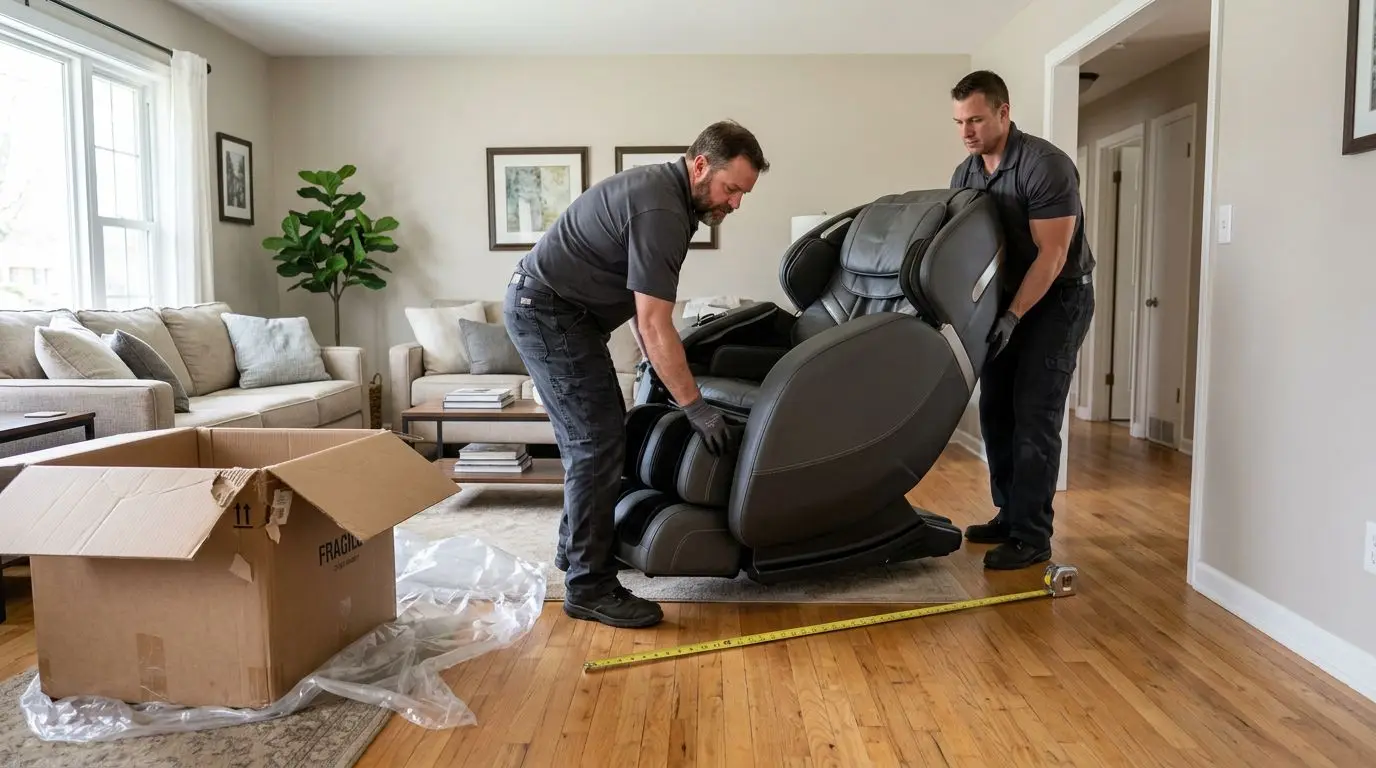
Measure chair width, depth, reclined length, and required wall clearance before purchase. Some space-saving recliners need about 2 to 6 inches behind the chair; other designs may need closer to 12 to 18 inches. Also measure doorways, stair turns, and hallways. A common interior doorway is about 30 to 32 inches wide, and some chairs ship in large sections.
4. Keep programs practical
A chair with 4 to 8 clear massage programs may be easier to use consistently than one with dozens of presets. If the provider recommends short, regular sessions, the ability to set a 15-minute timer may matter more than entertainment features.
5. Consider intensity control
Look for adjustable roller intensity, air-cell pressure, and heat settings. More intensity is not always better, and some users need low-force settings. This is especially important for older adults, people with sensitive skin, or anyone with a condition that requires clinician guidance.
6. Ask about returns before buying
Large chairs can be expensive to return, and pickup or restocking fees may apply. Since FSA and HSA eligibility can be uncertain, confirm the return window in days, the condition requirements, and whether opened items are returnable.
7. Avoid buying only because the plan year is ending
FSA deadlines create pressure. Still, a rushed December 31 purchase without documentation is risky. If you need an LMN, get it before buying whenever possible.
Massage chair types and features: 10 practical comparisons
Not every massage chair is the same. If a healthcare provider recommends mechanical massage at home, the type of chair and specific feature set should connect to the treatment purpose. The table below compares common options without tying them to any brand or model.
| Type or feature | What it does | Medical-necessity consideration |
|---|---|---|
| S-track | Follows the natural curve of the spine | May fit back-focused use where lower-body massage is not needed |
| L-track or SL-track | Extends from the back into the seat area | May be relevant when symptoms involve low back, glutes, or upper hamstrings |
| 2D rollers | Move up/down and side-to-side | Often adequate for basic kneading and rolling |
| 3D or 4D rollers | Add adjustable depth and rhythm variation | Useful only if variable intensity is needed and tolerated |
| Air compression | Inflates airbags around shoulders, arms, calves, or feet | Ask a clinician first if you have circulatory concerns |
| Heat | Adds warmth to back, legs, or feet | Can support comfort, but heat is not appropriate for every condition |
| Zero-gravity recline | Reclines the body to distribute weight | May reduce perceived pressure for some users but is not a treatment by itself |
| Body scanning | Attempts to locate shoulders and adjust roller position | Helps fit, but accuracy varies by body size and posture |
| Foot rollers | Massage the soles of the feet | Use caution with neuropathy, diabetes-related foot issues, or reduced sensation |
| Timer | Limits sessions, often 10 to 30 minutes | Supports consistent, controlled use aligned with a provider’s recommendation |
The best choice is not necessarily the most feature-heavy chair. For HSA or FSA purposes, a restrained purchase that aligns with the provider’s recommendation can be easier to defend than a chair loaded with nonmedical extras.
How to pay or reimburse yourself: a 4-step claim process
The cleanest process is to confirm eligibility before the charge. This matters especially for an FSA, where the administrator may deny reimbursement if the paperwork is incomplete or the expense falls outside plan rules.
- Ask your provider first. Discuss the medical condition, whether mechanical massage is appropriate, and any reasons to avoid it. Get the LMN before shopping if possible.
- Contact the plan administrator. Ask whether a massage chair can be reimbursed with an LMN, what details the letter must include, and whether pre-approval is available. Save the response.
- Pay in a trackable way. Use a method that gives you a dated receipt showing the item, amount paid, seller, and purchaser. Avoid cash if it creates weak records.
- Submit or retain documentation. For an FSA, submit the claim package promptly. For an HSA, keep the records with your tax files even if you reimburse yourself years later.
If your FSA debit card is declined, that does not always mean the expense is ineligible; the merchant category may simply not be coded for healthcare purchases. If the card is approved, the reverse is also true: the plan can still request proof.
For HSA users, tax reporting is ultimately your responsibility. If you take an HSA distribution for a nonqualified expense before age 65, the amount is generally taxable and may be subject to an additional 20% penalty. After age 65, nonqualified distributions are typically taxable but not subject to that additional penalty. Qualified medical expenses remain tax-free.
Who it is best for: 4 buyer profiles with stronger cases
A massage chair is not a first-line financial move for most households. It makes the most sense when the medical rationale is clear, the user will actually use the chair as directed, and the purchase fits within a broader care plan.
Potentially stronger candidates include:
- People with a documented musculoskeletal condition. If a provider has diagnosed a condition and recommends home mechanical massage as part of symptom management, the expense has a clearer medical purpose.
- Users who cannot easily attend frequent appointments. Someone who lives 45 minutes from a clinic, has transportation limitations, or needs short sessions several times per week may have a better practical reason for home equipment.
- Households with HSA savings already available. An HSA can reduce the after-tax cost if the expense is qualified, but it should not replace emergency savings or necessary medical care.
- FSA participants with pre-approval. If the administrator reviews the LMN and gives written approval before purchase, the risk of denial is lower.
It is usually not the best fit for:
- Buyers seeking general relaxation after work.
- People without a diagnosis or provider recommendation.
- Anyone who expects the chair to cure a condition.
- Households where multiple family members will use the chair mainly for comfort.
- People with medical conditions that make massage, heat, compression, or reclining risky without clinician guidance.
Massage chairs may help some people relax or temporarily ease muscle tension, but they should not be treated as a substitute for medical evaluation, physical therapy, prescribed treatment, or urgent care. If you have numbness, weakness, unexplained pain, swelling, chest pain, fever, recent injury, or worsening symptoms, seek medical advice before using one.
Tax records to keep for 7 years if you claim the expense
Many tax professionals suggest keeping health expense records for at least 3 years after filing, and some consumers keep them up to 7 years for added caution. For a gray-area purchase like a massage chair, better records can make a major difference.
Keep a digital folder with:
- The letter of medical necessity or prescription.
- The diagnosis-related visit note or after-visit summary, if available.
- The itemized receipt and proof of payment.
- The product page or specification sheet showing relevant features.
- Any pre-approval email or claim determination from the FSA administrator.
- Photos of the serial label or delivery paperwork, if applicable.
- A simple use log for the first 30 to 60 days, especially if the provider recommended a schedule.
A use log is not always required, but it can support the idea that the chair was bought for a treatment plan. For example, a note showing 15-minute sessions 4 days per week is more persuasive than no usage record at all.
If the chair is partly for medical use and partly for personal use, ask a tax professional or plan administrator how to handle that. Partial reimbursement may be possible in some situations, but you should not guess.
FAQ: 5 common HSA and FSA massage chair questions
Can I buy a massage chair with my HSA card?
Possibly, but it is risky without documentation. If the chair is not a qualified medical expense, the HSA distribution may be taxable and may face a 20% penalty if you are under 65. Paying out of pocket first and reimbursing yourself after you confirm eligibility can create a cleaner paper trail.
Will an FSA approve a massage chair if I have a letter of medical necessity?
A letter of medical necessity helps, but it does not guarantee approval. FSA administrators can apply plan-specific substantiation rules, and they may decide the chair is a personal comfort item unless the medical purpose is clear and well documented.
Does a doctor’s prescription automatically make it eligible?
No. A prescription or LMN is strong evidence, but the expense still must meet medical expense rules and plan requirements. The letter should explain the diagnosis, treatment purpose, and recommended use.
Can I reimburse myself from an HSA years after buying the chair?
Generally, HSA reimbursement can occur later if the expense was incurred after the HSA was established, was qualified at the time, and you kept records. You should retain receipts and medical documentation before taking the distribution.
Are massage chair repairs or accessories HSA/FSA eligible?
They may be eligible only if the original chair and the repair or accessory are medically necessary. A replacement remote needed to operate a medically necessary chair is different from an upgraded cushion, speaker feature, or cosmetic accessory.
Bottom line: A massage chair is not automatically HSA or FSA eligible in the United States. It may qualify when it is medically necessary for a diagnosed condition and properly documented, but general comfort and relaxation purchases usually do not. Before you buy, get the provider letter, ask the administrator, and keep records that show the chair was purchased for medical care rather than wellness alone.
Frequently asked questions
Can I use HSA funds for a massage chair? +
Possibly, but only if the chair is primarily for medical care related to a diagnosed condition and you keep strong documentation, usually including a letter of medical necessity. A chair bought for relaxation or general wellness is usually not a qualified HSA expense.
Can I use FSA funds for a massage chair? +
An FSA may reimburse a massage chair only if the plan administrator accepts it as medically necessary. You should ask for the required documentation before purchase because many administrators deny comfort or wellness items.
What should a letter of medical necessity include? +
It should include your diagnosis, the provider’s recommendation, why mechanical massage is part of treatment, recommended frequency or duration of use, the expected treatment period, and the provider’s signature and license information.
Does a doctor’s note guarantee HSA or FSA eligibility? +
No. A doctor’s note helps support the claim, but the expense still must meet IRS medical expense rules and any FSA plan requirements. Administrators can still deny weak or incomplete documentation.
Is a massage chair eligible if I use it for back pain? +
Back pain alone is not enough. Eligibility is stronger when a licensed provider diagnoses a condition and recommends the chair as part of a treatment plan. Occasional soreness or relaxation use is generally not enough.
Related guides
Is a Massage Chair Worth It? Benefits, Limitations, and Who Should Buy One
13 min read
Massage Chair vs. Physical Therapy or Chiropractic Care: What Each Can and Can’t Do
13 min read
Is a Massage Chair Worth It? Cost, Use Frequency, and Break-Even Math for U.S. Buyers
12 min read
Massage Chair vs. Professional Massage: Which Is Better for Your Routine and Budget?
10 min read
Are Massage Chairs Good or Bad for You? Benefits, Risks, and Safe Use Guidelines
13 min read