Disclosure: We may earn a commission when you buy through links on this page, at no extra cost to you. We buy nothing, sell nothing and accept no payment for coverage — commissions never decide what we recommend. How we make money.
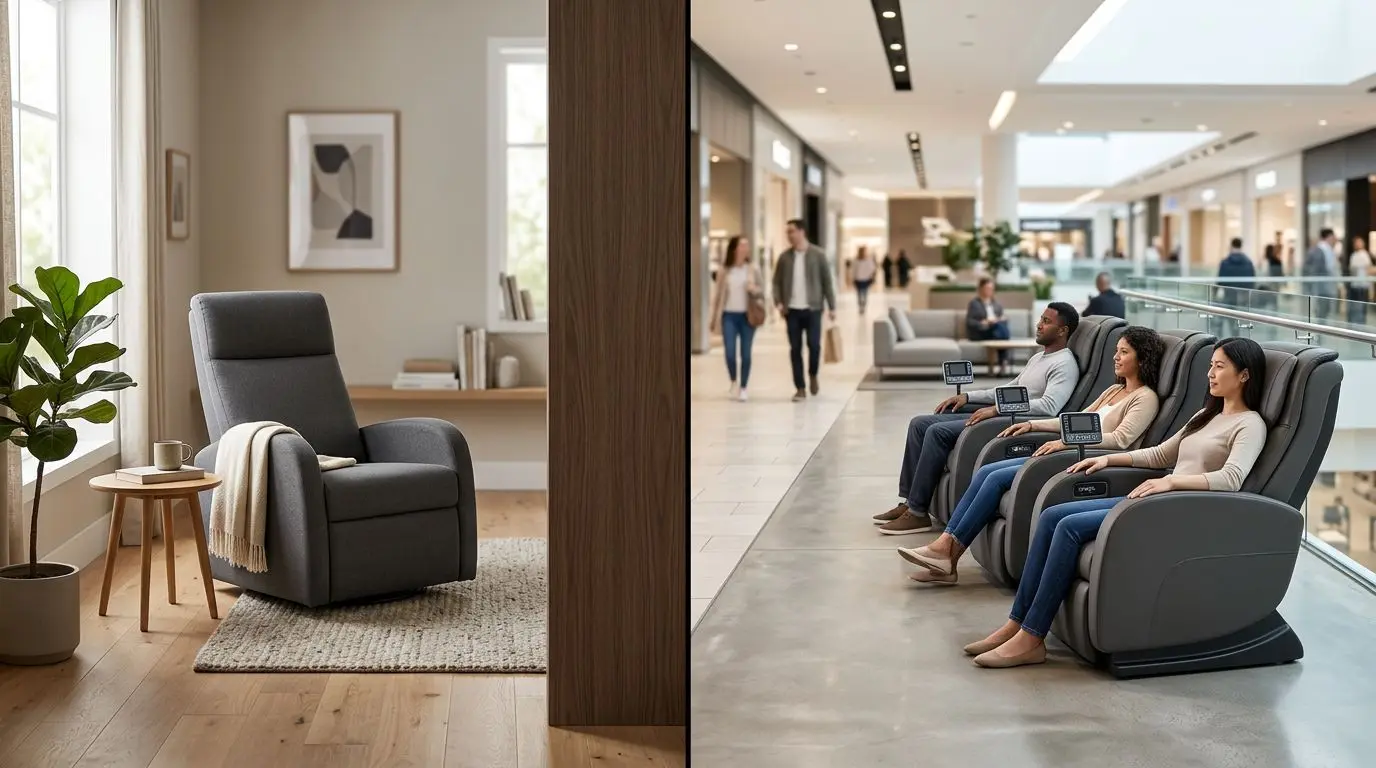
An at-home massage chair makes the most sense if you use one several times a week, want privacy, and care about controlling pressure, body area, recline, and session length. A gym or mall massage chair makes more sense if you use one only now and then, do not have space at home, or want pay-per-use access without maintenance. The right choice comes down to frequency, space, cleanliness expectations, and whether you value control more than a no-commitment session.
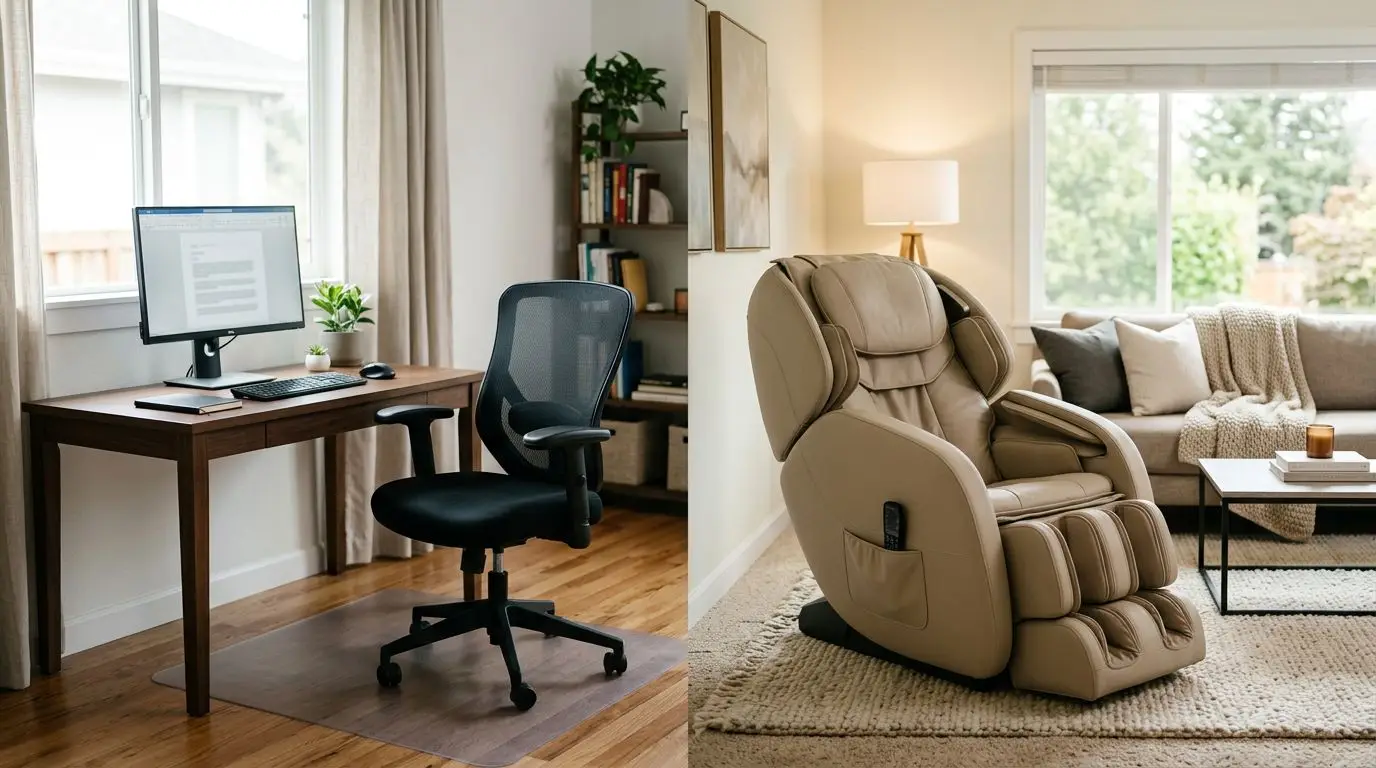
Both options can feel good when you want mechanical kneading, rolling, compression, or vibration after a long day. They are different decisions, though. One is a piece of home furniture and equipment you live with every day; the other is a short public session you fit around errands or a workout.
The 6-factor comparison: ownership vs. pay-per-use access
The main differences fall into 6 practical categories: cost, privacy, cleanliness, control, convenience, and long-term value. A public chair is easy to try because you can sit down for a short block of time and walk away. An at-home chair takes more planning up front, but it gives you the same seat, settings, and environment every time.
| Factor | At-home chair | Gym or mall chair |
|---|---|---|
| Cost structure | Higher upfront cost, then no per-session payment at the chair | Pay per use, usually in short time blocks set by the location |
| Privacy | Private room, your clothing choice, your noise level | Public or semi-public space with foot traffic nearby |
| Cleanliness | You control wiping, covers, and who uses it | Shared surfaces and location-dependent cleaning routines |
| Session control | More control over programs, roller depth, air compression, heat, and recline if equipped | Often simpler controls with fixed programs and limited adjustments |
| Convenience | Available any time, but requires floor space and electrical access | No space commitment, but only available when you are at that location |
| Long-term value | Best when used consistently over months and years | Best for occasional use or trying the experience before buying |
Think of the public chair as access. Think of the home chair as control.
Cost math: compare 10-minute sessions before you buy
Cost is not just the price of a chair or the posted rate on a kiosk. It is the cost per use over time. A simple 10-minute comparison keeps the math grounded without depending on a specific local price.
Start with your realistic use pattern. One session per week equals 52 sessions per year. Three sessions per week equals 156 sessions per year. Five sessions per week equals 260 sessions per year. If you are comparing a home chair with a public chair, multiply your local pay-per-use cost by those annual session counts, then compare that total with the full ownership cost of a home chair over the number of years you expect to keep it.
Use this formula:
Public chair annual cost = local cost per session x sessions per year.
Home chair cost per session = total ownership cost ÷ total sessions used.
Total ownership cost should include more than the sticker price. Add delivery, assembly if needed, floor protection, any optional service plan, and likely out-of-warranty repair risk. If the chair is large, also consider whether you will pay to move it later.
| Use pattern | Sessions per year | What it usually favors |
|---|---|---|
| 1 session per month | 12 | Gym or mall chair, unless privacy is the main goal |
| 1 session per week | 52 | Depends on local rates, chair cost, and space |
| 3 sessions per week | 156 | Often favors ownership if the chair is comfortable and durable |
| 5 sessions per week | 260 | Strongly favors ownership for frequent users who have room |
The break-even point is personal. A low posted rate and occasional use can make public access the smarter buy. Daily use changes the picture quickly.
Session control: 15 to 30 minutes at home beats fixed public programs
Many home massage chairs use automatic programs that run about 15 to 30 minutes, depending on the chair and setting. Public chairs often run in shorter paid blocks, and the controls may be simplified so many users can operate them quickly. That difference matters if you are particular about pressure, coverage, or body position.
At home, you may be able to adjust roller width, roller speed, air compression intensity, foot roller intensity, heat, recline angle, and zero gravity position if the chair includes those features. You can also stop, restart, or switch programs without feeling rushed by a timer in a busy hallway.
Public chairs are not all basic, but they are usually built for fast turnover. The session may start immediately, follow one preset path, and end when the paid time expires. If the pressure feels too strong on your calves or too light on your shoulders, your adjustment options may be limited.
| Feature | Why it matters | More common advantage |
|---|---|---|
| 2D rollers | Move up and down and side to side for basic back coverage | Both home and public chairs |
| 3D rollers | Add adjustable in-and-out depth for stronger or softer contact | At-home chairs with more advanced controls |
| S-track | Follows the curve of the back from neck area toward lower back | Both, depending on chair type |
| L-track or SL-track | Extends roller travel under the seat for glute and upper hamstring contact | More useful in a chair you can test and tune |
| Air compression | Squeezes areas like arms, calves, feet, shoulders, or hips | At-home chairs when intensity can be adjusted |
| Heat | Adds warmth to selected areas, usually the back or calves | At-home chairs where you control duration |
If you mainly want a quick back roll after a workout, the public chair may be enough. If you want a repeatable setup with your preferred recline, lower intensity, or specific roller path, home ownership has the edge.
Cleanliness and privacy: a public chair with 20 users is a different experience
A shared chair used by 20 people in a day has 20 rounds of contact with the headrest, arm areas, seat, foot wells, and controls. That does not mean it is unsafe; it means your comfort depends on the location's cleaning process and your own expectations. In a gym or mall, you may not know when the chair was last wiped down or how closely the foot and arm areas are cleaned between users.
At home, cleanliness is simpler. You decide whether shoes stay out of the foot area, whether to use socks, how often to wipe the upholstery, and who sits in the chair. You can keep a microfiber cloth and upholstery-safe cleaner nearby and make a 60-second wipe-down part of your routine.
Privacy matters just as much for many people. A mall chair may put you in a reclined position near shoppers, kids, security cameras, and background noise. A gym chair may sit near locker rooms or a recovery area where people come and go. Some users do not mind. Others find it hard to relax in public, especially when the chair reclines or compresses the legs and arms.
At home, you can use the chair in workout clothes, pajamas, or whatever feels comfortable. You can lower the lights, choose your own music, and avoid a line forming behind you. That setting can make the same mechanical program feel more comfortable because you are not performing relaxation in front of strangers.
Convenience and space: measure a 30-inch path before choosing ownership
Convenience cuts both ways. A public chair is convenient because you do not store it, move it, plug it in, or maintain it. An at-home chair is convenient because it is available at 6 a.m., 10 p.m., or during a 20-minute break without driving anywhere.
The home chair has one nonnegotiable requirement: space. Before buying any full-size chair, measure the entire delivery path, not just the final room. Check exterior doors, interior doorways, hallway turns, stair landings, elevator dimensions, and the spot where the chair will sit. A 30-inch doorway can be tight or workable depending on the chair's shipping width and whether parts can be removed.
Measure the chair in use, too. Many full-size massage chairs need roughly 65 to 75 inches of length when reclined, though designs vary. Wall-hugging recline systems may need only a few inches behind the backrest, while standard recline designs can require much more rear clearance. Leave walking space around the chair so it does not become an obstacle.
Weight matters as well. Many full-size chairs weigh roughly 150 to 300 pounds. That can affect upstairs placement, apartment moves, floor protection, and whether two adults can safely reposition it. If you rent, check lease rules and think about how you will remove the chair later.
Public access avoids all of that. The trade-off is that you must be at the gym or mall, the chair must be available, and the location must be open. If your real use depends on a 15-minute drive, the public option may become less convenient than it first appears.
Who each option is best for: 1 visit a month vs. 3 sessions a week
A gym or mall massage chair is best for occasional users. If you sit in one once a month, want a quick add-on after training, or are still deciding what features you like, pay-per-use access is practical. You get a low-commitment way to compare pressure, body fit, noise, foot rollers, and recline without bringing a large chair home.
It is also the better choice for people in small apartments, frequent movers, shared housing, or homes where a large recliner would be unwelcome. If you dislike maintenance or do not want another powered appliance in the house, public access keeps the responsibility with the location.
An at-home chair is best for frequent users, multi-person households, and anyone who wants predictable settings. If 2 adults in the same home each use the chair 3 times per week, that is 312 total sessions per year. In that situation, control over cleanliness, schedule, and settings becomes a real value, not just a luxury.
Home ownership also suits people who know exactly what they like. Maybe you prefer lighter roller depth, a lower foot compression setting, a specific zero gravity angle, or an L-track that reaches under the seat. Public chairs rarely let you fine-tune that experience as much.
Choose public access if your use is casual. Choose ownership if repeated use and control are the point.
How to choose and measure: 7 checks before you decide
Before committing either way, run through these 7 checks. They will tell you whether your decision is based on real fit or just the appeal of a new gadget.
- Track your actual use for 30 days. If you pass a public chair often, note how many times you would realistically use it, not how many times you imagine using it.
- Calculate sessions per year. Use 12, 52, 156, or 260 sessions as simple benchmarks.
- Measure your body fit. Public chairs must fit many users. For home chairs, check recommended height and weight ranges, shoulder position, calf length, and footwell comfort.
- Measure your room. Include reclined length, rear clearance, side clearance, and space to walk around the chair.
- Measure delivery access. Check at least one complete path from curb to room, including a 30-inch doorway or any tighter point.
- List must-have controls. Examples include 3D roller depth, adjustable air compression, heat on/off, manual spot controls, and zero gravity.
- Plan cleaning and maintenance. Decide who wipes the chair, how often, what cleaner is safe for the upholstery, and where the remote or controller will live.
If you are leaning toward ownership, try several generic chair types in person when possible. Pay attention during the last 5 minutes, not just the first minute. A chair that feels impressive at first can feel too intense after a full program, while a gentler chair may be easier to use more often.
Safety considerations: ask a physician before either option if these 8 apply
A massage chair is a consumer wellness product, not a medical device. It is designed to provide mechanical pressure, movement, warmth, recline, and compression sensations. It should not replace medical advice or care.
Ask your physician before using a home, gym, or mall massage chair if you are pregnant; have a pacemaker or other implanted cardiac device; have a history of blood clots or take anticoagulants; have osteoporosis; recently had a fracture or surgery; have spinal disc problems; have neuropathy; or have uncontrolled hypertension. Do not bury those concerns under convenience or cost. Public chairs may be especially tricky because you may not be able to adjust intensity enough for your situation.
Use common sense during any session. Start with the lowest intensity. Keep early sessions short, around 10 to 15 minutes, until you know how the chair feels. Stop if the pressure feels sharp, pinching, numbing, or uncomfortable. Children should not use a powered chair without adult supervision, and pets should be kept away from moving footrests and reclining parts.
Good ownership decisions include safety habits. Keep the power cord out of walkways, avoid using the chair when the upholstery is damaged, and leave enough clearance so the backrest and leg rest can move without hitting a wall, table, or person.
Long-term value: the better choice is the one you will actually use for 12 months
Long-term value is not the same as buying the most feature-heavy chair. It is the match between your use pattern and the way you live. A chair with advanced rollers, a long track, foot rollers, heat, and zero gravity is only valuable if it fits your body, fits your room, and gets used regularly.
For some people, the gym or mall chair is the honest answer. It keeps costs tied to actual use, requires no space, and lets you skip ownership risk. If you use it 6 times and lose interest, you are not stuck with a large chair in the living room.
For others, the at-home chair is clearly more sensible. If you dislike public settings, want consistent cleanliness, share the chair with another adult, and expect to use it several times a week for years, ownership can deliver better everyday value. It is not just about saving on sessions. It is about having the chair available when you want it and set up the way you like it.
The simplest decision rule is this: use public chairs until your habits prove that ownership would be used often. Once your real use is consistent, compare space, controls, and total cost per session. That approach keeps the decision practical and helps you avoid buying a large chair based on a few good minutes at the mall.
FAQ: 5 quick answers about home, gym, and mall massage chairs
Is an at-home massage chair cheaper than using a gym or mall chair?
It can be, but only with frequent use. Compare your local pay-per-use cost against your expected annual sessions, such as 52 sessions for weekly use or 156 sessions for 3 times per week. Include delivery, maintenance, and possible repairs in the home-chair side of the math.
Are public massage chairs clean enough to use?
Cleanliness depends on the location's routine and how many people use the chair. If you use one, consider wiping contact areas before the session, wearing socks, and avoiding the chair if the upholstery looks damaged or soiled.
Do home chairs feel different from mall or gym chairs?
Often, yes. Home chairs may offer more adjustable settings, such as roller depth, air compression intensity, heat, recline, and manual area controls. Public chairs are commonly set up for quick, simple sessions with fewer choices.
How much space do I need for a home massage chair?
Measure both the room and the delivery path. Many full-size chairs need about 65 to 75 inches of reclined length, and the doorway or hallway path can matter as much as the final footprint. Always check the specific chair dimensions before buying.
Should I try a public chair before buying one for home?
Yes, if you can. A public chair can help you learn whether you like foot rollers, air compression, zero gravity recline, or stronger back rollers. Just remember that one public chair may not represent every track design or roller type.
Frequently asked questions
Is an at-home massage chair cheaper than using a gym or mall chair? +
It can be, but only if you use it often. Compare your local pay-per-use cost with your expected session count, then include delivery, maintenance, and possible repair costs for the home chair.
Are public massage chairs clean enough to use? +
Cleanliness depends on the location and how often the chair is wiped down. If you use one, consider wiping contact areas first, wearing socks, and skipping chairs with damaged or visibly soiled upholstery.
Who should choose a gym or mall massage chair instead of buying one? +
Public chairs make the most sense for occasional users, small apartments, frequent movers, and people who want short sessions without maintenance, delivery, or floor-space commitments.
Who should consider an at-home massage chair? +
Ownership is usually a better fit for frequent users, multi-person households, and anyone who wants privacy, consistent cleanliness, and more control over pressure, recline, heat, and session length.
How much space do I need for a home massage chair? +
Measure the full delivery path and the final room. Many full-size chairs need roughly 65 to 75 inches of length when reclined, but exact dimensions and rear clearance vary by design.
Related guides
Massage Chair vs. Professional Massage: Which Is Better for Your Routine and Budget?
10 min read
Is a Massage Chair Worth It? Cost, Use Frequency, and Break-Even Math for U.S. Buyers
12 min read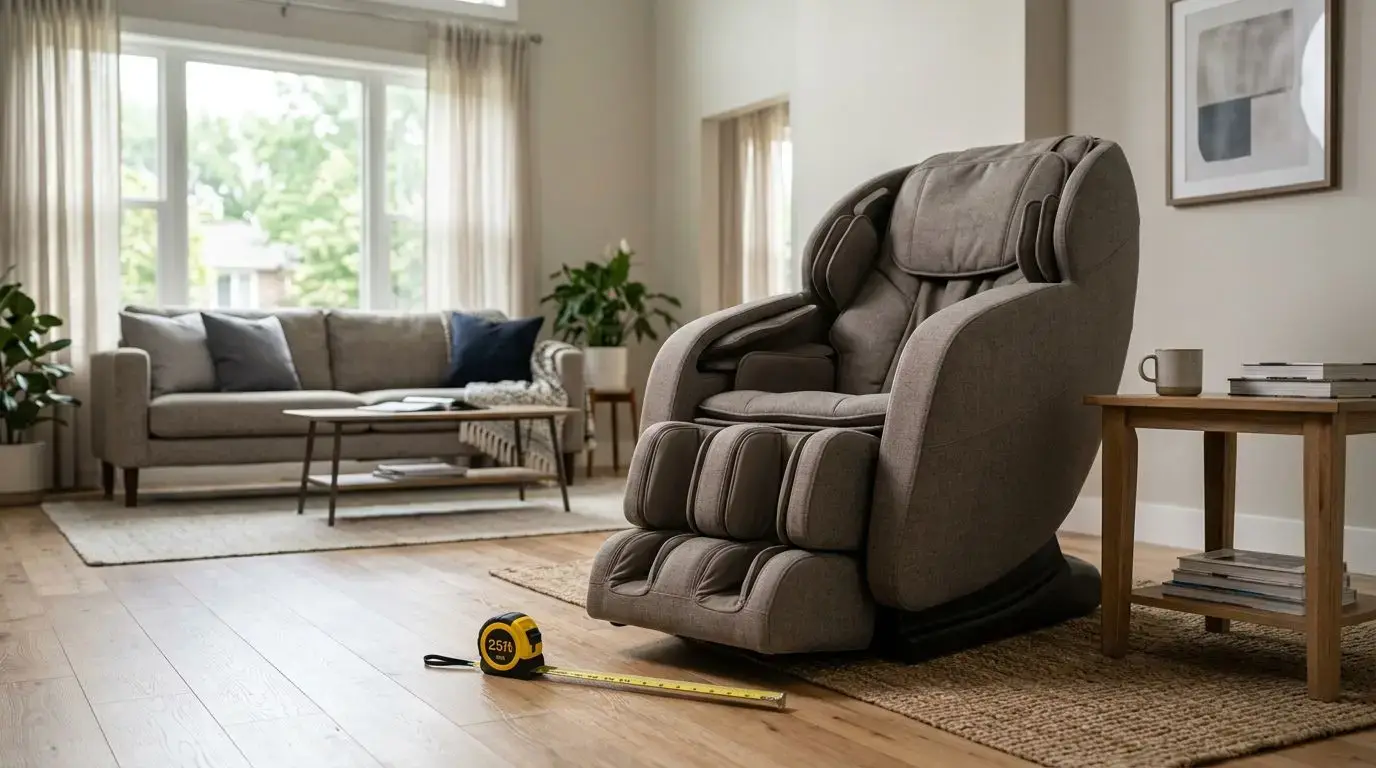
How to Choose a Massage Chair for Home Use
14 min read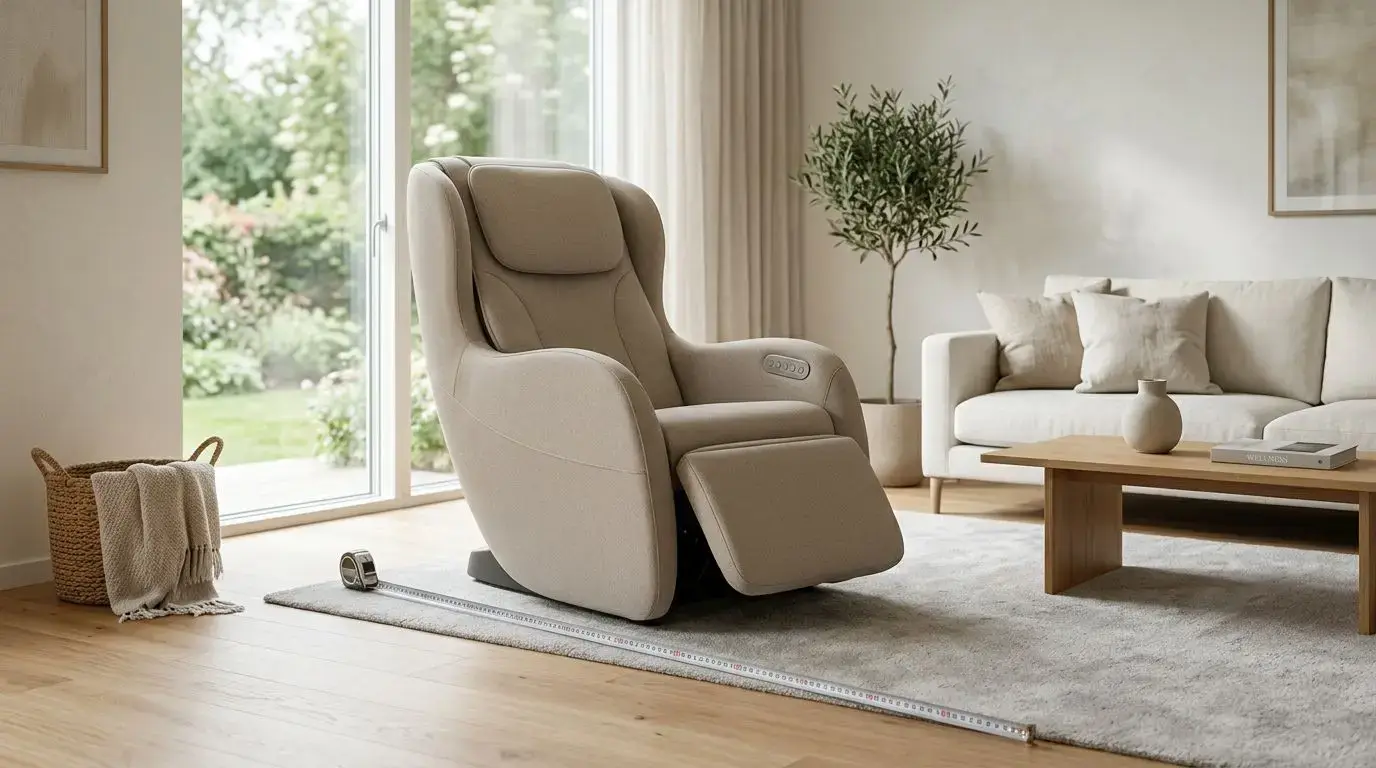
Is a Massage Chair Worth It? Benefits, Limitations, and Who Should Buy One
13 min read